
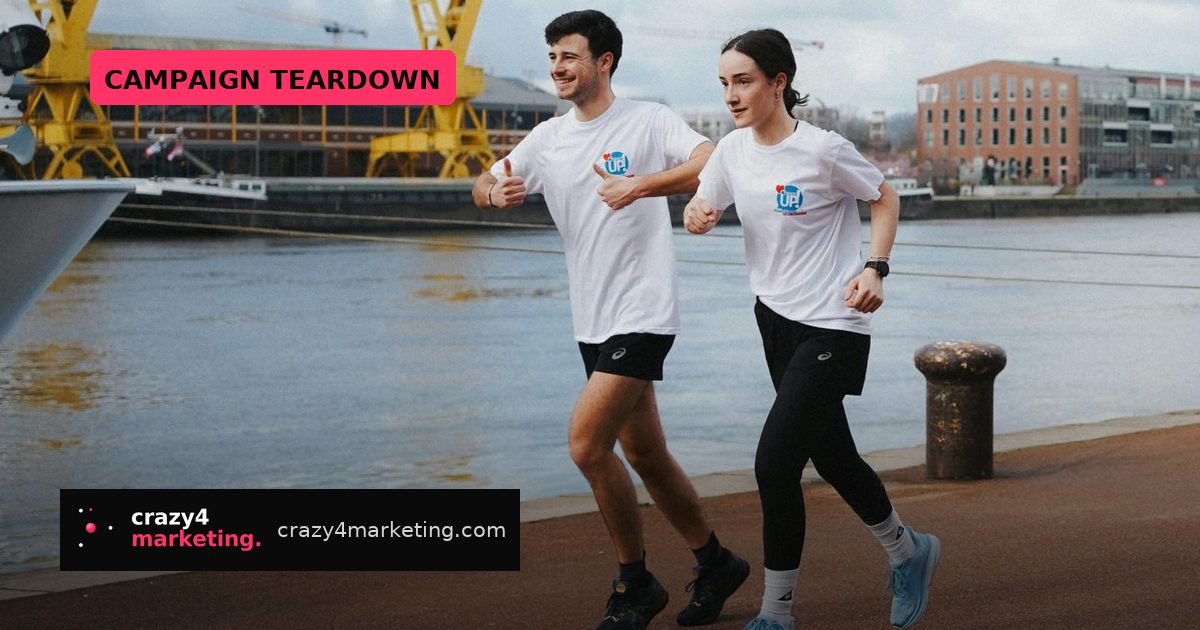
Hoka has found a smart way to make out-of-home advertising feel alive: let its customers write the creative with their legs.
The running brand has launched the Hoka Run Your City Challenge, a month-long New York campaign that turns Strava activity into digital out-of-home (DOOH) creative. Runners in all five boroughs log miles for their home turf through Strava, and Manhattan, Brooklyn, Queens, the Bronx and Staten Island compete on total mileage across September.
How the campaign works
Challenge data feeds ticker-style creative on digital screens in Times Square, Tribeca, SoHo and Williamsburg. The screens carry weekly updates covering miles logged, running pace and other stats generated by participants.
Worth noting for anyone planning something similar: the announcement does not spell out the technical pipeline moving Strava results into the outdoor creative, and it does not say the updates are real time. Weekly refreshes are what has been described. The Interactive Advertising Bureau counts dynamic content and data integration among DOOH’s core capabilities, so the plumbing is well-trodden even if Hoka isn’t showing it.
One more nuance: the activity data lives with Strava, which hosts the challenge and records the runs. The campaign materials do not frame it as Hoka first-party data.
Why Strava is the right partner here
This isn’t a cold start. Hoka and Strava already have a global partnership, and Hoka’s official Strava club counts more than 247,000 members. The brand has run challenges there before, including a Speedgoat 7 challenge built around 7,000 feet of elevation gain in 30 days and a Mach 7 challenge based on covering 26.2 miles.
Hoka has also wired Strava into its loyalty motion. A 2026 Hoka Membership challenge asks members to connect their Strava and Hoka accounts before tracking eligible activities toward apparel discounts. Run Your City, however, doesn’t include an equivalent membership integration.
Scale-wise, Strava said in July that it had passed 200 million users across more than 185 countries. Its sponsored challenge tools let brands build activity around distance, duration, elevation or collective participation, with placements in user feeds, the challenge gallery, email and elsewhere.
The full-funnel wrap-around
The billboards are the hook, but the campaign is built as a system. Jellyfish, part of The Brandtech Group, handled the concept plus creative and media planning. The rest of the mix:
- Paid social on TikTok and Meta throughout September, targeting running and fitness audiences in New York.
- Creators: six creators, one per borough, managed by Collectively (also Brandtech Group), documenting their runs and recruiting others. Their content gets reused in paid social.
- Live event: a closing event at McCarren Parkhouse in Brooklyn on October 3.
- October follow-through: event content powers a separate social campaign aimed at running audiences beyond New York, plus a recap with publisher Highsnobiety.
The commercial logic
Parent company Deckers Brands said in its fiscal 2026 annual report that Hoka’s marketing priorities include building a connected consumer ecosystem across social, e-commerce and retail. Deckers launched a US Hoka loyalty programme during fiscal 2026 and expects to keep investing in loyalty for Hoka and UGG.
On a January earnings call, Deckers said Hoka members delivered higher revenue per consumer, bought more units per transaction and made more multi-category purchases than the average consumer. No figures were given for those gaps, but the direction of travel explains why a community challenge sits at the centre of a brand campaign.
What growth teams should steal
The transferable idea is not “buy billboards.” It’s this: find a platform where your audience is already generating structured data, then give that data a stage.
Three questions to ask before you copy it:
1. Is there a native data source? Strava works because runners log runs anyway. Manufacturing participation is far harder than borrowing a habit.
2. Does the rivalry write itself? Borough-vs-borough is free creative fuel. Geography, teams, cities and stores all do this work for you.
3. Can you recycle the output? Hoka is running the same asset through DOOH, paid social, creator content, an event and a publisher recap. One mechanic, five channels.
The gap in the announcement is measurement. Hoka has not disclosed participation targets, impression or conversion targets, or how performance will be attributed across Strava, DOOH, social and creators. If you pitch a data-driven OOH stunt internally, define that before you buy the screens, not after.
Source: Marketing Tech News