
The next wave of digital marketing spend in India isn’t coming from metro D2C unicorns. It’s coming from the café down the road, the resort two hours out of the city, and the salon chain with three outlets.
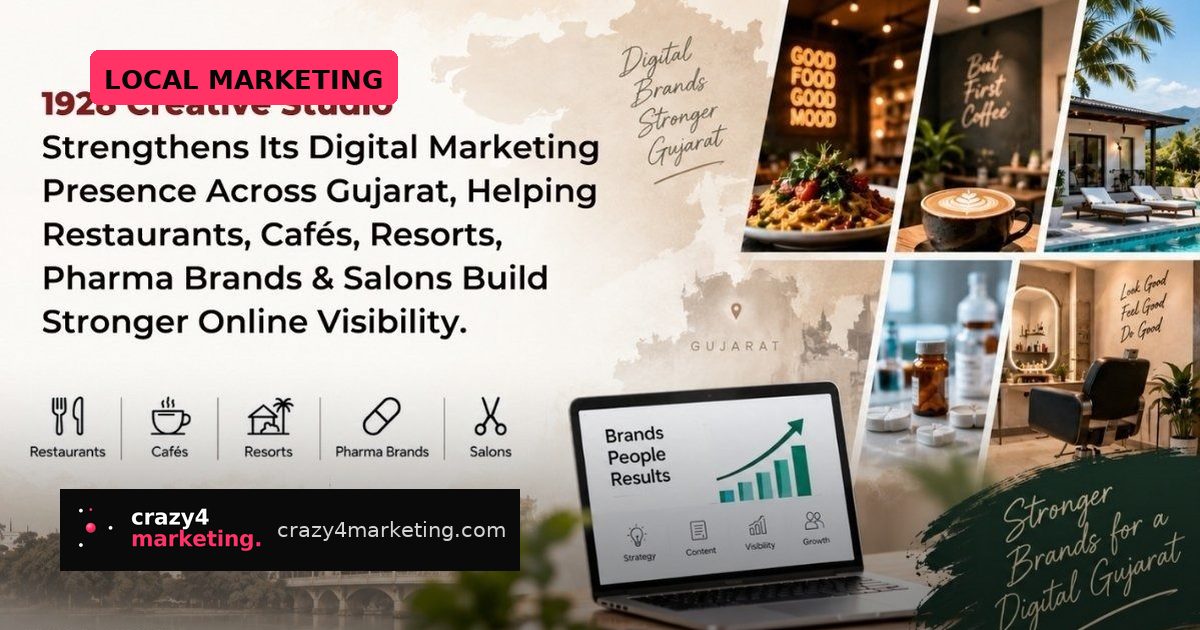
A fresh example: Ahmedabad-based 1928 Creative Studio is expanding its digital marketing and social media services for businesses across Gujarat, working with restaurants, cafés, resorts, pharmaceutical brands and salons that want a more consistent online presence, according to a report in Ahmedabad Mirror.
Why a regional agency story matters
Because it’s a signal. The agency’s pitch is built on a simple behavioural shift the source describes clearly: customers now discover brands through Instagram, Google, search engines, online reviews and digital content before they buy, book or visit.
That’s the whole game for a local business. The decision is made on a phone screen, often in under a minute, on the strength of photos, ratings and whether the brand looks alive. Traditional marketing doesn’t lose because it’s old — it loses because it isn’t present at that moment.
For agency folks, that means the growth market isn’t just “more ad budget from bigger clients”. It’s hundreds of category-specific local brands who need strategy, creative and search visibility bundled together.
The category-specific angle is the real lesson
What stands out in 1928 Creative Studio’s approach is that the content strategy changes by vertical rather than running one template across every client. Per the report, the studio maps content to the business, its audience and its growth goals — for example:
- Cafés and restaurants: food-first creative, promotional content, influencer collaborations and location-focused campaigns.
- Resorts: destination appeal, experiences, property highlights, seasonal offers and booking-oriented campaigns.
- Salons: services, transformations, customer experience, expertise and offers.
- Pharma and healthcare: educational and brand-building content that signals credibility while respecting industry communication norms.
That last one is worth pausing on. Healthcare and pharma marketing is where most generic social playbooks fall apart — compliance constraints kill the “just post reels” approach. Agencies that can operate inside those guardrails get pricing power.
Social plus search, not social versus search
The other useful framing from the story: social media drives engagement, but search visibility is where intent lives. The studio’s stated approach combines branding, social, SEO and paid advertising so channels feed each other rather than run in silos.
For local businesses, that ecosystem is fairly mechanical:
Discovery happens on Instagram and Reels. Validation happens on Google — the listing, the reviews, the photos, the website. Conversion happens through a call, a booking link, a WhatsApp message or a walk-in. Break any one link and the spend leaks.
What growth teams should take from this
If you run marketing for a multi-outlet or regional brand, treat this as a checklist:
Audit the validation layer first. Before increasing ad spend, fix the Google listing, category tags, photos and review velocity. Paid traffic into a weak profile is a donation.
Build creative by vertical, not by trend. A salon’s best-performing asset is a transformation. A resort’s is a room and a view. Don’t force one content format across categories.
Tie content to a countable outcome. Enquiries, bookings, visits, sales — as the source notes, an active account alone isn’t the goal.
Think local intent, not national reach. Location-led campaigns and “near me” search behaviour matter more than follower counts for these businesses.
The bigger opportunity
Gujarat’s business base spans established enterprises alongside newer hospitality, healthcare and lifestyle ventures — and 1928 Creative Studio says it is now looking beyond Ahmedabad to brands across the state.
The takeaway for the rest of us: regional India is where local search, creator collaborations and performance marketing are converging fastest. If your agency positioning is still metro-only, you’re competing in the crowded half of the market.
Source: Ahmedabad Mirror