Cancer Council Australia is betting that Australians don’t just want a sunscreen — they want to know what it stands for.
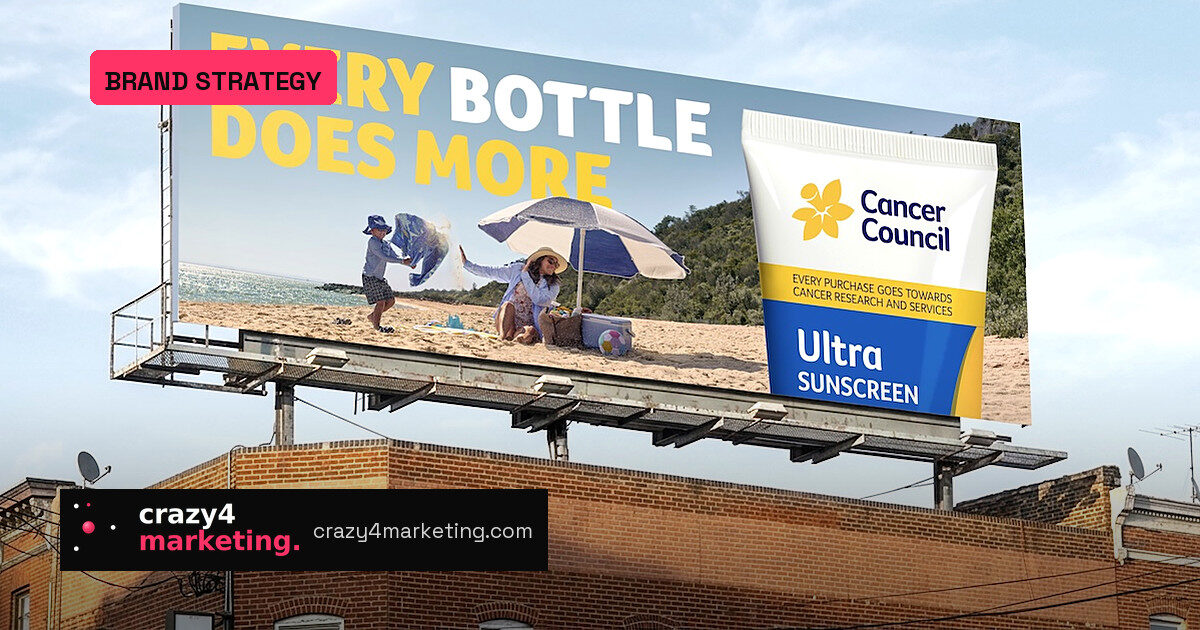
The summer campaign, “Every Bottle Does More,” created by TRP, turns the organisation’s licensed product range into one connected promise: every purchase supports cancer research, prevention, advocacy and support services.
The work features sunscreen alongside hats, sunglasses, swimwear, shade and tint products, and it launches across streaming TV, video platforms, social and out-of-home.
The insight behind the campaign
TRP’s strategy starts with a simple belief: what people know about an organisation’s expertise shapes how much they trust its products. Rather than trying to prove the sunscreen out-performs rivals, the campaign shows the decades of sun-safety work standing behind every bottle.
Kyle Ross, Head of Strategy at TRP, described the opportunity in one line: “People know Cancer Council sunscreen. The real opportunity was to reveal more of the organisation behind it.”
Why this matters for marketers
This is brand licensing and cause marketing working together. Cancer Council’s name already carries authority in cancer prevention; the campaign extends that trust across a wider portfolio without making each product explain itself from zero.
Arianne Reisner, Head of Brand Licensing and Corporate Partnerships at Cancer Council Australia, said the campaign brings the portfolio “together under a shared purpose, helping consumers better understand the connection between the products they purchase and Cancer Council’s wider mission.”
Lucinda Sabo, GM of Marketing and Digital at Vitality Brands Worldwide, added that buyers already place confidence in the name when choosing sun protection. The job is to reinforce that trust and show where the purchase goes.
For D2C and retail brands, this is a reminder that “what you are known for” is a conversion asset. When a snap judgment includes a well-known mission, the product doesn’t have to fight only on price.
At a practical level, the campaign also gives the licensed range a coherent role: each item becomes another way to participate in the mission, rather than a piece of merch with a logo.
What marketers can steal
- Lead with expertise, not just ingredients. If your brand has decades of specialist work, make that visible at the moment of choice.
- Connect purchase to purpose immediately. Don’t bury the mission on an “about us” page — place it beside the product.
- Unite a product range under one idea. Hats, sunglasses and sunscreen feel like one system when they share the same promise.
A simple framework
Think of it as: expertise → trust → higher willingness to choose. Cancer Council is not asking buyers to donate; it is showing that buying is already a contribution. That reframe lowers the barrier to purchase while giving people an emotional reason to switch.
One caveat: purpose only works when the product keeps its functional promise. A sunscreen still needs to protect skin; the mission is the reason to choose it, not a substitute for efficacy.
The next test for performance marketers is whether this purpose-led message lifts conversion or simply builds brand warmth. It is built for reach and recall first, with digital channels ready to follow up.
The lesson is sharp: if there is a bigger mission behind your product, make it impossible to miss at the shelf — and on the screen.