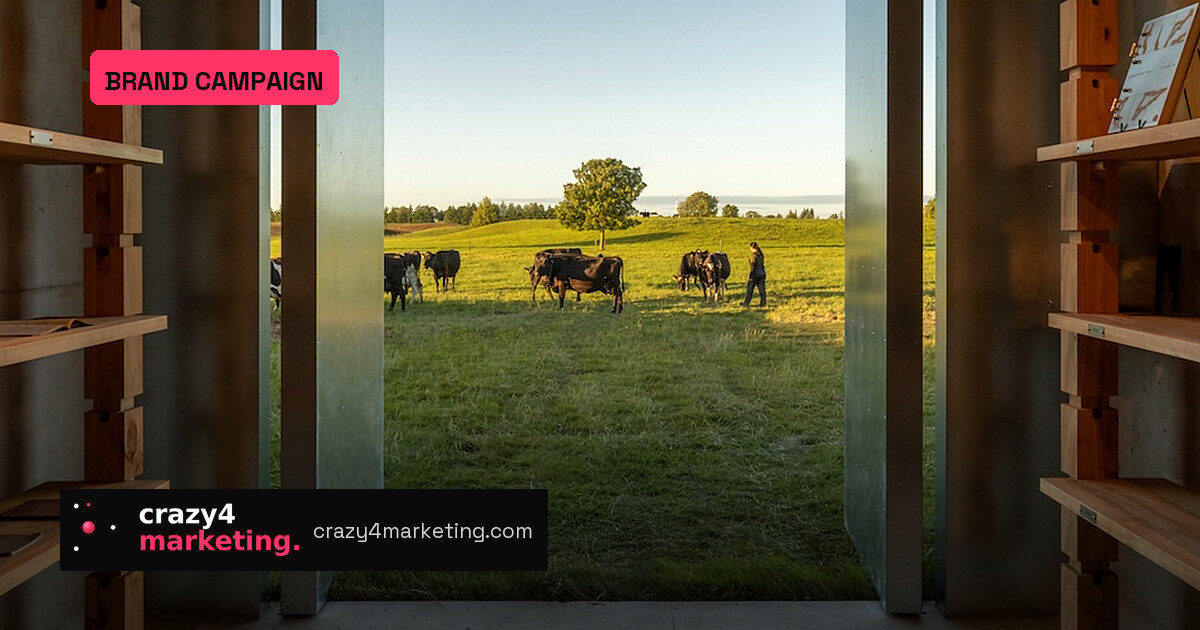
New Zealand agritech company Halter has launched Mav, an AI farming assistant designed to help farmers make better decisions. But the launch doesn’t look like a typical software drop. At its research and development farm in Morrinsville, Waikato, Halter has built a permanent Agricultural Intelligence Archive into a grassy hillside.
From 2 million collars to a physical archive
Halter is known for solar-powered smart collars that let farmers virtually fence, move and monitor herds. The company now has more than two million collars across 4,000 farms globally, giving it one of the world’s largest combined pasture and cattle datasets. Mav turns that data into an assistant farmers can act on.
Instead of putting all that intelligence in the cloud, Halter worked with creative agency Motion Sickness to put it back in the ground. The archive is inspired by seed banks that preserve resources for future generations. It will hold verified agricultural insights from real farms, animals and seasons, and it is open to farmers. Designed and constructed with Wonder Group in just three weeks, the structure turns a data product into a visitable place.
A 500-page record of a season
At the centre of the archive is Agricultural Intelligence Volume 1, a 500-page book developed by Motion Sickness and Halter. The edition documents New Zealand’s 2026 pre-mating period, combining insights, trends, farmer stories, photography and data. Future learnings from Mav will be verified and continually committed to the archive in physical form.
Craig Piggott, Founder and CEO of Halter, says: “Farming knowledge has always been built season by season and passed from one generation to the next. We’re now able to learn from farms at an incredible scale, and we think there’s value in preserving some of that.”
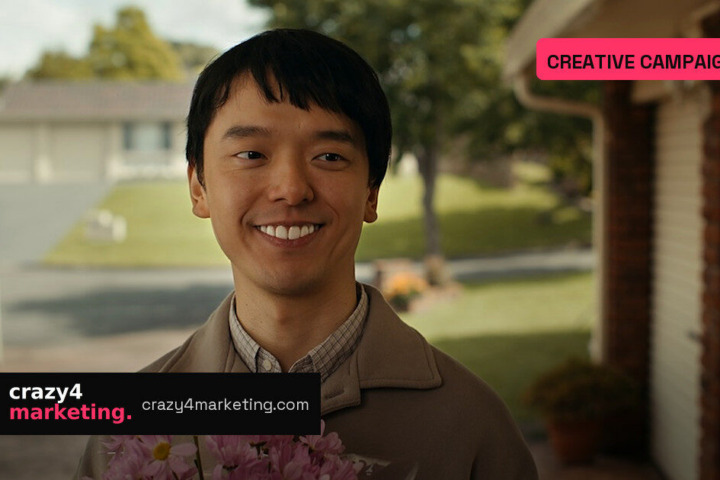
Motion Sickness also named Mav. Short for Maverick, the name comes from cattle that broke away from the herd. The agency developed the full brand identity and created a hero campaign film with director David Robinson-Smith of Goodoil.
Why the launch works
For marketers, this is a useful case study in making intangible tech feel tangible. Here’s what to borrow:
- Give data a place: a physical archive makes an AI product something farmers can visit, not just log into.
- Name the product with a story: Mav connects to cattle behaviour and independence, not another suffix like -GPT.
- Publish your insights: a 500-page book turns a season’s data into a brand asset with long-term value.
- Build for the future: the archive grows as Mav learns, turning a campaign into an ongoing record.
What comes next
The archive is open for designated public visits, and Volume 1 is available online. The campaign brings together naming, identity, film, publishing and a large-scale installation to launch Halter’s next chapter. For D2C founders and growth teams, the lesson is simple: your product’s data can be a brand world, not just a dashboard.