The puzzle behind the puzzle
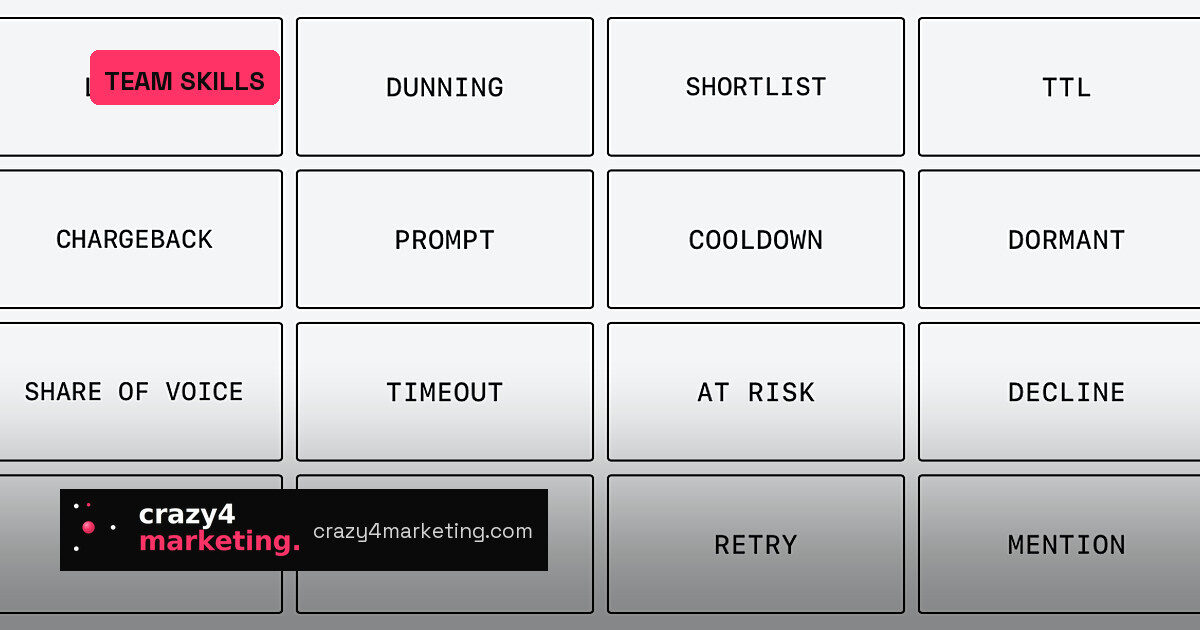
PPC Land, the daily performance-marketing read, put a deceptively simple challenge in front of its audience: take sixteen marketing terms and sort them into four groups. Three of those groups map cleanly to one discipline each. The fourth is where people stall — and not because the words are obscure.
That fourth group is the story. It is proof that professionals can live in the same dashboard ecosystem and still not share a working vocabulary across paid search, SEO, social, analytics and e-commerce.
Fluency is assumed, rarely taught
The diagnosis behind the exercise is blunt: teams assume fluency in the full stack, but training almost never covers it. Hiring managers look for deep channel expertise. Onboarding teaches tool settings. Almost nobody sits a team down to align on what a conversion, an impression or ROAS means when the data moves from one platform to another.
That assumption creates a silent two-speed team. People who already speak the language appear fast. People who don’t are left to absorb definitions by osmosis, often wrongly.
Why the fourth group is hard
The hard category in a sorting test is rarely the rarest term. It is the term that shifts meaning across contexts:
- A click in paid search is not the same signal as a click in an email report.
- Attribution can mean last-click, data-driven or multi-touch depending on who is asking.
- Audience means something different in Google Ads, Meta and a CDP.
When those definitions stay implicit, reports get misread, budgets get argued over, and experiments get killed for the wrong reason. For D2C founders and lean growth teams, the risk is even sharper: a small team with one person on paid social, another on SEO and another on CRM can spend every weekly review negotiating data instead of making growth decisions.
Turn fluency into a system
You don’t need another jargon deck. Run your own version of the sorting exercise with the terms your team actually uses in dashboards, briefs and QBRs. The contested pile is your curriculum.
Then treat shared language as a growth function. Pair specialists to teach each other their metrics, keep a living glossary with real campaign examples, and add a vocabulary check to onboarding and promotion reviews. Fluency grows when it is designed, not assumed.
The teams that sort the stack together are the teams that scale it together.
Source: PPC Land