
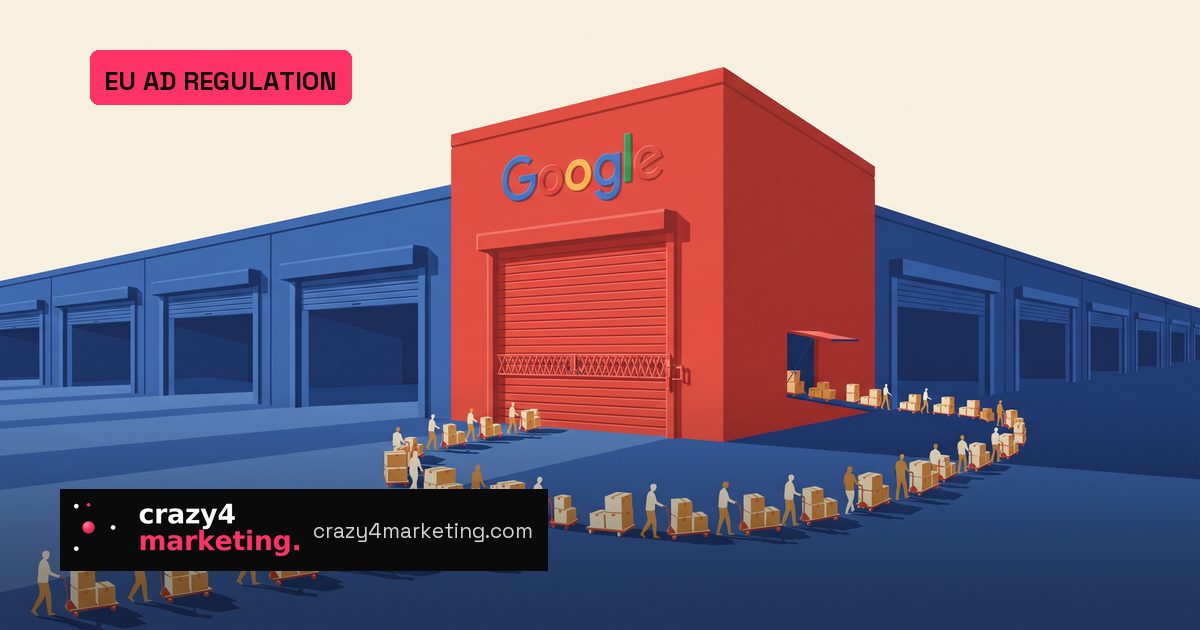
Twelve European comparison shopping companies told the European Commission on 8 September 2026 that the emerging Google Shopping remedy could make the original problem worse. Their warning: if Google operates a closed shopping box that excludes merchant inventory submitted through rivals, retailers will feel they have no choice but to return to Google’s own comparison service to stay visible.
The box-to-box red line
The coalition, signing as the CSS Group, points to a “box-to-box” model under discussion in which competing comparison services each display their own ad unit inside Google Search. The group says it does not endorse that architecture, but it set one condition it calls absolute.
Google must not get a closed unit. The letter asks Brussels to require Google Shopping to bid inside every rival box as what it describes as a live-market safeguard against “kingmaking.” Without that, the signatories argue, the remedy would become a stronger version of the self-preferencing Article 6(5) of the Digital Markets Act is meant to stop.
Why 93,000 merchants are watching
The group claims member companies generate over €340 million in combined annual turnover, employ more than 1,000 specialists and support more than 93,000 active European merchants. It also estimates it accounts for 74% of third-party comparison shopping clicks across the EEA and UK, though that figure is the coalition’s own estimate.
For performance teams, the math is simple. Current auction mechanics allow only comparison shopping services to bid; merchants pay the service of their choice, and Google Shopping competes in the same auctions. A closed Google box would break that shared auction and consolidate feed strategy around a single intermediary. Channable data cited by PPC Land shows European e-commerce advertisers already lost 46% return on ad spend over 12 months as clicks became more expensive. The wrong layout could tighten that squeeze.
What to do now
Teams running European product feeds should treat this as a distribution risk rather than a distant policy story:
- Map your intermediaries: know which comparison services currently bid on your product inventory and where visibility sits.
- Model both scenarios: a closed Google box concentrates spend; an open auction keeps negotiation leverage.
- Track AI surfaces separately: Productrise found identical products in AI Mode averaged 21.6% higher prices, and only 1.28% of traditional search products appeared in AI Mode at all.
- Watch the deadline: the 60-day compliance window closes 21 or 25 September 2026 depending on notification, with potential periodic penalties up to 5% of daily worldwide turnover after that.
The bigger picture
Google was fined a combined €890 million on 23 July 2026: €460 million for search self-preferencing and €430 million for Google Play steering. The July decision named nine Alphabet services ranked more favourably than rivals. Google rejected the finding and said it was evaluating an appeal.
The Commission has not published the layout under discussion, and the coalition’s account of the direction of travel is not verified from Brussels. What the letter does establish is that the group claiming the largest share of third-party comparison clicks believes the wrong design could make its own position worse.
The CSS Group’s central demand is participation, not separation. Whether the Commission agrees will shape how much leverage comparison services have, which intermediaries merchants can use, and whether feed diversification remains a realistic performance strategy in Europe.
Source: PPC Land