
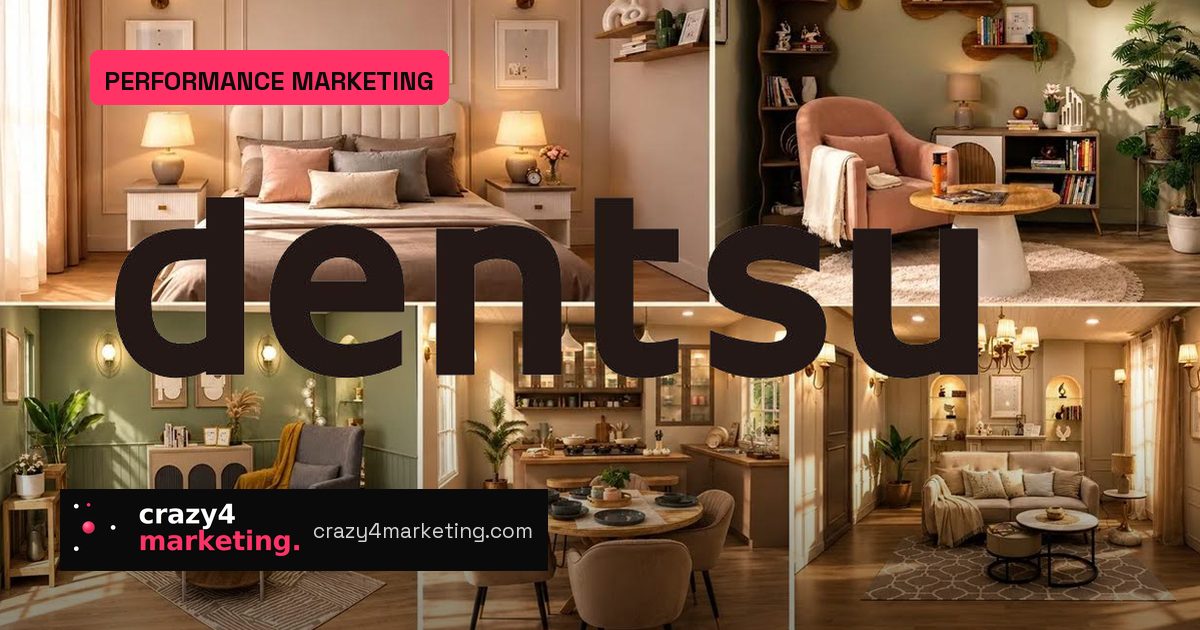
Dentsu India has opened a new performance marketing unit in Bengaluru, with a clear bet that creative, media and measurement should no longer sit in separate silos. The new Dentsu Performance Studio is built around what the agency calls Performance Marketing 3.0.
The facility spans 3,000 square feet and is designed to connect creative strategy, AI production and media expertise. Under its “Results in a Box” framework, the studio says it can deliver more than 1,000 assets each month.
Creative moves into the performance engine
The most interesting part of the announcement is the order of priorities. Abhirup Datta, chief executive officer of Performance Practice Media Solutions, Dentsu India, and chief executive officer of Sokrati India, said: “Performance marketing is entering a new chapter.” He added that the winning model will bring creative, media and measurement together to deliver outcomes at scale.
That is a shift from the usual performance playbook, where media buying and measurement dominate and creative is often treated as an upstream input. Dentsu is positioning creative as part of the live performance loop, constantly refreshed and tested.
Vidhu Ravinath and Archisman Sarangi have been appointed vice-presidents and business heads to lead the unit. They described the aim as an “always-on engine where every creative decision is informed by performance” on one connected data system.
Why this matters for performance teams
The 1,000-plus asset monthly target is a strong signal. Performance creative decays quickly, and high-spending accounts need a steady pipeline of new angles, formats and hooks to keep learning.
The studio model matters for three reasons:
- Creative velocity: dedicated production capacity changes how many tests a team can run.
- Connected data: creative, media and measurement share one system, reducing handoffs.
- Clear ownership: two business heads and a senior performance leader are accountable from day one.
The AI production angle is also relevant. Scaling from a few dozen assets to more than 1,000 a month is hard to sustain with traditional production alone. AI-assisted workflows can speed up variations, but the benefit only shows when approvals, data and media decisions are connected. That is precisely what the studio is trying to package.
From a client perspective, the promise is simpler than the machinery behind it. You get creative, media and measurement delivered as one connected service, with the output scaled to support constant testing.
What to do next
Teams can borrow the “Results in a Box” thinking without needing a Bengaluru facility. Build a feedback loop where every creative decision is tied to a performance signal, and treat creative output as a number worth measuring alongside cost per acquisition.
Start by auditing how many creative variants you actually ship per month per channel, then set a volume target that matches your testing needs. If your media buying is strong but your creative pipeline is slow, you are likely leaving scale on the table.
Source: Indian Television Dot Com