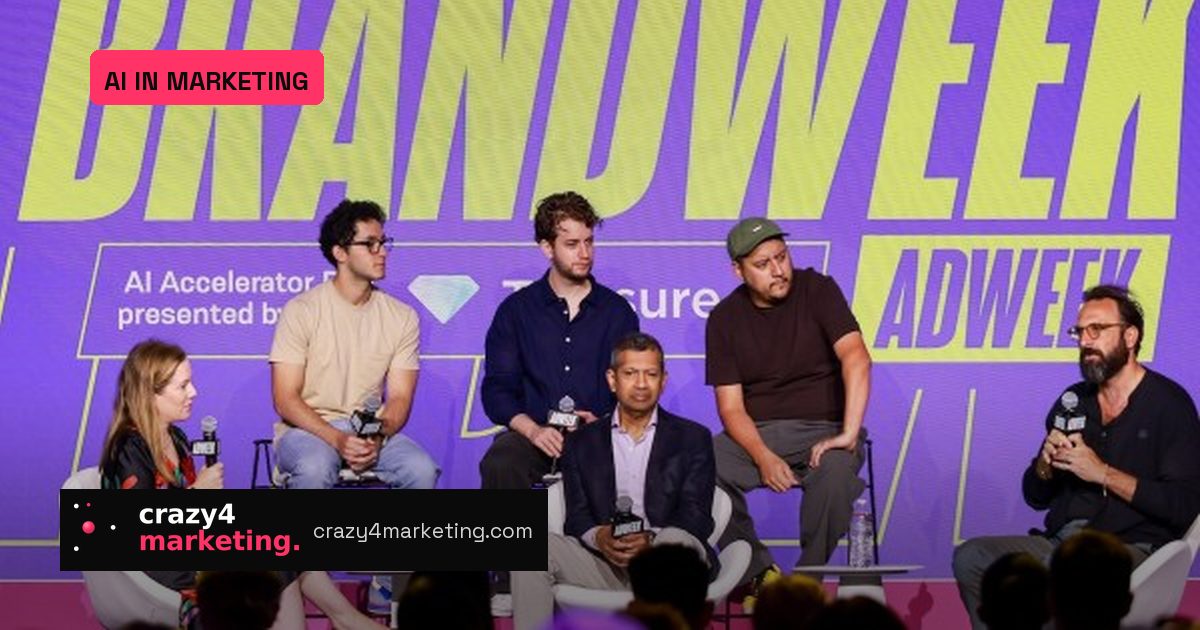
AI-generated ads have moved from experiment to production. At Brandweek 2026, Higgsfield AI and ADWEEK put that shift to the test with a four-week competition called the Adathon—and the winning entry made the case that AI can carry a campaign, but only when a human story leads.
From toy to creative language
Higgsfield launched roughly 17 months ago, at a time when many marketers dismissed AI creative tools as a novelty. Mahi de Silva, co-founder and chief strategy officer of Higgsfield, said that view changed as teams actually used the platform. Marketers now run ideation and production tasks through the tool, producing work at what de Silva called “a fraction of the budget, but also a fraction of the time.”
De Silva framed AI as “a new language for creators”—a way to realize an idea without being limited by cameras, lighting, location or budget. He compared the skepticism to the old Photoshop debates. Thirty years ago, digital tools faced the same pushback, and now they are simply part of the workflow.
The Adathon winner
The contest gave agencies and brand creatives four weeks to create an ad using AI tools. The winning team came from AI-R Studio, the AI arm of PicoLove, a Mexico City-based creative tech agency.
Their ad centered on a commercial director who is told to replace his AI cast with “something more human.” It closed with the tagline: “Don’t kill the AI stars. They’re just trying to improve your video.” The self-aware joke worked because viewers were in on the idea, not asked to ignore the technology.
What judges looked for
Michael Ventura, author of Applied Empathy and one of the judges, said he started by looking at how entrants used the tool. Then he moved to harder questions: Was there a creative idea? Could he see a good choice being made? Was there a story?
As Ventura put it, “The submissions that rose to the top weren’t just flexing with tech, but were telling a story with the tools available.”
Why this matters for marketers
The result gives performance and brand teams a practical filter:
- Speed and cost are real advantages, but not the main criteria.
- AI should compress production, not replace the creative direction.
- Strong entries still need discernment, voice and a clear narrative choice.
For D2C teams and agencies, this is a signal that AI-native workflows can scale content without defaulting to generic output. The winning ad didn’t hide the AI; it made the tension between AI and human craft the story.
What to do next
Evaluate AI-generated work the way Ventura judged the Adathon: first check the creative idea, then the execution. If a concept only works because of the tool, it probably isn’t strong enough. Use AI to move faster and test more variations, but keep a human making the final storytelling calls.
De Silva closed with a boundary worth remembering: there is no replacement for human storytelling—the imagery, voice and choices behind it. AI is a booster seat, not the driver.
Source: Adweek