
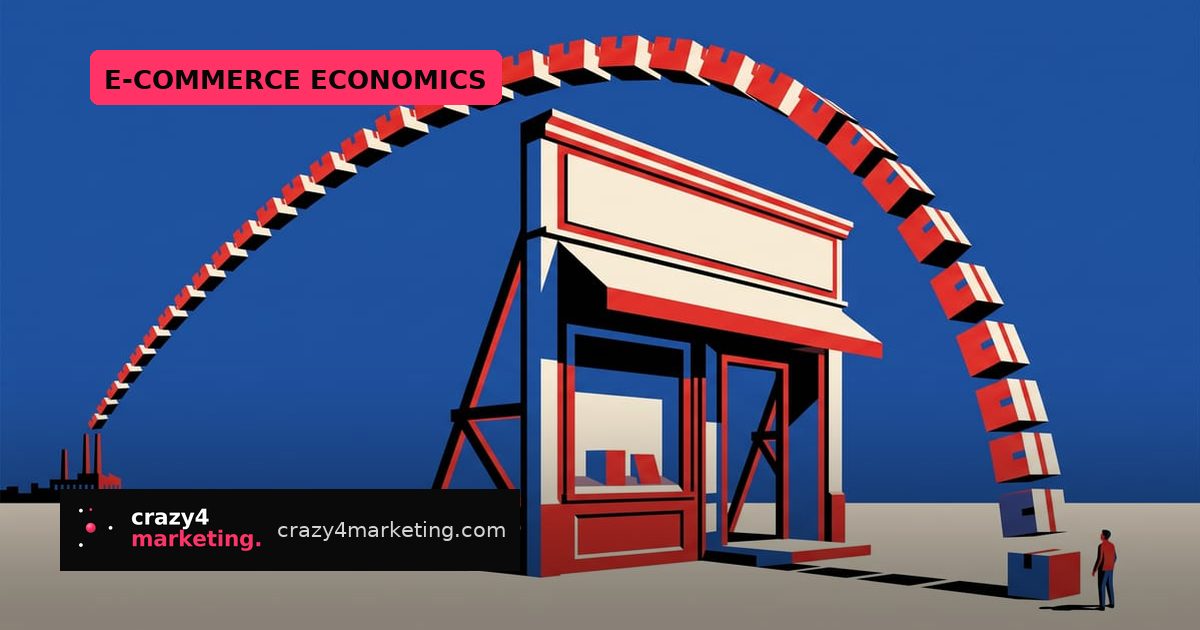
Dropshipping was built on one promise: sell retail without buying inventory. A merchant lists products, a customer pays, an app forwards the order to a supplier, and the supplier ships straight to the buyer. Capital risk approaches zero.
A new explainer from PPC Land lays out why that premise is now under pressure from three directions at once: customs reform, platform rules and advertising enforcement. For anyone buying media for a D2C store, it is essential reading.
The liability nobody outsources
PPC Land makes the sharpest point early: fulfilment is outsourced, but liability is not. The merchant remains the seller of record, on the hook for consumer law, tax and refunds, while having the least control over delivery, accuracy and returns.
US law has been explicit about this since 1975, when the FTC issued its Mail or Telephone Order Merchandise Rule (16 CFR Part 435). Ship within the advertised window, or within 30 days if none is stated, or get consent for a delay or refund. The Commission amended the rule on 17 September 2014 to explicitly cover internet orders, effective 8 December 2014.
Paid media is the entire demand engine
Here is why this is a marketing story, not a logistics one. A new dropshipping store launches with no organic traffic, no brand recall and no repeat base. Paid social and paid search are not one channel among many; they are the whole business.
That forces the familiar playbook: short-form video, aggressive price framing, fast product rotation. It also makes the store hostage to auction costs. When cost per order exceeds gross margin, the store simply stops, because there is no inventory position worth defending.
Temu is the case study at scale. It reportedly spent around $2 billion on Meta in 2023, the platform’s largest client that year. Then on 9 April 2025 it halted US Google Shopping advertising, and its App Store rank fell from a steady top-five spot to 58th within three days. That is what a business with zero owned demand looks like when it turns off the tap.
The rules tightened everywhere
Per PPC Land, the operating room has narrowed fast:
- Amazon allows dropshipping only if the merchant is seller of record and the sole name on invoices and packaging. Buying from another retailer for direct shipment is banned outright.
- eBay permits wholesale-supplier fulfilment but bars sourcing from other retailers or marketplaces.
- Google required resellers to use manufacturer brand names in product titles from 3 October 2025, killing generic rebranding, and consolidated Shopping ads and free listings policies in September 2026.
- TikTok Shop ended independent Seller Shipping for US sellers on 25 February 2026, forcing platform logistics or approved providers, plus a 24-hour evidence deadline on delivery disputes.
- EU customs replaced the 150 euro duty exemption with a flat 3 euro per-item charge on 1 July 2026. Within weeks, auction data across roughly 500 European advertisers showed Temu’s Google Shopping presence halving and Shein close to full exit.
Add the AliExpress fine of 550 million euros on 20 July 2026 under the Digital Services Act, and EU packaging rules from 12 August 2026 requiring authorised representatives per member state, and the entry cost of a supposedly zero-cost model climbs sharply.
Why it pollutes your auctions too
Even if you never dropship, the category shapes your CPMs. New small advertisers pile into the same auctions as established retailers. And enforcement is brutal: Google suspended 39.2 million advertiser accounts in 2024, up 208 percent, and reported 8.3 billion ads blocked or removed with 24.9 million suspensions in 2025. VAB analysis citing New York Times reporting found 70 percent of newly active Meta advertisers were promoting scams, poor-quality products or illicit goods.
The takeaway for growth teams
Treat inventory-free selling as a testing method, not a business model. Validate demand with a small catalogue, then move winners to held stock or domestic suppliers before customs and delivery windows eat the margin.
And be honest about sizing claims. Grand View Research put the 2025 global market at $464.4 billion; Global Market Insights said $290.7 billion for the same year. The often-quoted 80 to 90 percent store failure rate traces to blogs, not audited data. Build your model on your own contribution margin, not someone else’s infographic.
Source: PPC Land