
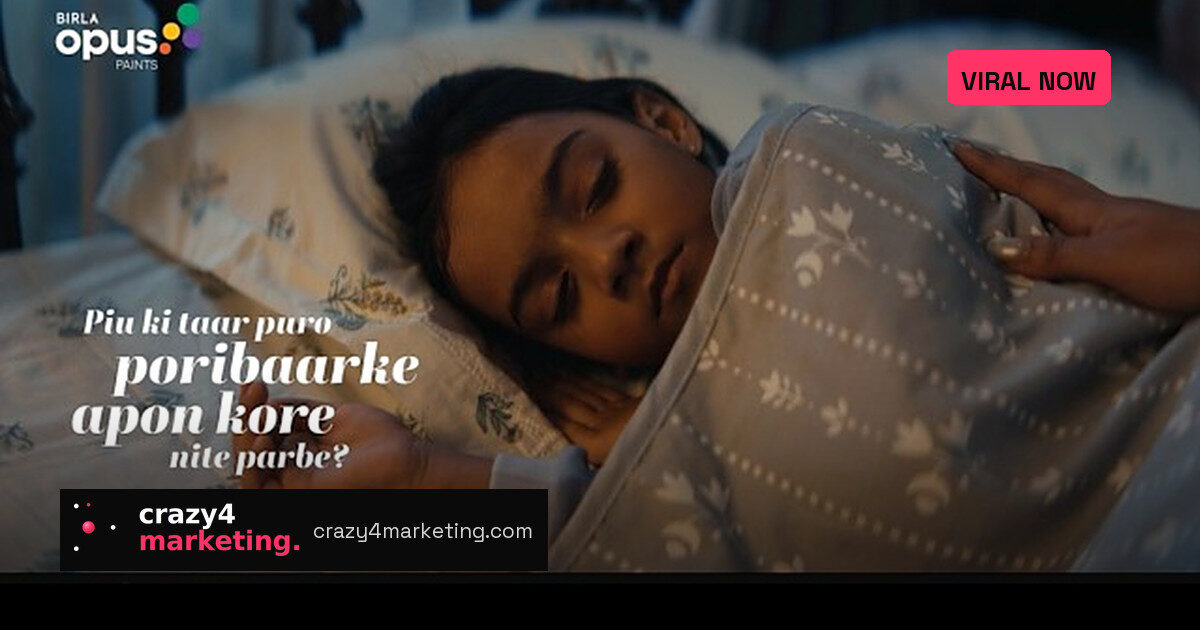
Birla Opus Paints is not interrupting Durga Pujo with a paint demo. Instead, the Aditya Birla Group paint brand and Leo India bet that the most shareable festive message is a return to something harder to capture than a colour match: belonging.
The hook
The film opens on a young woman coming home to India after time away. The tension is not dramatic, but it is instant: she is present physically and holding back emotionally from the family’s Pujo preparations. That gap between arrival and participation does the work of the first three seconds, because it frames the rest of the film as a question — will she let the celebration pull her in?
The structure of the film
The story moves through small, specific preparation rituals rather than a montage of spectacle. Her family pulls her into drawing alpona, she tastes homemade nadu and she spends time with cousins. These details build a quiet arc: reluctance gives way to familiarity, and the unfamiliar celebration becomes a way to create new memories. The film is less about Durga Pujo as an event and more about what shared rituals do to a person who has been away.
Birla Opus Paints frames the paint itself lightly. This is a brand film about homes, memory and the relationships that give a house its emotional colour.
Why it spread
The share trigger is recognition. Durga Pujo nostalgia is deeply felt, and the film invites viewers to see their own families in the alpona, the food, the cousins and the slight awkwardness of returning after a long time. It is built for digital and social platforms, where viewers can tag a sibling or relative or share the film as a small statement of roots. That is a stronger sharing mechanism than a product claim.
The brand quote from Inderpreet Singh, head of marketing at Birla Opus Paints, points to the strategy: the campaign wants to capture how celebrations create belonging across generations. He said the film is a reminder that homes evolve, but “the memories, traditions, and relationships that colour them remain timeless.”
The numbers
The source does not disclose views, reach, media spend or conversion figures. What it confirms is distribution across digital and social media platforms, which matches the campaign’s share-first approach. The proof of spread will show up in tags, forwards and comments rather than a publicly reported view count.
Steal this
Smaller brands can use the same emotional structure without a big production budget. Three moves stand out:
- Sell the ritual, not the product. Show the specific, repeated actions people already do around a festival; the product can simply be part of the setting.
- Open with the outsider. A reluctant participant gives the audience an entry point and gives the story a natural arc from distance to belonging.
- Make it taggable, not just watchable. Build in family references people want to send to a cousin, sibling or parent; the share is the campaign.
Watch the original: Birla Opus Paints on YouTube
Source: ETBrandEquity.com