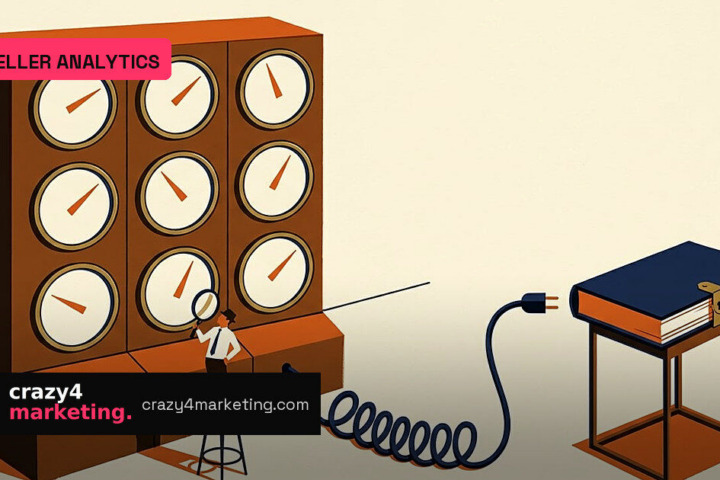
Before the cloud, the kirana’s CRM was a lined notebook and a pencil. The khata book held credit, loyalty, family history and the shop’s entire risk model. It worked because the owner remembered. But memory has limits: it doesn’t reorder inventory, flag a slow week or remind a regular customer who hasn’t visited in a while.
The connectivity reset of 2016 changed the backdrop. Jio launched with the Welcome Offer: unlimited 4G data, voice, video and apps (Reliance Industries). Jio reached 100 million subscribers within 170 days of launch (company-reported; Reliance Industries Integrated Annual Report 2016-17). Slowly, the question India asked moved from "How much does data cost?" to "What can we do with data?"
For small shops, that question landed at the counter.
The khata gets a second memory
Jio’s stated priorities today include digitising businesses, bringing digital services home and "AI Everywhere for Everyone" (Reliance Industries 48th AGM, August 2025). Inside a kirana, though, the shift looks less like a keynote and more like three small changes.
- The owner checks a regular’s balance on the phone while the customer waits, rather than flipping through last month’s pages.
- A shelf that looks thin triggers a reorder from a screen, not a mental note.
- A payment link settles a due amount without ending the informal trust the shop runs on.
That is the core of the cloud ledger: it doesn’t replace the shopkeeper’s judgment. It gives the judgment a longer memory.
What changes for the shop
The paper khata records who owes what. The cloud version can also show what sold recently, which packs are moving slowly, and which regular hasn’t come by in a while. That turns the shop from a place that remembers after the fact to one that can act before the shelf empties.
The owner’s day changes, but not in the way a tech demo would suggest. Less time tallying. Less time guessing. More time at the counter, with the customer.
What changes for the customer
The first change is invisible. The shop still smells the same. The credit window still exists. The owner still knows the family order. But the shop starts to remember better: a festival rush gets planned earlier, a preference gets noted without being asked twice, and a "pay later" keeps its warmth while the record becomes cleaner.
Customers are not walking into a software upgrade. They’re walking into the same relationship, with slightly sharper service.
The neighbourhood services point
For D2C brands and growth teams, the digitised kirana is more than a distribution channel. It is a local trust layer. The shopkeeper already has the relationship; cloud, commerce and payments tools give that relationship more reach and recall. Jio’s ecosystem today spans connectivity, entertainment, commerce, payments, devices, cloud and AI (Reliance Industries 48th AGM, August 2025), which matters when it shows up as a faster recharge, a smoother payment or a smarter reorder at the shop.
With Jio serving 524 million+ customers (Reliance Jio Infocomm, March 2026; company-reported), the kirana’s digital shift sits inside a larger connected habit. But the story at the lane is simpler: the shop that used to say "likh lo" now says "ho gaya." The cloud just holds the memory.
The practical lesson for marketers is to digitise the habit, not the process. Start from the khata ritual the shop already trusts, then layer payments, inventory and service modules. Small business adoption doesn’t begin with a dashboard; it begins at the counter.