
AI agents are now touching live PPC accounts where real budget moves every hour. After a season of agents behaving unexpectedly in production, the right question is not whether you trust AI. It’s how you build controls so AI can be trusted.
Evaluate AI like you would an agency
No one hires a new PPC agency and simply says “I trust them.” You ask what the team can see, what it is allowed to change without approval, and who reviews the work. A recent Search Engine Land piece sponsored by Optmyzr applies the same three questions to agentic PPC.
- What can it see? A thin data layer produces confident but incomplete answers.
- What is it allowed to do? Structural limits matter more than instructions in a prompt.
- Who signs off? Someone needs to approve changes before they reach the account.
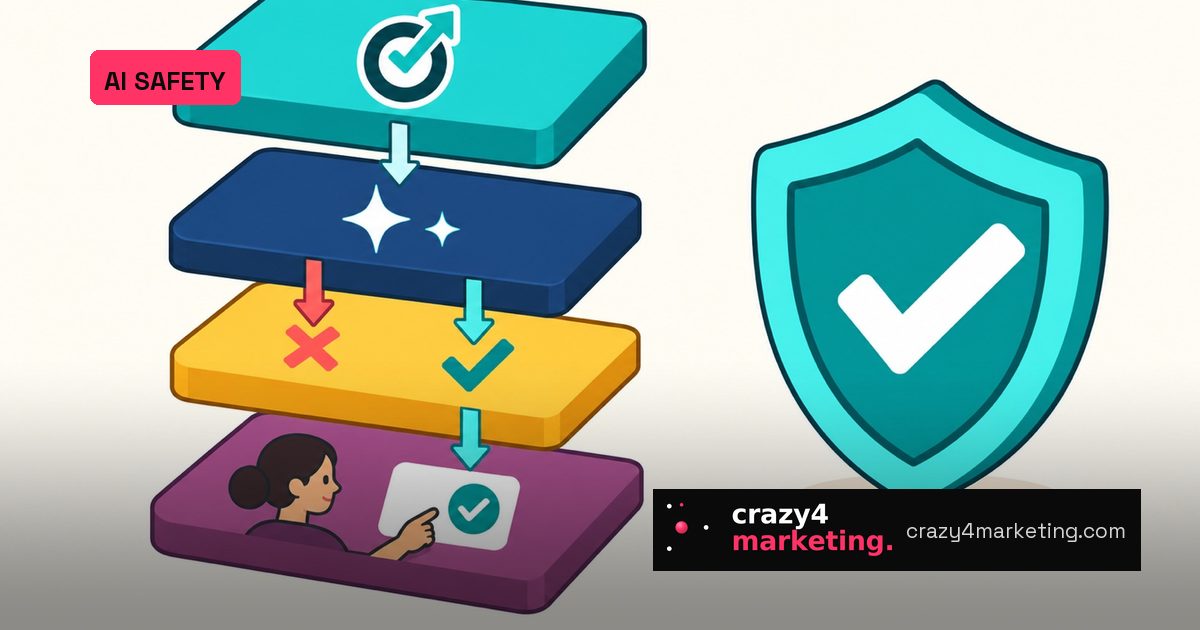
Layer 1: Give the agent full context
Grounding is a safety feature, not a convenience feature. Every gap in what an agent can see is a place it will fill with fluent guesswork. For PPC, that means the agent needs the full Google Ads query layer, GA4 data alongside ad performance, complete change history, consolidated negative keywords, auction insights, vertical benchmarks, cross-platform budget data, and a stored account profile.
Starting from zero? Grounding gives the fastest payoff because it immediately cuts confidently wrong recommendations.
Layer 2: Set policies that live on the account
The next layer blocks bad changes before they happen. The key structural detail: rules should sit on the ad account, not in the AI prompt. That way a 20% bid increase, a hallucination, an injected instruction, or a junior with a misplaced decimal all get blocked identically. Overrides should be deliberate and on record.
This is automation layering: one system proposes, another validates whether it makes business sense.
Layer 3: Keep a real human in the loop
Many teams claim they review changes, but after-the-fact change history is not a loop. The safer pattern borrows from engineering code review: nothing reaches production without a change request another person sees. For ad accounts, every bid, budget change, pause, or negative keyword becomes a draft request. Policies evaluate it, a human reviews the exact preview, and only then does anything go live.
The side benefit is an audit trail. When a client asks why target CPA moved in March, you have proposal, rationale, policy verdicts, approver, and date—not a chat transcript.
What marketers should do this week
You don’t need all three at once. Pick the layer that closes your biggest current risk. If agents aren’t making changes yet, start with grounding. If they are, add hard account policies this week. If both exist, build the review queue so the team actually uses it.
The goal is a setup you can predict: you know what the agent can see, what it cannot do, and that nothing reaches the account without you.
Source: Search Engine Land