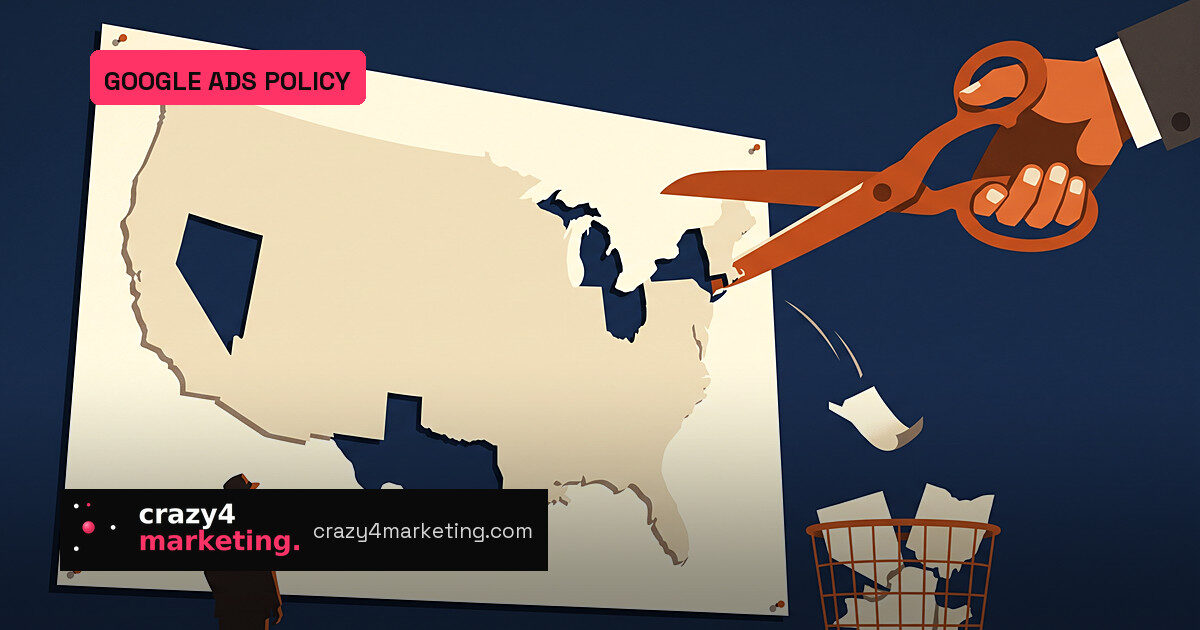
Google just redrew the map for prediction market advertisers. On October 7, 2026, the company updated its Prediction Markets advertising policy to ban ads for prediction market contracts and related products in Connecticut. The operational catch: the ban took effect the moment it was posted, with no transition window.
Connecticut becomes the fifth state carved out of Google’s prediction market program. Nevada was excluded from the start in January 2026, followed by Ohio in June and Michigan and New York in July.
A state regulator moves first
On September 10, Connecticut’s Department of Consumer Protection hit nine operators with cease-and-desist orders over sports event contracts: Polymarket, Coinbase, Crypto.com, Robinhood, ProphetX, Novig, Webull, Gemini and Underdog Predict.
The orders included an explicit instruction to stop advertising to Connecticut residents. An August federal court ruling in the state had already labelled sports event contracts as unlicensed gambling, making a federal Google certification hard to reconcile with state pressure.
Why this matters for your Google Ads account
Prediction market operators are serious spenders. Kalshi, one of the largest players, raised $1 billion at an $11 billion valuation in June 2026. Agencies and in-house teams managing that budget face a simple checklist each time Google carves out a state:
- Add Connecticut to location exclusions in every certified prediction market campaign.
- Audit trading or brokerage creative because the phrase related products is undefined.
- Update landing pages and certification records before the next change, because Google has offered no grace period since June.
Federal approval, state-by-state exclusions
Google’s policy is now split. Certification still depends on federal authorization: a CFTC-designated exchange or NFA-registered broker. But geography tracks state enforcement, the reverse of Google’s sports betting model, where advertisers get certified state by state.
One detail in Google’s help page makes this trickier: the phrase related products is undefined. A general trading app that includes event contracts but doesn’t mention them in the ad could still be caught. The primary policy page also hadn’t been updated to list Connecticut four days after the ban, so teams reading only that page would miss the newest exclusion.
What to do now
Treat Connecticut as a hard location exclusion today. Set a monthly or weekly review of Google’s policy change log for this category, not just the primary policy page. And brief clients that more states may follow, since Massachusetts, Arizona, Montana, Illinois and Missouri have previously taken action against prediction market operators.
Google’s AI-generated summary points to localized advertising regulations. The practical takeaway is simpler: the platform is aligning its ad map with state crackdowns, one immediate update at a time.
Source: PPC Land