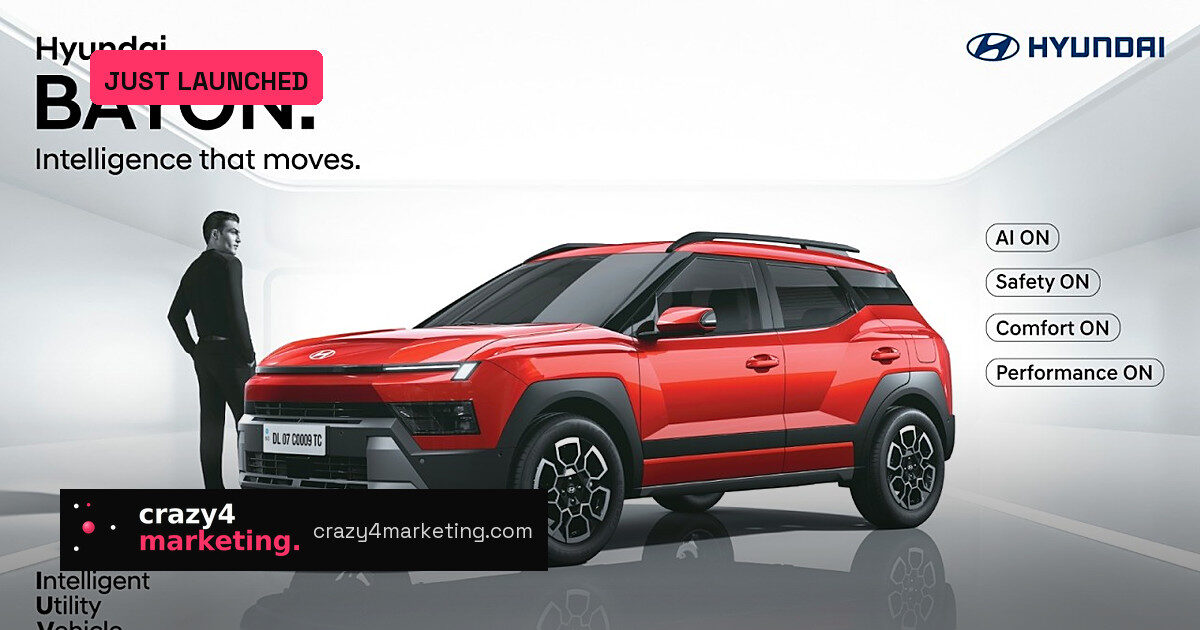
Hyundai’s latest BAYON launch is a lesson in making technology physically felt. On 28 October, the front page of Hindustan Times carried a print ad with a button. Pressing it triggered an AI-generated voice that introduced the new mid-sized SUV and gave readers a quick taste of the assistant waiting inside the car.
That one decision changes the ad’s job. It doesn’t describe the technology; it makes the medium behave like the product.
The hook: a button that talks
The first three seconds are built on the button press. In a page full of headlines, the ad doesn’t compete for attention with louder art—it asks the reader to listen. Sound arrives before the sales message, so curiosity does the opening work.
It’s a small move with an outsized effect. Readers who might skip a static car ad stop because something unexpected just happened.
The structure of the film
The film follows the same trigger-and-response sequence as the newspaper piece: a button, a voice, then an introduction to the BAYON. The assistant isn’t a spec-sheet line; it’s the narrator and the demo at once.
The technology partners arrive as proof, not preamble:
- SoundHound AI handles voice capabilities.
- Perplexity provides intelligence.
- Nvidia supplies processing power.
That stack keeps the claim grounded. The magic is in the interaction, but the system behind it is real.
The idea and the brief behind it
Hyundai positioned the BAYON around intelligent mobility, with the AI assistant at the center. The brief appears to have been direct: don’t tell people the car is smart—let them hear it. Inside the SUV, drivers can say “Hey Hyundai” to get help without navigating screens while driving. The print ad imported that exact behavior into a newspaper.
So the creative idea is a demo, not a declaration. The benefit is tangible because the reader experienced the same trigger inside the ad that they’d use inside the car.
Where it is running
The activation ran on the front page of Hindustan Times on 28 October. Front-page placement guarantees reach, but it also puts a talking button where readers least expect it. Hyundai used the context itself as part of the creative.
Steal this: three moves for a smaller brand
- Turn one feature into an interaction. Pick the single behavior you most want customers to remember and make it something they can trigger.
- Use the medium against itself. A newspaper ad that talks, a mailer that plays sound, a static page that reacts—unexpected formats earn attention.
- Let the product demo close the loop. Every tech claim should end in an experience, not an adjective. If they can hear it, they don’t need to be told it’s smart.
The BAYON print ad doesn’t rely on scale or spectacle. It relies on a button, a voice and a clear connection to the car. For brand and performance teams, that’s the takeaway: a well-placed interaction can outwork a louder message.
Watch the original: Hyundai on YouTube
Source: Brand Connect Initiative