
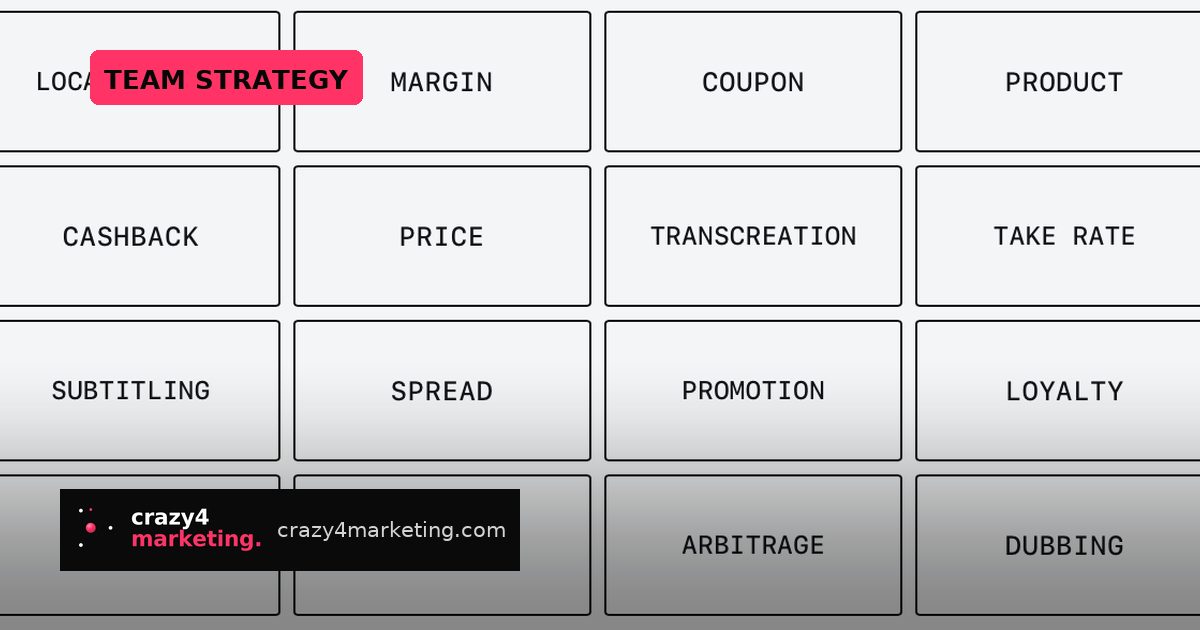
PPC Land has published a piece with a provocative premise: the in-housing argument has never actually been settled. Framed as a word puzzle built from sixteen terms drawn from beyond the ad stack, the article’s point is that the vocabulary marketers use to argue about in-housing is slipperier than it looks — one group of terms, as the publisher puts it, “reads like plain commercial English and is doing something else.”
That is a neat way of describing a decade-old fight that keeps resurfacing on LinkedIn every quarter. And it matters, because most teams are still making the in-house-versus-agency call on vibes rather than on structure.
Why the argument never closes
The debate never resolves because both sides are usually measuring different things. Brands that bring media in-house talk about control, data ownership and lower fees. Agencies talk about breadth of pattern recognition, platform relationships and the ability to redeploy senior talent across accounts.
Neither claim is wrong. They just answer different questions. “Should we in-house?” is not one decision — it is at least five: strategy, creative, media buying, measurement and platform ops. Teams that treat it as a single binary end up either paying agency rates for button-pushing or hiring one overwhelmed generalist and calling it a department.
The language problem is real
PPC Land’s framing about commercial vocabulary doing double duty is the useful part for practitioners. Terms like “transparency,” “partnership,” “managed service,” “efficiency” and “ownership” show up in every pitch deck on both sides of the argument, and they mean radically different things depending on who is holding the invoice.
If your in-housing conversation is happening entirely in that vocabulary, you are not having a strategy discussion. You are having a procurement discussion with better adjectives.
A cleaner way to decide
Split the work by two axes: how often the task recurs, and how much proprietary context it needs. That gives you a usable map.
- High frequency, high context: in-house it. Daily budget decisions, feed and catalogue hygiene, first-party audience logic, landing page iteration.
- Low frequency, high context: in-house the ownership, rent the execution. Brand strategy, annual planning, incrementality testing design.
- High frequency, low context: outsource or automate. Asset resizing, localisation, routine reporting builds.
- Low frequency, low context: buy it as a project. Platform migrations, one-off audits, new channel pilots.
Run that grid before you run a headcount plan. Most “failed in-housing” stories are really a mis-sorted grid: someone brought high-frequency, low-context grunt work in-house and left the high-context strategic work with a vendor who had no access to the business data.
What to do this quarter
Audit where your retained spend actually goes. If more than half of an agency retainer covers tasks that recur weekly and require your data to do well, that is the in-housing case making itself. If most of it buys senior judgment you would struggle to hire at your salary band, the retainer is doing its job.
Then write down what each side of the relationship owns in plain, testable language — who moves budget, who signs off creative, who owns the measurement model, who holds the platform accounts. Ambiguity there is what keeps this argument alive.
The honest answer, as PPC Land implies, is that there is no settled answer. There is only a settled answer for your business, this year, at this spend level. Revisit it annually and stop treating it as an identity.
Source: PPC Land