
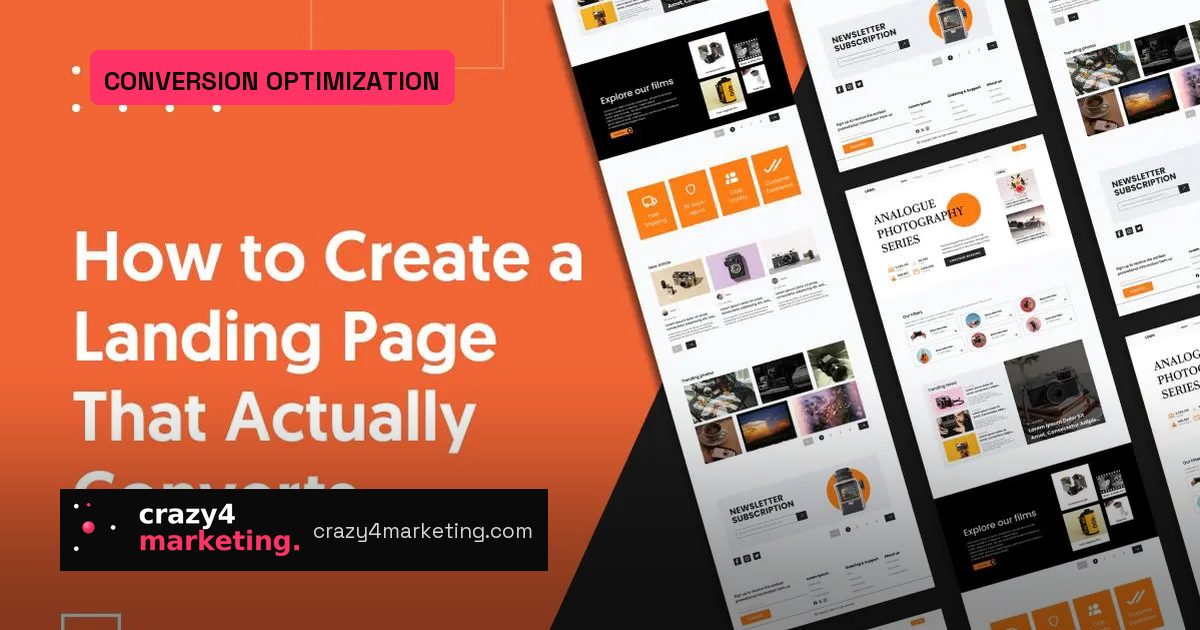
If your landing page pulls traffic but doesn’t convert, the problem is rarely the audience. Neil Patel’s updated guide to high-converting landing pages puts the median conversion rate at 6.6 percent across industries, but that number hides huge variance by channel, device, and page type. For growth teams, the takeaway is less about chasing the average and more about designing around a single action.
The 2026 benchmarks that should reset your targets
Unbounce’s research, cited in the guide, shows email is the highest-converting traffic source at 19.3 percent on average. Paid social follows at 12 percent, and paid search at 10.9 percent. Yet 83 percent of landing page visits happen on mobile, while desktop still converts about 8 percent better on average. That gap makes mobile friction a revenue problem, not just a design issue.
Cart abandonment sits above 70 percent across the industry. Many landing page sign-up flows and checkout paths share the same friction: too many fields, unclear value, or too many exits.
Six landing page formats, one clear job
The guide breaks high-converting landing pages into six core formats: text-only, lead generation, click-through, long-form, video, and SEO. The right choice depends on the action you want.
- Text-only keeps the focus on copy and a single CTA.
- Lead generation trades value like templates or webinars for contact details.
- Click-through warms visitors up before handing them to checkout or demo.
- Long-form sells through benefits, social proof, and repeat CTAs.
- Video builds trust and explains complex products; 96 percent of consumers have watched an explainer video.
- SEO pages chase long-term organic visibility, while campaign pages chase paid-traffic wins.
That last distinction matters because AI search is changing how SEO landing pages get found. According to HubSpot data in the guide, nearly 30 percent of marketers report decreased search traffic as consumers turn to AI tools, and over 92 percent are optimizing for both traditional and AI-powered search.
AI is now part of the landing page workflow
Tools like Unbounce’s Smart Copy speed up draft copy and variants. Smart Traffic routes visitors to the variant most likely to convert based on device, referrer, campaign source, and behavior. That turns A/B testing from a two-week wait into continuous optimization.
But raw AI copy can still hurt. The guide notes pages written at a fifth- to seventh-grade reading level convert more than two times higher than professional-level writing, and the correlation between difficult words and conversion is 62 percent stronger than in 2020. Human review still catches the corporate voice and wordiness that AI tends to add.
“One of the biggest mistakes site owners make when building landing pages is not having a clear, single focus for the page.” — Ryan McHugh, Director of CRO, NP Digital
What to change this week
Start with one primary objective. Remove navigation links that leak attention, keep forms short, make the CTA visually dominant, and place secondary links below the fold. Optimize headlines and subheadings around visitor intent, structure copy with H1, H2, H3 tags, and add trust badges only when they support the conversion goal.
If you’re using paid traffic, test mobile-first layouts and compare email, social, and search segments against realistic benchmarks. Use AI to generate variants, but have a human edit for clarity and grade level.
Source: Neil Patel