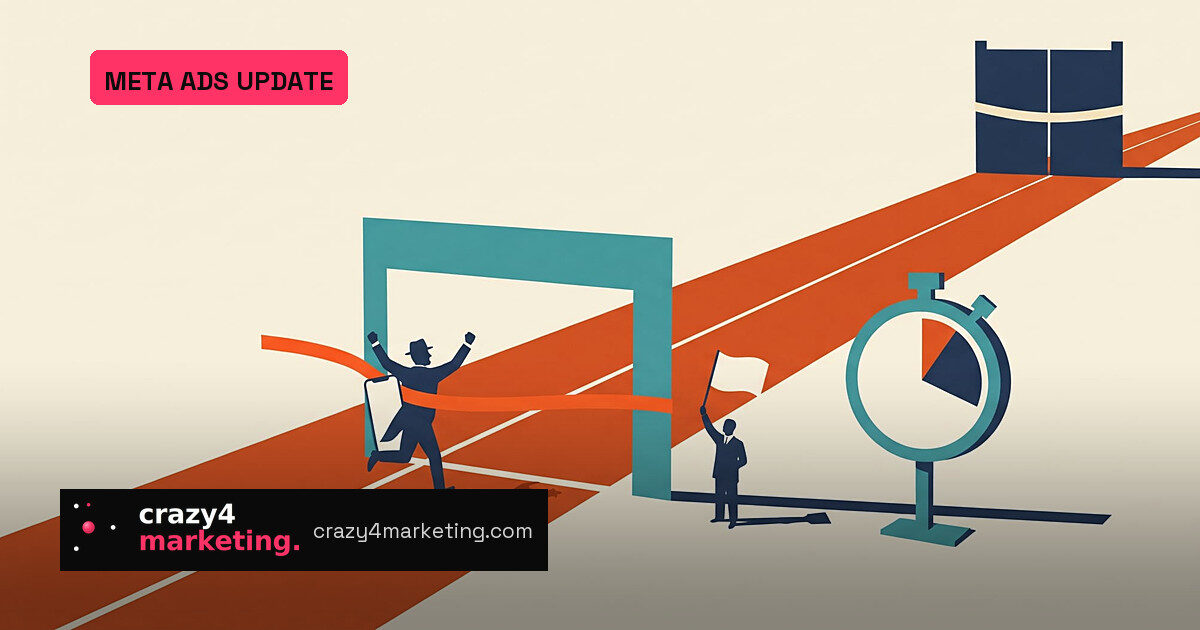
Meta has quietly given video advertisers a shorter definition of a watched ad. A new Ads Manager option lets brands optimize ThruPlays for six seconds instead of the default 15 seconds, a change flagged on LinkedIn by Bram Van der Hallen of Edge.be.
The six-second setting sits under the Awareness and Engagement objectives and works for both auction and reservation campaigns. Meta’s own interface frames it as “ideal for short-form video such as Reels and Stories,” and says delivery will find people most likely to watch at least six seconds. On clips shorter than that, the goal becomes up to 97% completion.
What changed in Ads Manager
Van der Hallen’s screenshot shows the configuration as:
- Campaign objective: Awareness or Engagement
- Buying type: Auction or reservation
- Performance goal: Maximize ThruPlay views
- ThruPlay duration: 6 seconds or 15 seconds, with 15 still the default
No official Meta announcement is cited, and the post gives no rollout date, market list or eligibility detail.
Why the shorter threshold matters
ThruPlay is not a neutral name. Choosing six seconds redefines what a “complete” view means in your reporting. Any view that reaches 15 seconds has also passed six seconds, so the six-second count can only be equal or higher. If you switch and watch cost per ThruPlay fall, that does not prove the creative improved; you are simply counting more views under the same spend.
The timing adds another layer. Meta’s third-quarter results showed average price per ad up 14% worldwide and 23% in the US and Canada, while impressions rose 10%. A cheaper cost per ThruPlay under a six-second threshold mixes the effect of a looser definition with rising impression prices, so before-and-after comparisons are not like for like.
What to do about it
Treat the six-second option as a fit for short-form assets, not an automatic upgrade. If your Reels or Stories are built around a hook in the first three to six seconds, optimizing for six seconds can align delivery with how the format actually works. If your video is 30 seconds and depends on a mid-roll payoff, 15 seconds may still be the stronger signal.
The marketers commenting under Van der Hallen’s post split on exactly this. Angelos Perlegkas questioned why a top-funnel campaign would choose six seconds when most Reels are 30-plus seconds. Syeda Khushbakht Sherazi countered that six seconds “lines up much better with how quickly people decide whether to keep watching,” and wondered whether it would steer budget toward tighter hooks or just make the same creative look cheaper on paper.
The practical move is to test, but keep evaluation honest. Run a split between 6-second and 15-second ThruPlays on the same creative, and look beyond the view metric: holdout lift, click-through, cost per purchase or brand study. A lower cost per ThruPlay is only a win if it buys attention that does something later.