

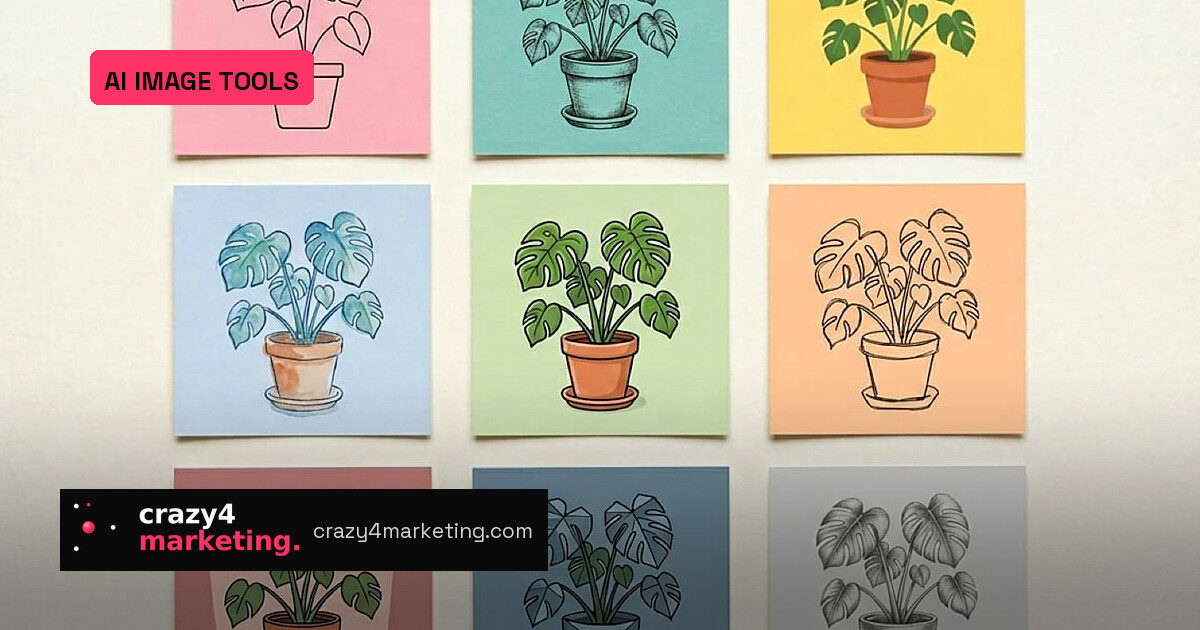
Nine AI image generators, three creative tests, one clear signal: the gap is no longer in the tool, it is in the prompt. Buffer’s 2026 review ran nine models through a hand-drawn sticker sheet, a photorealistic product flat lay, and an embroidered typography graphic. The results reshuffle what social teams should actually use.
Nano Banana 2 takes the overall win
Google’s Nano Banana 2 was the most consistent performer across all three jobs. It got closest to photorealism, nailed illustration accuracy, and handled typography better than most. Buffer’s verdict: if you only try one model for social content, start there.
The field was not empty. Seedream and Ideogram 3.0 were the most reliable at spelling and placing text. Recraft V4 Pro produced the most visually distinct, design-led output. Midjourney still owns mood and texture, but it struggled with long words and precise object lists. Adobe Firefly 5 fits neatly into Photoshop and Illustrator workflows, though it declined brand names like iPhone and Instagram.
Typography was the biggest divider in the test. Models that could not spell are not ready for quote cards, launch art or ad creative with embedded text. If every letter has to be right, Seedream and Ideogram 3.0 are the safer bets.
The other three — GPT Image 1.5, FLUX.2 Pro and Lucid Origin — each have a role: quick generation inside ChatGPT, a distinct point of view, and fast dimensional output. But none unseated the leaders.
Why this matters for growth teams
Social teams no longer have to bet on one model. Multi-model platforms like Leonardo.ai and Higgsfield let you run the same prompt across several generators side by side. That turns AI image generation into a testing workflow rather than a one-tool decision.
A growth team does not need a single perfect model. It needs fast iteration. Generating a carousel background, a sticker set and a product flat lay from the same hub shortens the gap between idea and publish — that is the real unlock.
The legal layer matters too. In the U.S., purely AI-generated material generally is not eligible for copyright protection without sufficient human authorship. Human editing, art direction and original composition still decide whether an asset is protectable.
The prompt system that won
Across every tool, the same prompt habits widened the gap between good and useless output:
- Start with the subject and action, not style or mood.
- Use camera language — shallow depth of field, golden hour, 35mm film — to push realism.
- Describe colors in plain words before trying hex codes.
- Anchor illustration style with technique words like wobbly line art, ink hatching, or flat vector shapes.
- Put negative prompts early to cut watermarks, text and unwanted photorealism.
What to steal for your next campaign
The winning structure: [subject and action] + [setting or context] + [two or more specific details] + [style]. For a product flat lay, that meant describing the phone, surface, coffee and lighting before the words “editorial product photography.” The models followed the order and the detail.
For performance marketers, the action is simple. Build a repeatable prompt template, test it in a multi-model platform, and keep human review for text, brand accuracy and anything you plan to reuse.
Source: Buffer: All-you-need social media toolkit for small businesses


