Most social teams don’t have a content problem—they have a coordination problem. Ideas live in DMs, approvals happen in Slack threads, and the “calendar” is a mental note. Hootsuite’s 2026 guide makes the case that one shared calendar can pull scattered post ideas into a publishing plan the whole team can run.
Start with strategy, not slots
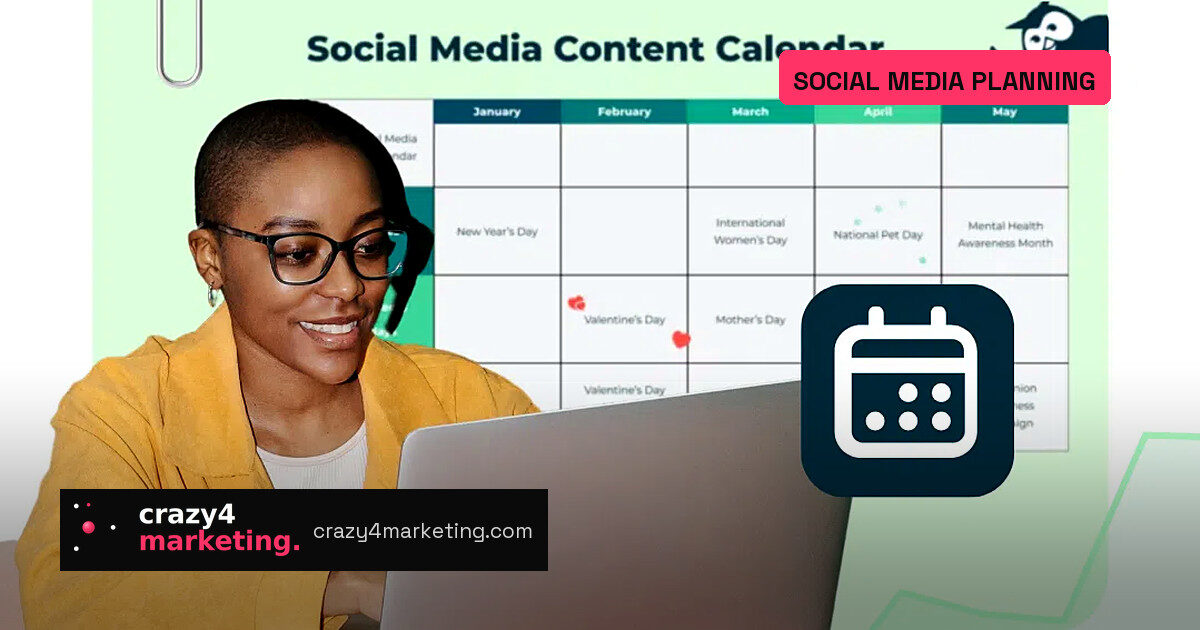
A social media calendar is not the same as a content calendar. The content calendar maps blog posts, email, video and campaigns across channels. The social calendar zooms in on platform-specific formats, copy, assets and publishing workflows—the layer that moves daily.
But the calendar is only as strong as the strategy behind it. Hootsuite’s process starts with S.M.A.R.T. goals, audience insights, competitive analysis, content pillars and approval workflows. Only then does the team brainstorm ideas and fill dates.
As Eileen Kwok, former social strategist at Hootsuite, puts it: “We’re not making content for the sake of making content.” Every post should map back to a goal, a pillar and a format that fits the platform.
What the best calendars actually track
A basic calendar has date, time, platform, copy, asset and link. But a calendar built for reporting also records status, owner, campaign or pillar, paid boost flag, accessibility fields and UTM-tagged CTAs.
- Scheduling: publish time, platform, status, owner, and expiration date.
- Content: format, caption, @-mentions, visual assets, alt text, pinned comment and CTA.
- Workflow: reviewer, approval notes, campaign pillar, paid/organic flag and custom tags.
That turns a list into a system you can optimize, audit and reuse.
Posting cadence: less than you think
With social platforms reaching 5.75 billion users in 2026, the coordination challenge is global. Yet across Facebook, Instagram, LinkedIn and X, Hootsuite’s data shows engagement peaks at around two posts per week. TikTok is the outlier—up to 14 posts per week correlates with the highest engagement.
The bigger point: consistency beats volume. A predictable weekly rhythm keeps teams aligned and still leaves room for reactive content when a trend pops or an algorithm shifts. Hootsuite’s team plans weekly but sometimes creates and posts within the same day to catch a moment.
From calendar to performance loop
Build content in batches, color-code posts by content pillar, and schedule a recurring day to load finished posts into a publishing tool. After publishing, analyze engagement rate, reach, click-through rate and conversions. Tag posts by campaign and format so patterns show up: which topics convert, which formats drive reach, and which channels underperform.
If you spot gaps—too many carousels, too little video, or LinkedIn quiet for a week—the calendar makes them visible before they become a scramble. With 61.3% of social ad spend now going to video, a content mix check is a planning habit, not a nice-to-have.
If social isn’t driving leads immediately, don’t panic. Hootsuite frames social primarily as an awareness channel first, and a conversion tool second. The calendar’s real job is to keep that long-term audience building consistent.