The anti-tourist pitch
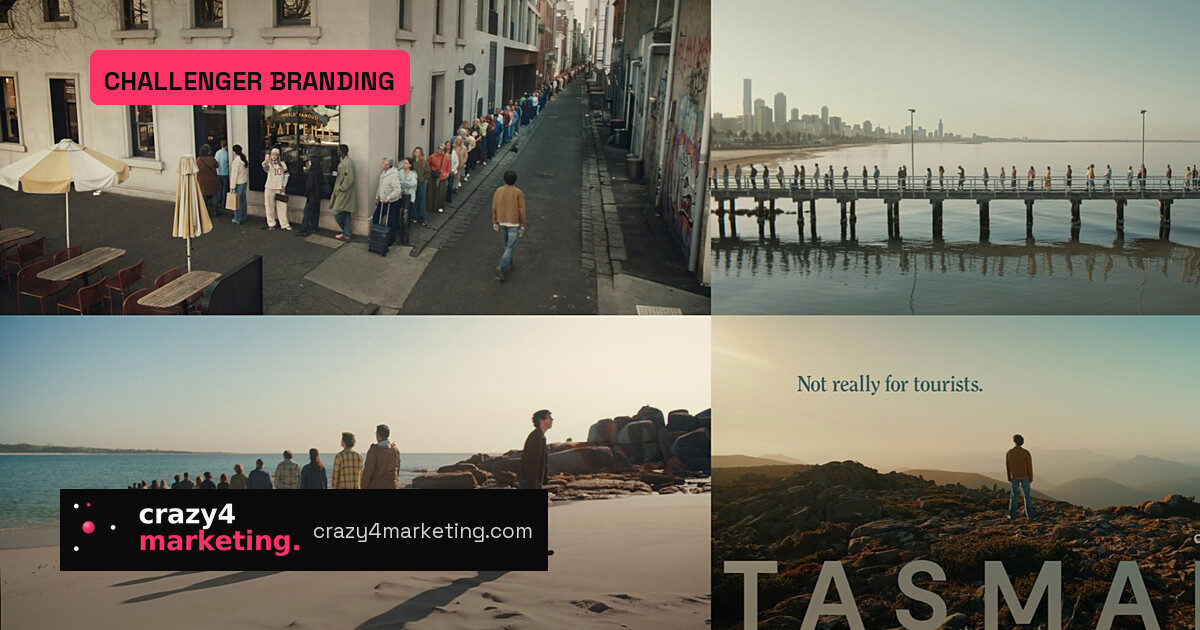
Tourism Tasmania has launched ‘Not Really For Tourists,’ the next chapter of its seven-year ‘Come Down For Air’ platform, created with BMF. The deliberately irreverent idea is not anti-visitor; it’s anti-tourist-habit. It holds up a mirror to the overplanned, queue-chasing, review-obsessed way many of us travel and asks Australians what actually makes a holiday memorable.
The hero film, ‘The Line Up,’ follows a man in an unidentifiable city who joins a queue for a viral pastry. The line stretches across the ocean and lands him in Tasmania, where he finally steps out of line and wanders off to find something genuinely rewarding.
The number that makes it stick
Tourism Tasmania didn’t just run a funny ad. It backed the creative with new national research from Decibel Research. Three in four Australians (75%) would rather be called a ‘traveller’ than a ‘tourist,’ and 86% believe tourist mindsets can undermine holiday enjoyment. The research also identified Australia’s top five self-recognised ‘tourist conditions’ — the habits that get in the way of being present.
That data does two jobs. It gives the campaign a real consumer tension to build on, and it gives the media story a statistic journalists can quote.
What’s actually rolling out
- Five De-Tourist Trails with more than 200 places and experiences, live on discovertasmania.com.au.
- ‘Lee Lin Chin Investigates,’ a quirky video series starring Lee Lin Chin on her first-ever Tasmania visit.
- A competition offering four Australian winners holidays for two, matched to the regional trails.
- Paid media across TV, BVOD, cinema, digital, social, print and large-format OOH, including Manly Wharf and Melbourne’s Southern Cross Station.
- A distributed discovery strategy combining social search with generative engine optimisation across AI-powered and LLM-driven platforms.
Why this matters for marketers
Tourism Tasmania is playing a classic challenger-brand move: anti-positioning. Instead of promising the same beaches, sunsets and must-dos as everyone else, the brand rejects the category’s clichés and becomes the antidote to them. CMO Lindene Cleary frames the work as ‘brave and distinctive’ in a crowded travel market, and BMF executive creative director David Fraser says Tasmania offers ‘a freedom to travel on your own terms.’
The wry, wink-and-nudge tone is intentional. The campaign has to be understood as humour, not exclusion. That’s why the generative engine optimisation layer matters: tourism marketers are optimising how the idea shows up in AI search, so the sarcasm lands with the right context.
For performance and brand marketers, the lesson is to pair a contrarian claim with structural support — research, utility, creators and distribution — not just a clever film.