What Taboola announced
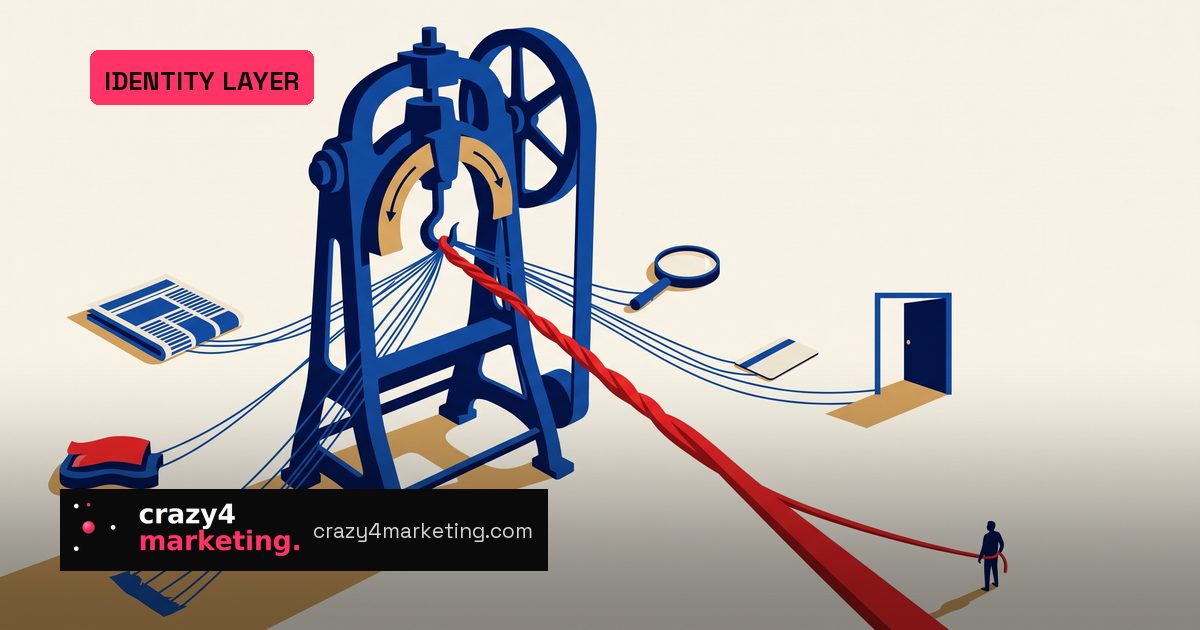
On September 22, 2026, Taboola added an identity layer called Realize ID to Realize, its performance advertising platform. The pitch: bring fragmented identifiers together into a single, persistent view of consumers who show purchase intent on the open web. According to Taboola, the signal-enriched predicted intent models have already produced an uplift of up to 2.4x on a conversion efficiency measure.
Taboola frames the product around what it calls “active decision mode”: the window after someone has shown interest but before they commit elsewhere. In its financial-services journey, a reader moves from an article to a credit-card ad to a landing page, and Realize ID treats those steps as one journey rather than disconnected events.
What the release doesn’t say
The 2.4x figure is the headline, but the supporting detail is thin. PPC Land’s reporting highlights missing information on the test group, verticals, markets, time period and baseline. It is not clear whether Realize ID campaigns were compared with Realize campaigns without it, and the efficiency metric could mean conversion rate, cost per acquisition or conversions per impression. The body text says “up to,” while the headline states the figure without qualification.
The release also leaves out whether matching is deterministic or probabilistic, whether the identifier travels outside Realize, and what retention or consent terms apply. It does not explain whether Realize ID is an identity graph, a universal identifier, or both. It says generative AI search is a growing channel but does not list signals captured inside a third-party AI assistant.
- No defined efficiency metric or baseline
- No advertiser count, vertical mix or markets
- No deterministic vs probabilistic matching detail
- No retention period, consent or pricing information
Why closed-loop claims need extra scrutiny
Taboola sits on both sides of the transaction, publisher and advertiser, and describes this as a “true closed loop.” That means the company supplying the identity, selling the media and reporting the result is the same. It is exactly why independent verification matters more than for a neutral measurement vendor.
Identity precision changes what lift means. PPC Land cites LiveRamp and Marketing + Media Alliance research from July 2026: a modelled campaign with a true 25% lift was read as roughly 6.8% when half of matched users were linked to the wrong person, and modelled ROI fell from $1.50 to $0.43. Vendor-reported uplift sits at the weakest end of the incrementality evidence ladder.
What marketers should do
Before shifting budget, ask the questions the Video Advertising Bureau recommends: what is the metric, what is the baseline, how was the test group selected, and what was the match quality? The endorsements in the release are upbeat but none reports results from Realize ID itself. Sameer Jain of Axis Max Life Insurance says the value is to “capture genuine purchase intent, not just casual browsing.” That is the promise; the proof still needs definitions.
Treat the 2.4x as a reason to run a controlled pilot, not to reallocate spend. Use a like-for-like holdout, demand matched-market comparisons and settle data handling questions before sharing first-party data into a closed loop.
Source: PPC Land