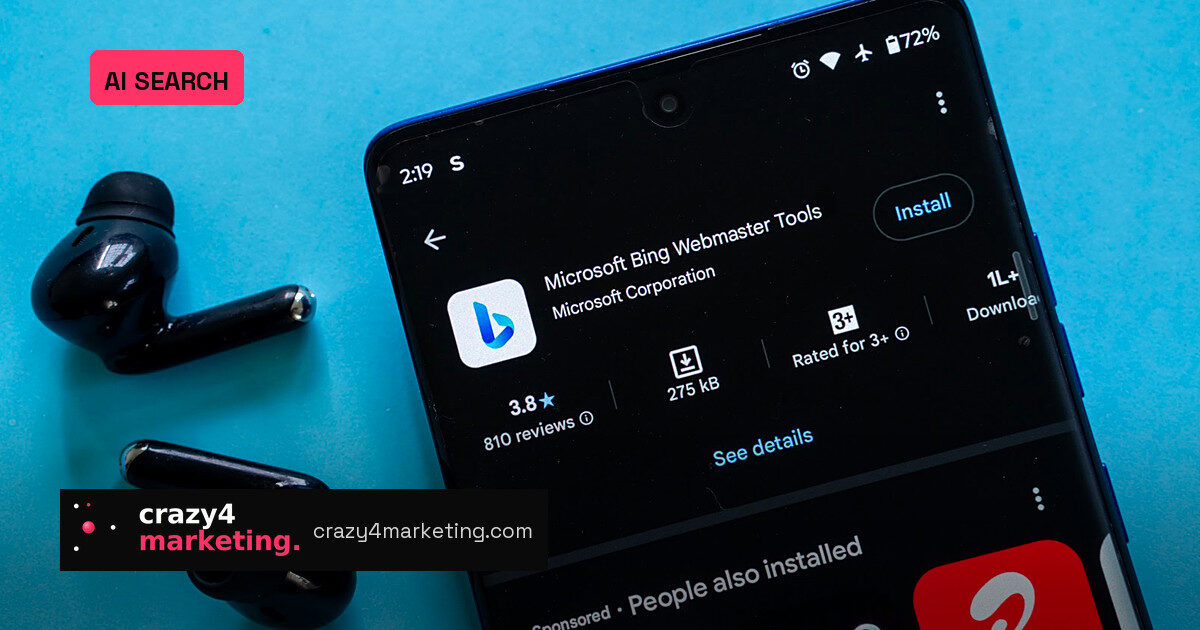
Microsoft has added a beta tab inside Bing Webmaster Tools called Topics Portfolio that changes how SEOs can see their presence in AI-generated answers. Instead of only showing the queries where your content gets cited, it groups those citations by topic and surfaces the queries where your site does not appear but other sites do.
What the Topics Portfolio shows
The new view lives under the AI Performance report, in a tab to the right of Citations & Pages. It only appears when Bing has enough data on your website, so smaller or lower-traffic sites may see fewer topics — or none at all.
Each listed topic comes with three directional metrics:
- Topic size — an estimated total of citations across all sites for that topic in the selected period.
- Sites cited — roughly how many sites show up for queries inside the topic.
- Queries — the approximate number of grounding queries in the topic.
Bing calls those grounding queries the search terms its AI uses to find and cite content in answers, including Copilot and its AI summary plus select partner integrations.
The real prize: opportunity queries
Below the topic table, a “Top Opportunity Queries” list pulls queries across all your topics where other sites are cited and yours is not. Clicking a topic opens a detail page with one table for queries you already appear in and another for those gap queries, with citation volumes shown as ranges.
That turns the feature into a content planning shortcut. Rather than guessing which questions your audience asks, you get a list of AI surface queries where your brand is currently missing. The catch is relevance. Microsoft warns that topics are AI-generated, so classifications can be imperfect, and branded searches can slip in — the company’s example was a running-shoe site seeing a competitor’s brand search listed as an opportunity.
Bing’s guidance is blunt: “Treat the numbers as directional signals for planning, not as a precise ledger.”
How to work it into your process
The data is available over one-, two- or three-month windows. Because the numbers are estimates — and opportunity volumes arrive in ranges — this beta is better used as a discovery layer than a tracking dashboard.
For our readers, a simple workflow:
- Filter out branded queries that belong to competitors or unrelated categories.
- Match remaining opportunity queries to existing URLs before creating net-new pages.
- Use the thumbs feedback controls on poorly classified topics, since Microsoft says they shape what gets fixed first.
This matters because AI citations are becoming a zero-click surface of their own. Being absent from grounding queries doesn’t just mean losing clicks; it means losing the explanatory presence that precedes clicks and builds brand recall inside Copilot and Bing’s summary answers.
For now, Bing hasn’t shared a date for the beta to end, and the AI Performance help page had not been updated with Topics Portfolio at the time of the announcement. Treat the portfolio as an early radar: useful for spotting gaps, not precise enough for monthly reporting.
Source: Search Engine Journal