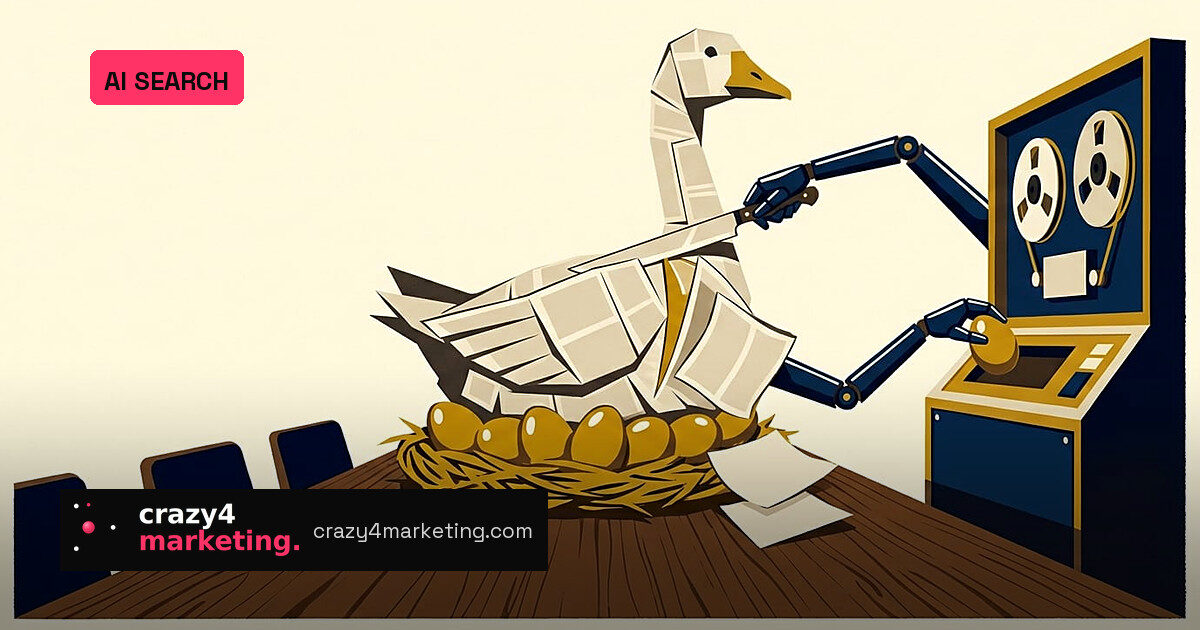
The numbers are no longer theoretical. Digital Content Next, a trade group whose members include The New York Times, asked a federal judge in New York to accept an amicus brief that pairs Microsoft’s own “doom loop” admission with a hard traffic stat: a 26% drop in unique visitors across member sites between 2023 and 2025.
The filing also reports a median 22% year-over-year drop in referred web traffic over an eight-week window in 2026, plus a 5% dip in total advertising and overall revenue. The judge has not yet agreed to accept the brief, and the case is far from settled.
What the doom loop actually says
DCN’s argument is simple. AI tools increasingly answer questions by pulling from publisher content, a process known as retrieval-augmented generation. The output is useful enough that users skip the source site. Fewer visits means fewer ad impressions and subscriptions, which means less money for the journalism the models depend on.
Microsoft’s own internal language, quoted in the filing, called this a “doom loop” that threatens the performance of its models and the web. That phrase is now doing real legal work.
The filing adds sharper numbers. Microsoft’s internal comparison reportedly showed an 87% to 93% drop in click-through rate for The New York Times’ sites when Bing Chat results were measured against conventional Bing search. It also says about 18% of Copilot conversations and 40% of ChatGPT conversations that use this grounding rely on news-publisher content.
Why this matters for marketing teams
This is not just a publisher fight. Every brand that depends on search discovery faces the same pressure: if an AI answer satisfies the query, the click never arrives.
- A Pew Research analysis found that users who saw an AI summary on Google were less likely to click other links.
- A separate field experiment cited in the filing found Google’s AI Overviews reduced outbound organic clicks to publishers by 39.8% in a sample of 1,065 desktop Chrome users.
- Referred traffic is shifting, not growing, for publishers that rely on traditional search.
For growth teams, the implication is clear: AI answer visibility is becoming a channel. Your brand either shows up in the summary, or it becomes invisible at the moment of intent.
What to do now
You don’t need to wait for the court’s view on fair use. Start treating AI search surfaces as their own marketing channel.
- Audit ChatGPT, Copilot and Google AI Overviews for your category and brand terms.
- Track AI-driven referral and zero-click queries separately from traditional organic search.
- Invest in first-party data, email and community so you’re not renting all your traffic from search.
The legal ruling may take years. The traffic shift is already visible in analytics dashboards.
Source: PPC Land