
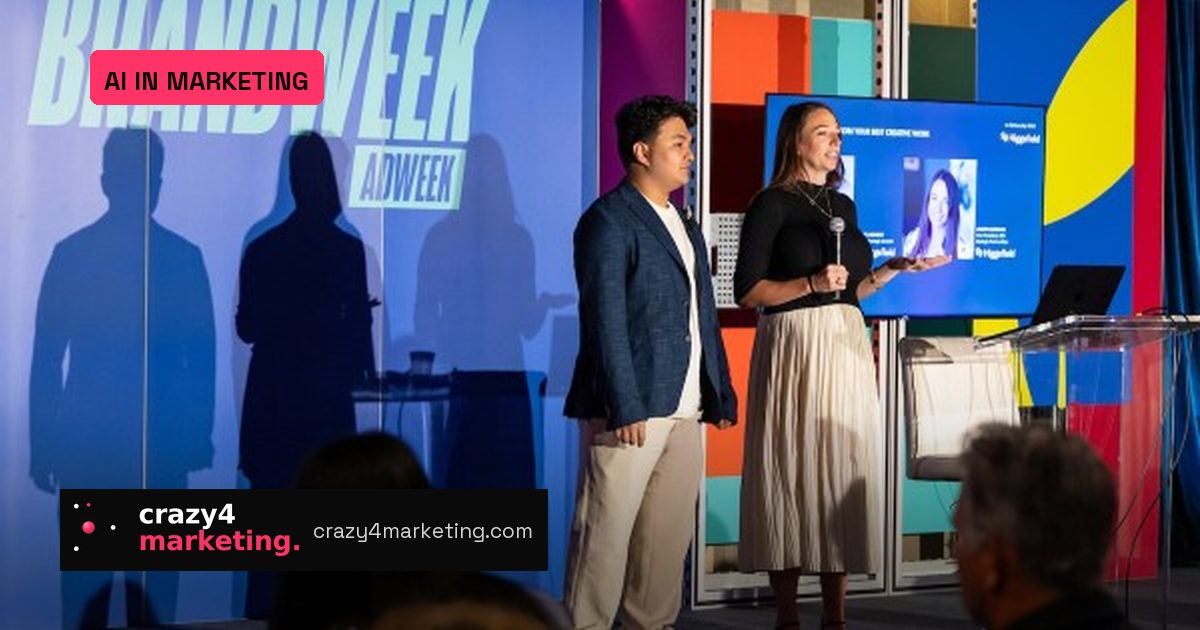
Generative AI has moved fast. At a Brandweek 2026 workshop co-hosted with Higgsfield AI, the message was blunt: the conversation has shifted from whether AI creative belongs in professional workflows to how teams use it every day.
Jasmyn Jarnigan, VP of B2B strategic partnerships at Higgsfield AI, said the industry conversation has changed dramatically in the past year. She called it a “much more positive conversation.”
Production cost is the creative bottleneck
Asilbek Akbarov, head of strategic growth at Higgsfield AI, demonstrated fully AI-generated ads, including one for Hulu. His core argument was that expensive production has long choked creative experimentation.
“We have a lot of creative people in the industry, and they are getting choked,” Akbarov said. “Because in marketing, if you want to try out the ad, you have to make an ad, and the production is very expensive.”
AI tools remove that barrier. Akbarov explained that every team member can have an idea, produce it right away, push it to social channels, and see if it gains traction.
What the live demo showed
Akbarov prompted AI agents he described as his “junior marketers” to create ad assets on the spot. The workflow spanned Higgsfield AI’s Supercomputer for agentic ideation, Marketing Studio for brand content, and Cinema Studio for high-quality editorial output.
The scale was the headline: Akbarov shared that Higgsfield AI’s team of 280 created 1,000 units of content in the prior two days.
Why this matters for performance marketers
This is not about replacing creatives. It is about compressing the test-and-learn cycle. The old model—script, shoot, edit, approve, launch—is too slow and too expensive for paid social. The new loop looks like this:
- Use agentic AI to generate multiple concepts from one brief.
- Have a human creative or brand lead tighten messaging, fix off-brand details, and remove AI slop.
- Ship the strongest variants to Meta Ads, Google Ads, TikTok or YouTube and let performance data decide where to spend.
- Feed winning hooks and formats back into the next AI generation cycle.
Human taste is still the moat
Akbarov was candid that quick demo outputs still have limitations. The final product depends on creative human input. Done right, he said, teams can eliminate AI slop and still put real passion on screen.
For growth teams, the takeaway is simple: treat genAI as an ideation and production accelerator, not a strategy. Use it to multiply concepts, test more hooks and learn faster—but keep a human as the final brand gate.
Source: Adweek