

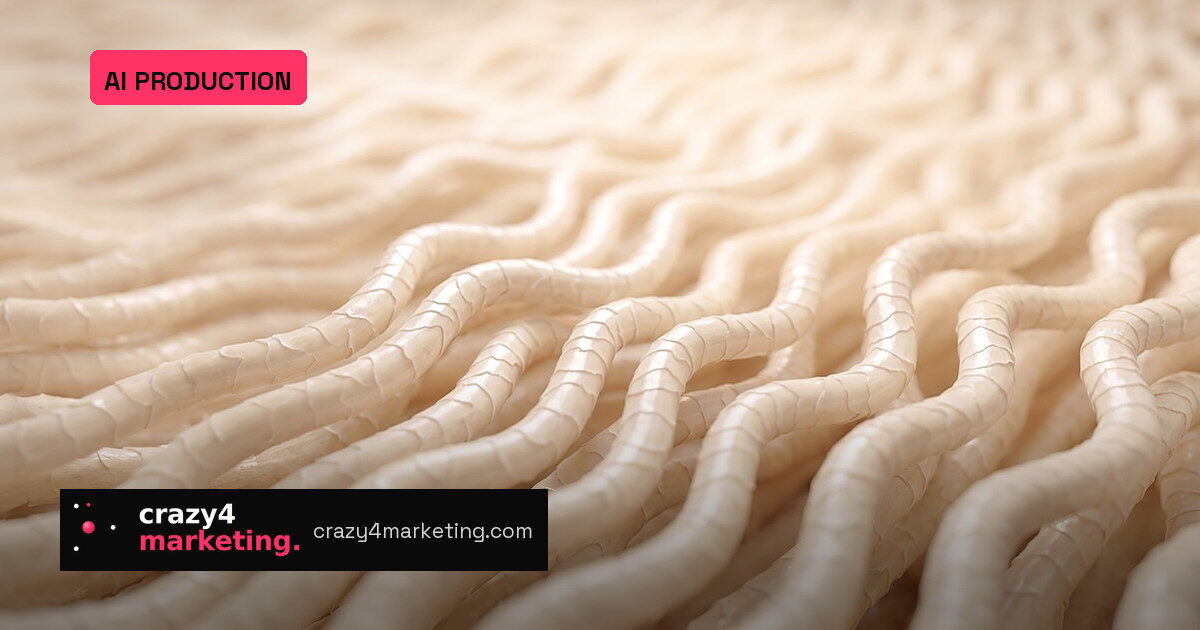
An AI-produced brand film about merino wool fibre has passed 175,000 YouTube views, and the number is only part of the story. “Merino Deep Dive,” from Zentera and production partner Odd Global, matters because of the disciplined pipeline behind it — not the novelty of its technology.
The slot-machine problem with AI video
Most AI production still gets described as rolling dice: type a prompt, push a button, hope for the best. For commercial work where accuracy, client trust and a premium finish are non-negotiable, that open-ended approach falls short.
Zentera — formerly the New Zealand Merino Company — had a specific educational challenge. The performance benefits of ZQ certified merino wool live inside fibre structures and microscopic scales. That is science, not a simple product shot, and it demands both beauty and precision.
Running AI as a production department
Odd Global founder Arthur Machado describes the shift: “treating AI not as a creative loose cannon but as a production department with its own process, controls and approvals.”
The workflow started with the script and the purpose of every shot, led by creative supervisor Ian Sweeney. Visual language moved from merino sheep and wool staples into fibre interiors and abstract performance imagery, with some scenes needing scientific accuracy and others a more poetic feel.
Key controls in the pipeline:
- Script and shot function defined before any visual work
- Visual directions developed for key scenes, then narrowed through focused feedback
- Stills, then animatic, then stakeholder sign-off, then motion
- Targeted refinement for wrong details instead of regenerating from zero
Why front-loaded structure pays off
The hard decisions happened early, when the team could still make thoughtful calls. By the time the film moved into motion, structure and visual language were already agreed — so the first motion cut was close to final, leaving only polish and finishing refinements.
That is the quiet takeaway for growth teams and D2C founders. The control in AI production does not come from the models. It comes from a transparent, structured process: a complete brief, the right people at the table early, and no feedback saved for later.
An asset system, not a one-off film
Voiceover by Antonia Prebble and sound design by Factory Studio gave the film its rhythm. The visuals were then extended into Zentera’s online merino education page, turning the production into a broader storytelling platform for partner brands, retail staff and consumers.
The film also sets a boundary worth copying: Sweeney notes the team was “conscious to never pass the depictions of humans, animals and nature as ‘real'” while using AI’s flexibility to reveal the microscopic world. For marketers, that is a useful honesty test for any AI-generated brand content.
For teams still treating AI video as a gamble, “Merino Deep Dive” is a case study in the opposite direction. Structure, not the model, is the creative advantage.
Source: Campaign Brief


