
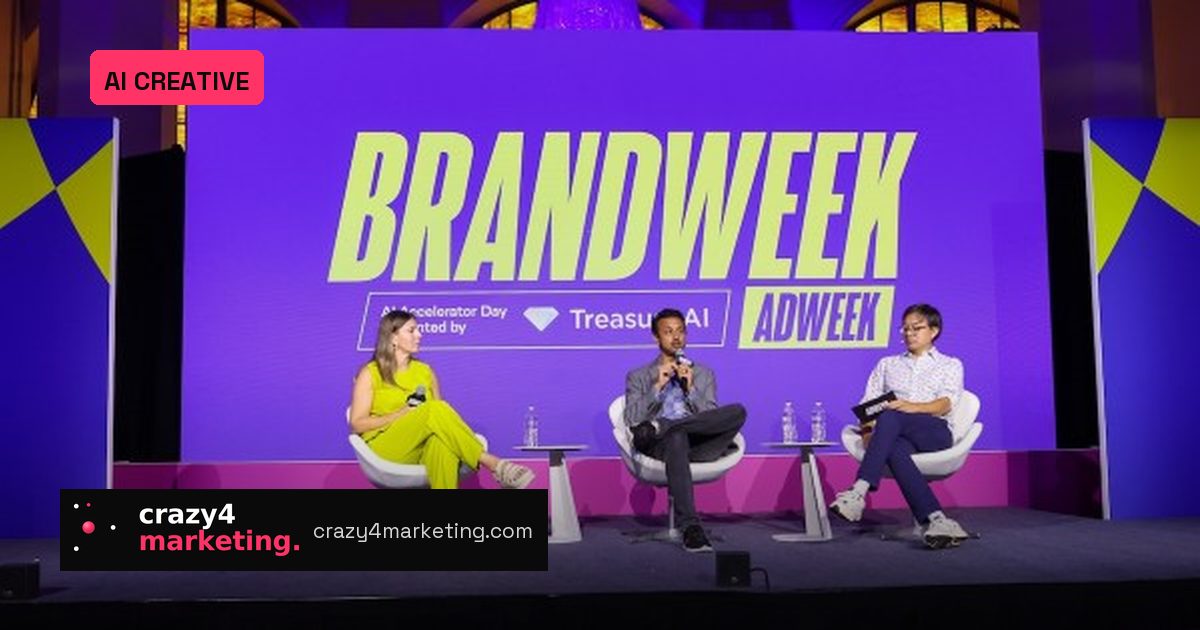
Personalization at scale has been a marketing promise for two decades. At Brandweek 2026, a fireside chat co-hosted with Flam suggested the gap may finally be closing—not through another audience segmentation model, but through AI-generated interactive ads that respond in real time.
ADWEEK editor-in-chief Ryan Joe hosted Kumar Shah, Flam’s head of sales, and Melissa Berger, chief solutions officer at Digitas, to explore whether ads can move from a one-way broadcast to a two-way experience.
What changed at Brandweek
Shah outlined how Flam’s AI content platform, fresh off a newly announced Series B funding round, is pushing responsive creative into the marketplace. With the company’s Flicks tool, brands can upload brand guidelines and a raw asset, add a prompt, and let AI generate creative variants.
From there, audience behavior and existing customer data shape what each viewer sees next. The speed claim is the headline: a 10-second ad can be built in 30 minutes or less.
Why that matters for growth teams
For performance marketers and D2C teams, this is a shift from static dynamic creative optimization rules to AI-generated variants tied to real-time intent. But Berger offered a useful warning: personalization only works if the experience is good. Clean data is difficult, and a poor interaction can alienate the audience.
Flam’s safeguard is human oversight. Shah said every variant is pre-approved before a campaign goes live, with creative leads signing off so the work remains adaptive without drifting off-brand.
How to test it without losing control
- Start with one asset and a small set of core audience signals, not an entire campaign.
- Require pre-approved variant guardrails before anything ships.
- Track speed to market and engagement lift, not just impressions.
- Audit first-party data quality before feeding it into the AI workflow.
Berger acknowledged that mistakes will happen, but early adopters see the risk as worth the value. That is the right framework: treat interactive AI creative as a controlled experiment, not an unchecked automation play.
Teams that pair AI-generated variants with human creative approval can test faster while keeping the brand safe. The format is still maturing, but the practical path is getting clearer.
Source: Adweek