

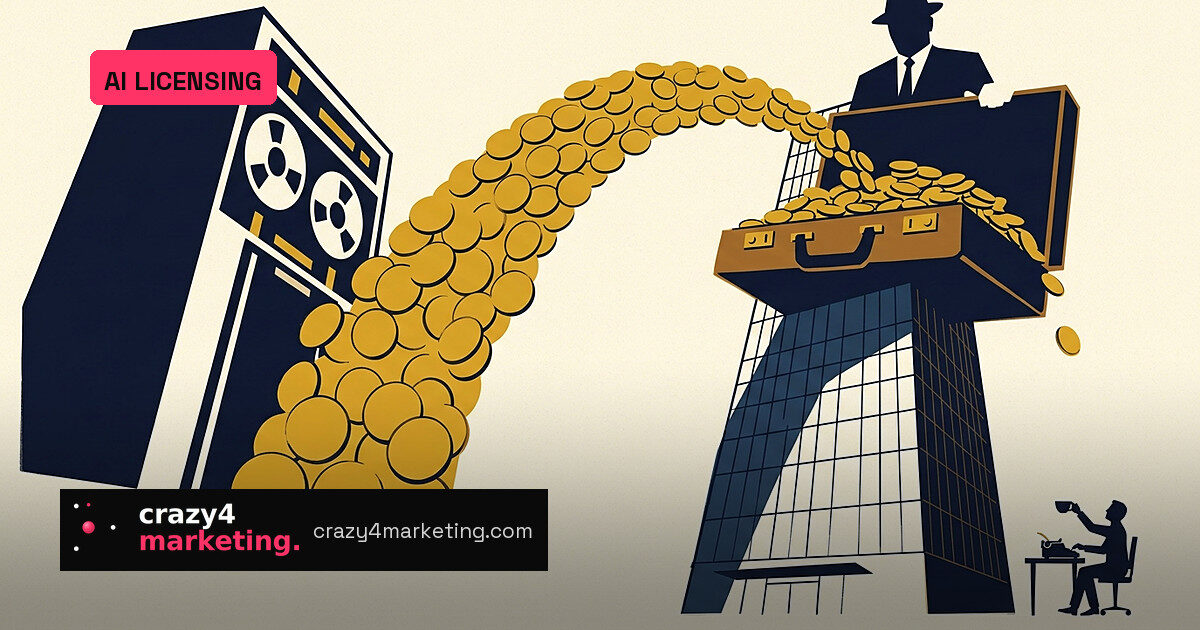
When an AI company pays to license books, songs or images for training, who actually receives the money? A new paper from the University of Amsterdam’s Institute for Information Law argues that too often the answer is not the person who wrote, drew, composed or performed the work.
The argument in brief
Elena Izyumenko, Assistant Professor of Intellectual Property Law, posted the 15-page paper on SSRN on 16 October 2026. The title: ‘A Human Right to AI Remuneration? What Human Rights Law Tells Us Copyright Owes Creators.’ Her core claim is that the EU’s current debate about paying for AI training conflates copyright owners with original creators.
The opening abstract is blunt: “AI remuneration may be defended in the name of creators’ human rights while leaving creators themselves with little or nothing.” The problem is structural. In EU law, copyright is usually held or exercised by publishers, record labels and studios, not by the individuals who created the work. Strengthening copyright can therefore enrich intermediaries without improving pay for creators.
Where the money goes
The paper separates two things. Human rights law protects the personal link between creators and their work and their basic material interests, grounded in dignity and an adequate standard of living. Intellectual property, by contrast, is a transferable legal entitlement whose scope can change. The UN Committee on Economic, Social and Cultural Rights made that distinction in General Comment No. 17.
That distinction matters for AI training. Under the EU’s text and data mining exception, works can be used without permission or payment unless the rightsholder opts out. If a licence is negotiated after an opt-out, AI developers have strong incentives to deal with large intermediaries that control big catalogues. The paper argues that neither route guarantees anything for the original creator.
Transparency does not fix this. The AI Act’s disclosure obligations may tell rightsholders which works were used, but as the paper puts it, knowing which works were used and even securing payment is different from ensuring that the resulting revenues reach their original creators.
The proposed fixes, tested
Izyumenko tests two policy families. Output-based levies would raise money from commercial AI use and channel it into cultural funds or creator support. Input-based schemes would tie payment to the specific works used in training. Each has a weak spot: output funds may help creators whose work was never trained on, while input-based payments may be so small that they offer little meaningful protection.
The paper does not claim to have a magic model. Its conclusion is a demand for scrutiny: ask not only whether a scheme generates revenue, but who actually benefits.
Why marketers should care
For digital marketers, agency teams and D2C founders, the paper lands in the middle of a fast-growing licensing market. Brands are paying for AI-generated creative, licensing content for campaigns and signing creator partnerships. The distribution question is often unanswered.
- Check your content licences: does AI training or licensing revenue flow back to original creators or to the intermediary?
- Ask AI vendors what their models trained on and what their licences actually cover.
- Treat AI copyright disclosures as a floor for compliance, not as proof of fair creator pay.
- Review opt-out and remuneration clauses in any creator or content agreement you sign.
A concrete example: the Music Artists Coalition asked Universal Music Group for details on revenue splits from its Udio settlement, including whether payouts would simply offset artists’ unrecouped balances. That is exactly the scenario the paper warns about, where money reaches the label without necessarily reaching the artist.
The takeaway is simple. Before celebrating an AI licensing headline, follow the money to the original creator.
Source: PPC Land


