Brands are running experiment programmes as if the customer journey ends at checkout. New data from Wingify suggests the post-purchase experience, the part that determines whether anyone comes back, is hardly being tested at all.
The conversion bias in the numbers
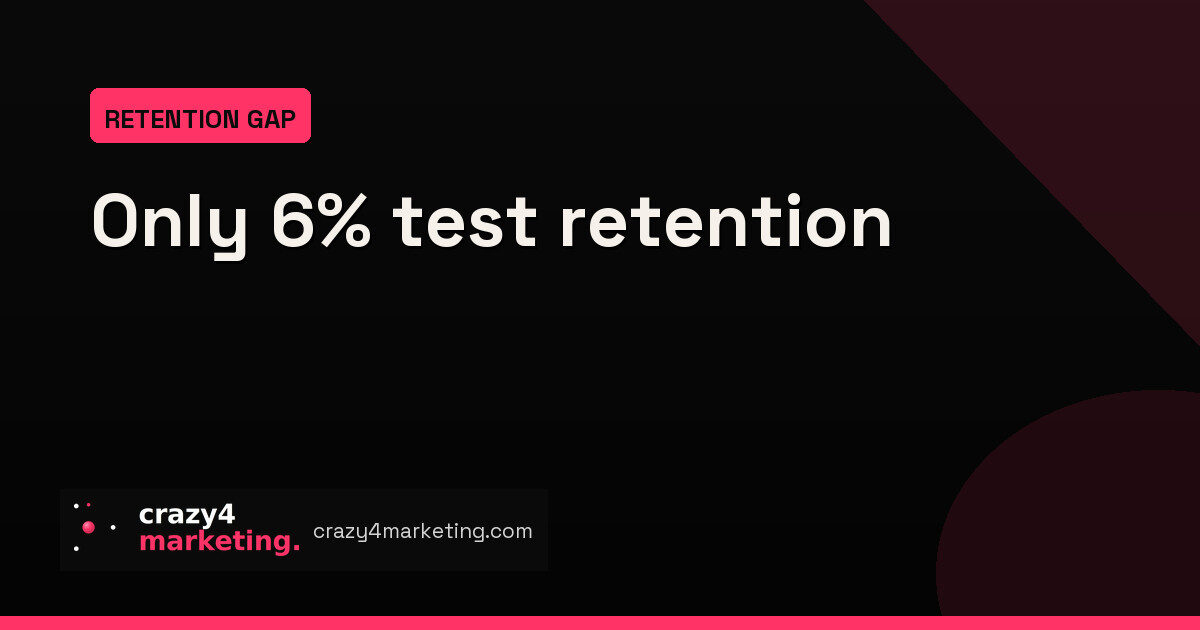
Wingify’s State of Experimentation 2026 surveyed 108 organisations across 21 industries and found a sharp imbalance. Nearly half (45%) of feature experiments focus on conversion rate optimisation. Just 6% target retention and engagement, and only 5% test whether customers discover and use new features.
Retail is leaning hardest into the transaction. In home and garden, 52% of feature experiments are CRO-led. Apparel and fashion follows at 48%, and food and grocery at 44%.
Why the leaky bucket is a strategic risk
The report frames this as a retention problem. If customer acquisition costs keep climbing, every churned customer becomes more expensive to replace. A growth engine built on conversion tests but no retention tests is likely to leak value.
“Ignoring the ‘leaky bucket’ of user churn is a dangerous strategic blind spot,” said John Hughes, Wingify vice-president of marketing.
Hughes says the strongest brands in 2026 are shifting from “how do we get them in the door?” to “how do we keep them here?” That means testing logged-in experiences, personalised engagement features and post-purchase onboarding journeys, not just the path to payment.
Mature programmes, narrow focus
The maturity data makes the gap harder to dismiss. Nine in ten respondents called their experimentation programmes strategic or transformative, with 36% saying transformative and 54% strategic. Yet 56% run just one or two tests a month, and 55% blame limited team capacity for the low volume.
In other words, many teams have leadership support and data-driven processes, but the tests they do run are concentrated on a small slice of the customer journey. The constraint is not conviction; it is where limited test capacity gets aimed.
What to change on the next sprint
Wingify’s answer is to combine client-side web experimentation with server-side feature experimentation. The first refines visible elements of the customer experience; the second tests the logic and functionality underneath. Together they let brands validate anything from a new call-to-action to a new pricing model before a change reaches real users.
For marketing and growth teams, the practical shift looks like this:
- Make retention and engagement explicit experiment goals, not secondary metrics.
- Run feature tests on logged-in experiences, personalisation and post-purchase flows.
- Pair server-side feature tests with web tests so you improve both the surface and the system.
The takeaway for growth teams
Before your next roadmap review, audit the last ten experiments. If almost none target what happens after the first purchase, the leaky bucket is still open. CRO is still valuable, but it captures demand; retention builds the customer base that compounds.
The report is a call to rebalance, not to stop optimising checkout. The brands that win in 2026, Hughes argues, are the ones that treat the moment after purchase as just as testable as the moment before it.