Every week Bestadsontv picks the best advertising from around the world and a top creative director reviews the shortlist. This week’s judge, Diana Triana, an independent chief creative officer in Colombia, found four ideas worth studying. There was no print winner this week.
For marketers, the list is more than an awards digest. It is a snapshot of what makes an ad earn attention, shares and recall. Triana is preparing to launch a creative studio, and her picks double as a brief on craft.
Two categories carried the week: TV and outdoor. That spread is a reminder that shareable ideas can live in a 60-second film or on a single poster.
The TV winner: a universe worth binge-watching
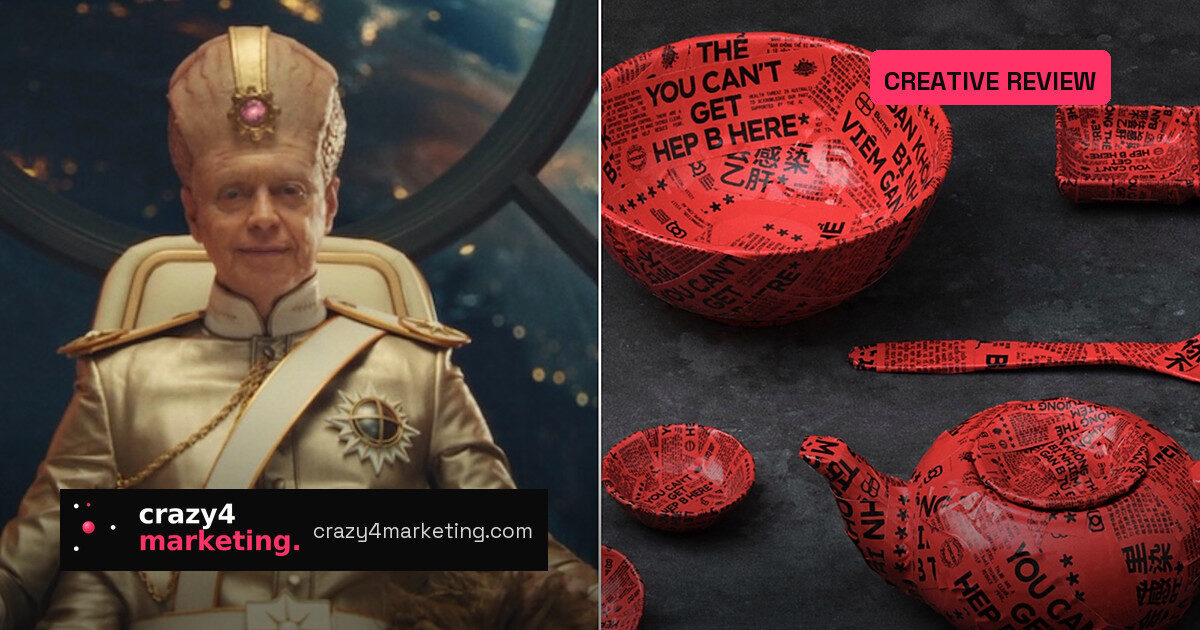
Telstra’s ‘Villains – Supreme Leader’ won best TV. Triana pointed to the cinematography, art direction and world-building: a spaceship, soldiers with heads in their stomachs, and a villain who resembles the soldier he exploits. She said the spot could have been a comic book, a movie or a Netflix series, and that audiences would watch the whole thing and share it.
The lesson: a brand film doesn’t need to sell a product in the first ten seconds if it builds a world people want to re-enter and pass around.
Runner-up: emotion over logic in health marketing
Apoteket’s ‘Make Menopause Less Hellish’ took the runner-up. Triana said emotion won over logic and she related to every vignette, adding she didn’t know she was perimenopausal until she saw the ad. The spot creates identification rather than listing symptoms.
For health and wellness marketers, that is the harder game: mirror lived experience so the audience says ‘that’s me’ before the brand says anything at all.
Outdoor: correcting a myth without lecturing
Burnet Institute and Hepatitis B Voices won best outdoor for ‘You Can’t Get Hep B’. Triana praised the simple, direct copy and design. She described the idea as one that ‘corrects a myth without preaching, while fighting exclusion in an ironically clever way.’ That is why she would be happy to see it in a museum or restaurant.
The work shows how a single clear message can reduce stigma at a glance. No long explainer, no fear appeal.
Making the untouchable touchable
Autoworld Brussels’ ‘The Moving Museum’ was the outdoor runner-up. The idea takes cars that are usually off-limits in a museum and invites people to get in and experience them. Triana compared it to an artist who painted on tableware so her mother could actually serve lunch on it.
This is participation as strategy: when you let the audience touch the product, the experience becomes the message.
What to steal from this week’s list
Run your current campaign against these four questions:
- Is there a world or cast people would want more of, like Telstra’s saga?
- Does the story reflect real emotional experience before it sells, like Apoteket?
- Can you correct a misconception in one visual and one line, like the Hep B poster?
- Can you let the audience physically or digitally participate, like Autoworld?
Triana is soon launching an independent creative studio with partners Jaime Perea and Lucho Correa. If this list is the bar, the work to come will be worth watching.
Source: Campaign Brief