

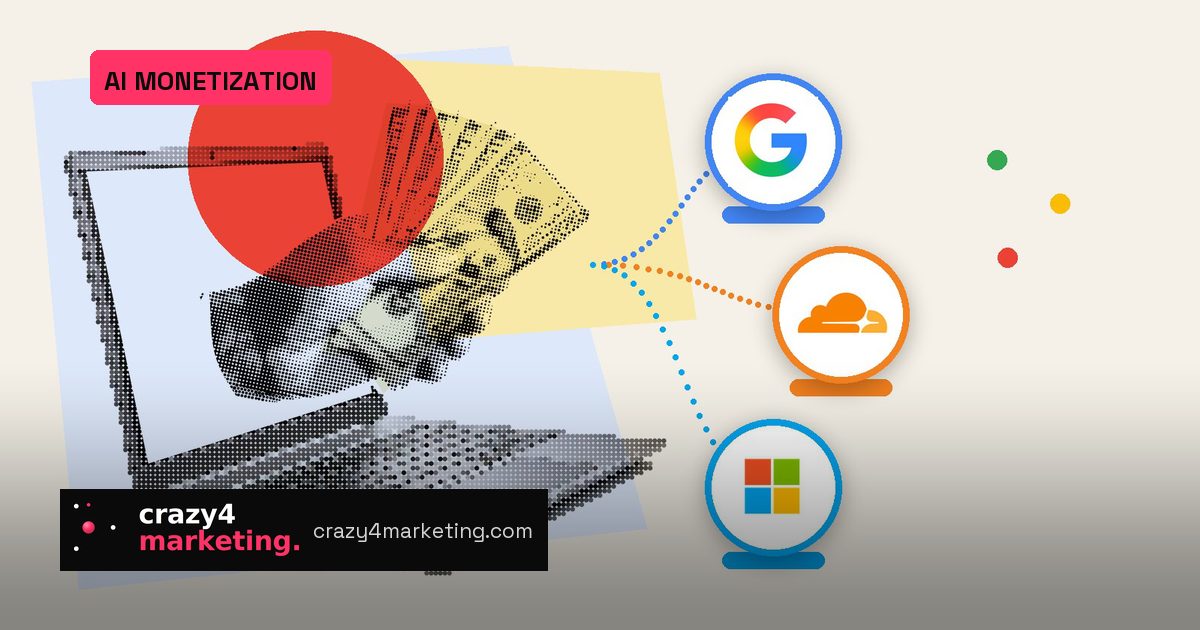
The race to compensate websites for AI use has produced three distinct payment models. Google, Cloudflare, and Microsoft are all testing ways to pay publishers, but they disagree on what should trigger payment, who controls the terms, and what data comes back. For digital marketers and D2C content teams, these differences will shape whether AI becomes a real revenue line or another opaque experiment.
What actually gets paid
Google’s pilot pays only when a site’s content contributes significantly to a generated response in Gemini, AI Overviews, or AI Mode. If the AI merely confirms or links after the fact, that does not count. The program is invitation-only, and participants can view a monthly earnings figure in Search Console. Google has not published the criteria for what counts as significant.
Cloudflare’s Pay Per Crawl has been in private beta since 2025. It charges a crawler for each successful HTTP 200 retrieval, with a site-set minimum price of $0.001 per crawl. Site owners decide whether to charge, allow, or block each crawler. Cloudflare is now shaping that into Pay Per Use, where AI companies bring their own payment models. For example, Ceramic.ai pays per query, while You.com pays on demand for premium content.
Microsoft’s Publisher Content Marketplace, announced on Feb. 3, takes a licensing approach. Publishers license premium content that supports Copilot responses and are promised payment based on delivered value plus usage-based reporting. Copilot is the first demand partner, and Yahoo was onboarding at announcement.
- Google: contribution-based payment; Google decides the trigger; Search Console shows a monthly total; opt-out available.
- Cloudflare: owner-set per-crawl price or partner-defined per-use event; crawler activity is visible, but earned balance requires a request.
- Microsoft: publisher-defined licensing terms; usage-based reporting promised; pricing and report details remain unspecified.
Who sets the value?
Google’s model is the most black box. Digiday reports that one executive familiar with the program described it as quite black box. Participants can opt out at any time, but nothing published gives them a say over terms. Some sources told Digiday the initial numbers were too low to accept.
Cloudflare gives publishers more direct control in Pay Per Crawl: you set the price per domain, vary it by path if needed, and decide per crawler. In Pay Per Use, the payable event depends on the partner, and Cloudflare has not established who sets the rate.
Microsoft says joining is voluntary and publishers keep ownership and editorial independence. However, the announcement does not specify what the licensing and usage terms involve or who determines pricing.
The search crawler trade-off
Cloudflare’s latest settings create a practical SEO risk. The Block option stops Googlebot, Applebot, and Bingbot entirely, including for search. If you want to refuse AI training while keeping search crawling intact, the safer choice is Disallow AI Training. That setting publishes a no-training preference in robots.txt that Google and Apple honor while their crawlers still work for search.
Google’s crawler documentation says URLs returning 4xx status codes can be removed from the index over time. Since a 402 Payment Required response is a 4xx, using paid crawler blocks against search bots can hurt visibility. Cloudflare says less than 1% of its sites block search bots, while 17% use some form of training block.
What to do now
Do not treat all AI payment programs as interchangeable. If you are behind Cloudflare and want to refuse AI training without sacrificing Google search, choose Disallow AI Training instead of Block. If you receive a Google pilot invitation, use the Search Console panel to monitor earnings, but ask for clear contribution criteria before relying on it. If Microsoft’s marketplace is on your radar, request specifics on pricing and reporting through its intake form.
The shift away from click-based revenue is accelerating. The publishers who understand payment triggers, crawler controls, and reporting gaps now will be best positioned when these models scale.
Source: Search Engine Journal