
Retrieval-augmented generation is not a new model. It is the plumbing that decides which pages an AI answer reads, cites and ignores. For marketers, that makes RAG a distribution problem, not just an engineering detail.
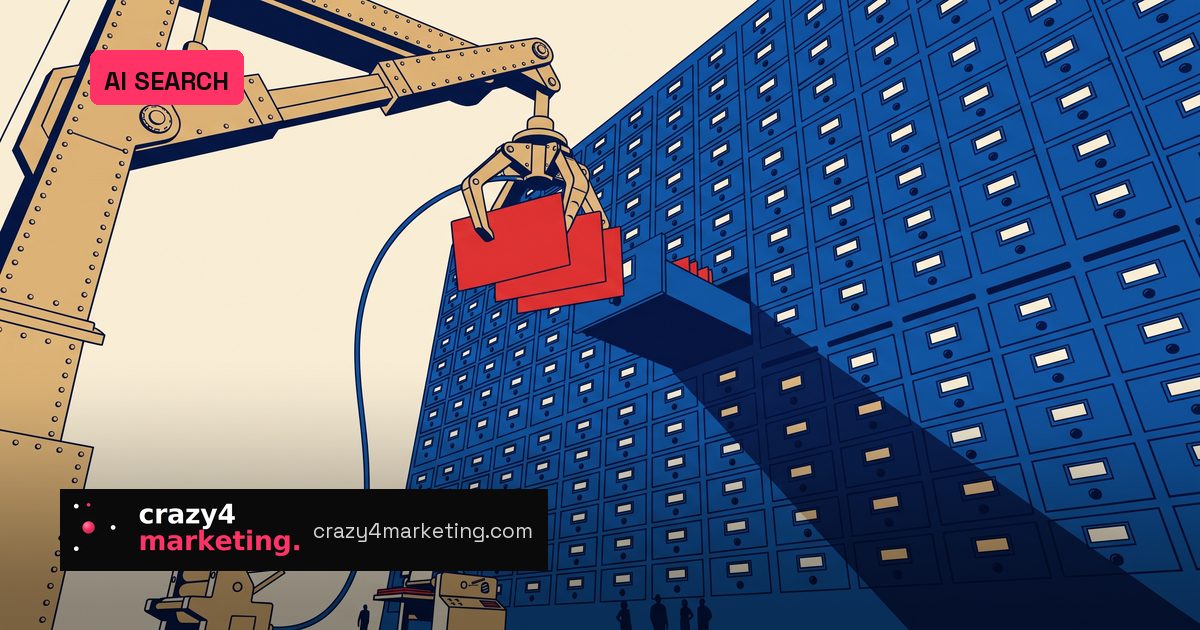
RAG gives a large language model a short-term memory. Instead of answering only from static training data, the system searches an external index, drops the most relevant chunks into the prompt and tells the model to write from those passages. The model weights stay unchanged; only the input changes.
How the retrieval loop works
The pipeline has two phases. First, documents are chunked, embedded into vectors and stored in a vector database. At query time, the question is embedded the same way, the closest chunks are retrieved, a reranker trims the list and the survivors are inserted into the prompt with a citation instruction.
Most production systems blend semantic vector search with keyword matching such as BM25, because exact strings like product codes get lost in pure similarity search. Web-scale assistants add another layer: the user prompt is rewritten into several sub-queries, a technique called query fan-out. Peec AI’s analysis of 5 million fan-out queries found ChatGPT ran about 2.1 searches per prompt, compared with roughly nine for Gemini 3.
Cloudflare’s Anni Wang summed up the operational reality: “Building a RAG pipeline is a patchwork of moving parts.”
The idea got its name in a May 2020 paper from Patrick Lewis and eleven co-authors, building on Google’s REALM work from earlier that year. Anthropic later added contextual retrieval in September 2024, reporting a 49% reduction in failed retrievals, rising to 67% with reranking.
Why marketers should care now
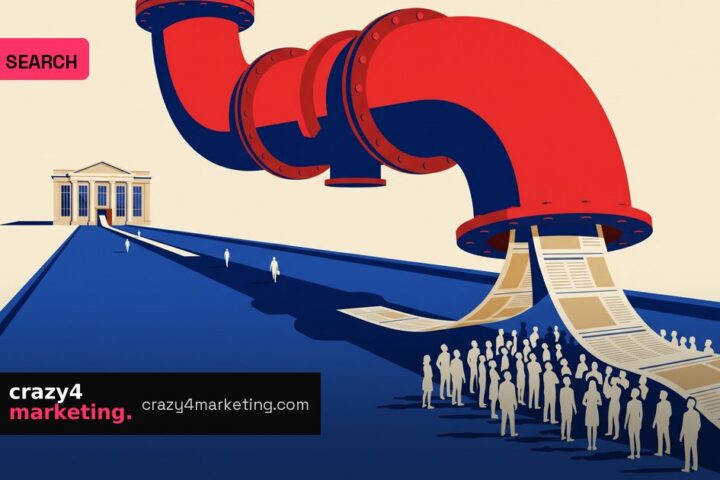
Retrieval is the new gatekeeper of AI visibility. AI Overviews, Perplexity and ChatGPT search can only cite content they can retrieve. If a page is not crawlable and relevant, the model has nothing to ground its answer on.
The commercial impact is visible. When ChatGPT referrals fell 52% in mid-2025, Reddit citations rose 87% and Wikipedia citations rose 62% within a month, a shift analysts attributed to OpenAI reweighting its RAG system. Retrieval weighting changed the traffic.
But Google has drawn a line: guidance from July 2026 says llms.txt files, content chunking and rewriting text for AI systems do nothing for visibility in Search. Visibility is not about formatting prompts; it is about being the source worth retrieving.
Inside advertising, RAG is becoming standard plumbing. The Ad Context Protocol allows about 60 seconds for product discovery because the task includes inference and retrieval, versus about one second for a database-served format listing. IAB Tech Lab’s CoMP v1.0 requires commercial agreements before content is crawled or used.
Limits to keep on your radar
RAG narrows hallucination but does not end it. Stanford RegLab found legal research tools marketed on RAG hallucinated between 17% and 33% of the time. Lexis+ AI answered 65% of queries accurately and Westlaw AI-Assisted Research 42%, though both vendors disputed the methodology.
Retrieval also amplifies whatever lives in the corpus. SEO consultant Lily Ray warns that repetition can be treated as consensus, so misinformation repeated across enough pages can become the retrieved answer. Copyright fights are also unresolved: Britannica and Merriam-Webster sued Perplexity in September 2025, and CNN followed in May 2026 over more than 17,000 works.
What to do next
- Win the retrieval, not just the click: AI citations are the new organic rankings, so track where your brand is cited inside AI answers.
- Keep pages crawlable and indexable: if the retriever cannot access your content, no model can ground on it.
- Do not over-invest in llms.txt or AI rewrites for Google: Google’s July 2026 guidance says they do not affect Search visibility.
- Audit agent and AI crawlers separately from training crawlers: blocking one does not block the other, and user-triggered fetchers behave differently.
- Prepare for content monetization pressure: CoMP-style commercial agreements may reshape how retrieval use is licensed.
RAG turned AI answer generation into a selection problem. Marketers who treat it as an infrastructure detail will keep producing content that never makes it into the prompt.
Source: PPC Land