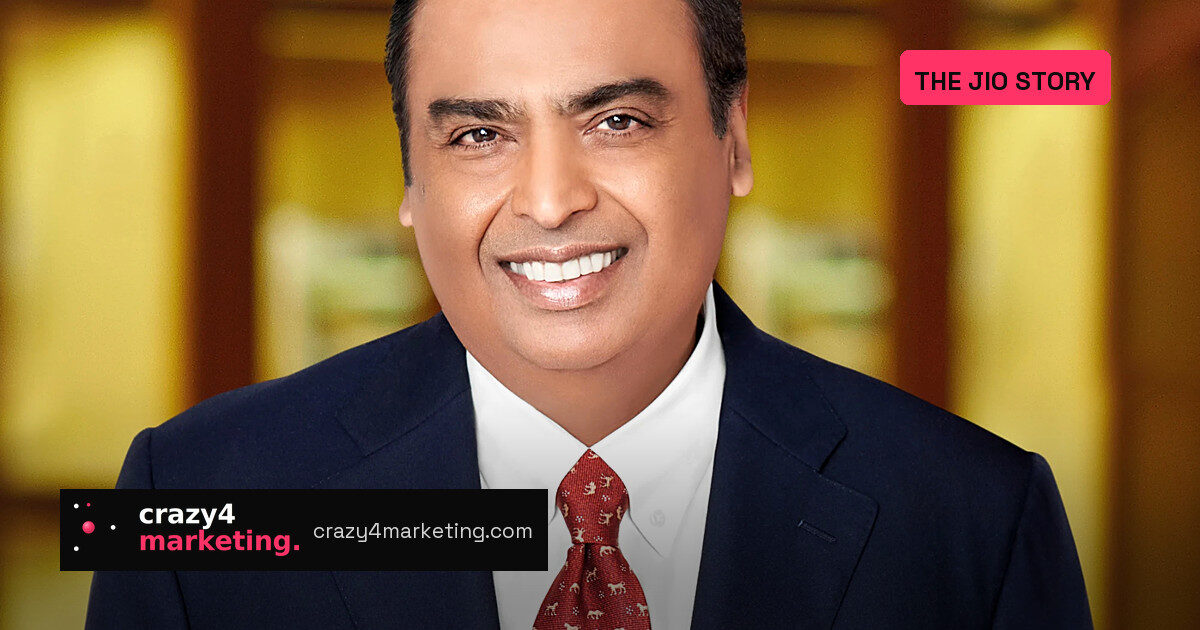
In 2016, a telecom launch became a clear behaviour-change case study. Jio opened with the Welcome Offer: unlimited 4G data, voice, video and apps, as Reliance Industries described it. What followed was not just a surge in connections. It was a reset in the way Indian consumers thought about data.
The question changed before the plan did
At the time, data was still a rationed input for many users. People checked packages before they opened a video, made a long call or watched a full match. The Welcome Offer replaced the old question—How much does data cost?—with a more useful one: What can we do with data?
That is the core marketing shift. The launch did not begin by persuading people to buy a better plan. It removed the pause between wanting something and doing it. Price became background noise; behaviour became the product.
The number that made marketers study it
The company reported reaching 100 million subscribers within 170 days of launch, as cited in the Reliance Industries Integrated Annual Report 2016-17. For growth teams, that speed was not the whole story. The method was the story.
- Behaviour before plan: The hook was what people could do, not what they paid.
- Habits over features: Video calls, streaming and sharing became daily routines rather than occasional experiments.
- Ecosystem as follow-up: Connectivity later extended into entertainment, payments, devices, cloud and AI.
In homes, the reframe looked ordinary. A video call home became a routine, not a decision. A small shop could let a customer scan instead of write. A friend could send a clip without first checking its size. These repeated moments turned a promotional window into shared memory.
What performance marketers can reuse
The Welcome Offer worked as a growth loop. One person using unlimited video called another person. The other person needed the same seamless experience. Every new use case created a fresh reason for someone else to join.
The takeaway is not that free works. The takeaway is that free works when it is attached to a shareable daily habit. A discount can be forgotten. A repeated behaviour across a household or group becomes the retention layer.
For modern digital marketers, the case is especially relevant in an attention economy. The most effective acquisition is not a clever line but an unlocked behaviour that becomes part of someone’s day. When the behaviour spreads by recommendation, the cost of acquisition shifts from paid repetition to shared routine.
The brand’s later stated priorities include connecting every Indian, bringing digital services home, digitising businesses, and ‘AI Everywhere for Everyone’. That reads like a roadmap for layering new habits onto the original always-on connection.
The brief today
Looking back, the 2016 launch is a reminder that a market can reframe itself when one product removes the gap between desire and action. Marketers took a simple brief from it: sell the unlocked habit, not the unit.
Data stopped being the headline. The things people did once the meter disappeared became the story. That is why the Welcome Offer still belongs in marketing classrooms, not just telecom timelines.