

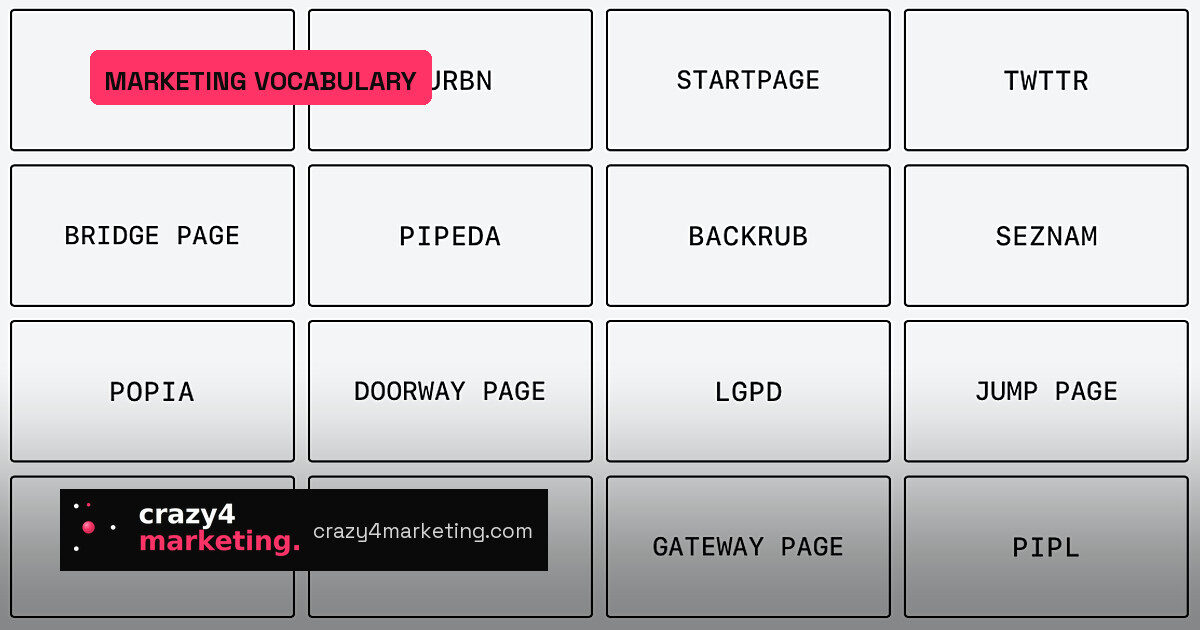
Published on 10 October, PPC Land’s latest reader game is a reminder that the words we use in performance marketing are not always as soft as they sound. The grid takes 16 marketing terms and sorts them into four groups of four.
The title does the work: it is vocabulary that “sounds friendlier than it is.” Luís Rijo, who has written the daily publication since founding it in 2016, published the grid for a reader-funded audience.
A grid tilted toward search and legal reality
The puzzle leans on search and the legal side of the job. That is the point. Search marketers and paid-media teams live inside a language layer that has been polished for politeness. Features are not removed; they get “sunset.” Data is not lost; it becomes “signal loss.” Policies do not restrict; they “clarify.”
None of those words is a lie, but each one softens an operational fact. If you misread the friendlier version, you will eventually be surprised by the sharper one: a missing metric, a disapproved asset or a consent requirement you did not plan for.
Why the game is worth your time
The value of the grid is not memorizing definitions. It is training a reflex: when a platform, an ad policy or a sales deck uses a gentle word, ask what changed underneath it.
- 16 terms are split into four groups of four.
- The grid skews toward search and legal vocabulary.
- One group rewards long memory more than daily practice.
For a growth team, that last line is worth noticing. Daily practice keeps you fluent in the tools you touch every week. But some of the most expensive mistakes live in the older vocabulary: rules that have not changed in years and terms you assume you already know.
Consider privacy and consent. The moment a platform says it is “improving transparency,” a performance marketer should immediately check what measurement, targeting or audience data is being restricted. Friendly language often arrives just before a change that makes your job harder. The teams that react fastest are the ones that treat vocabulary as a signal, not as decoration.
The game also exposes a split in marketing knowledge. Search specialists may instantly spot the legal group; creative or social teams may struggle with it. That is not a failure. It is a useful map of which vocabulary your team has not yet internalized.
Turn it into a team exercise
Run the game yourself first. Then bring it to your team as a ten-minute warm-up. Ask each person to find one term in your own campaign reports, ad platform notifications or legal guidelines that sounds harmless but carries a hidden constraint, cost or obligation.
That small exercise converts vocabulary into an audit. It also creates a shared habit: in performance marketing, the friendlier the language, the harder you should look at what it is asking you to accept.
Source: PPC Land


