
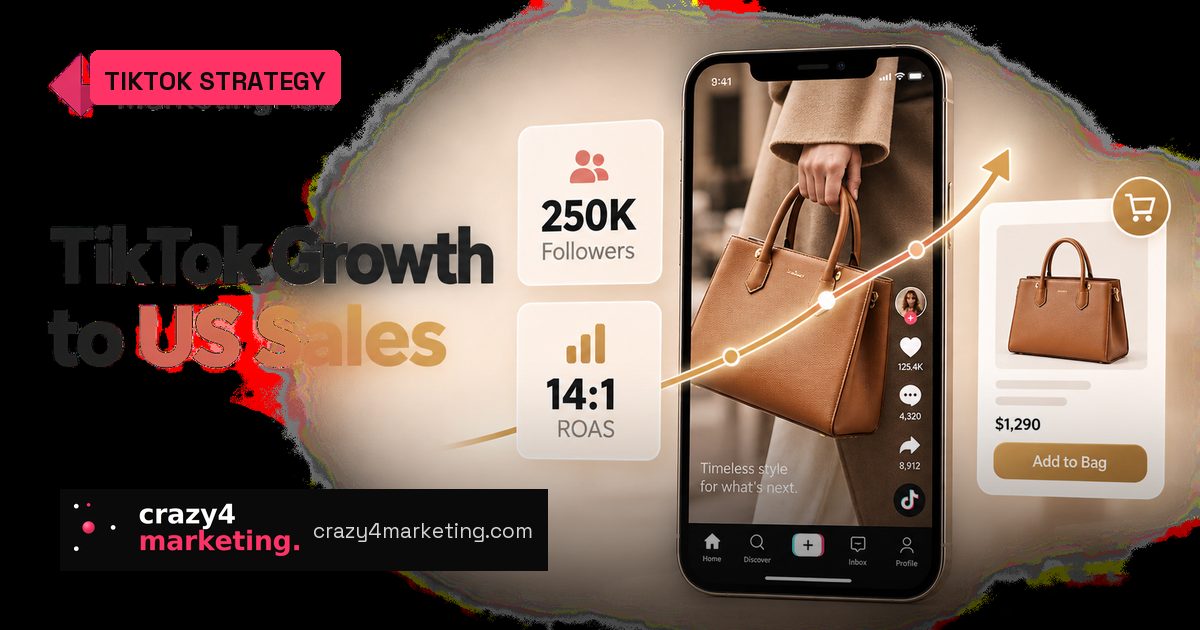
Luxury brands often treat TikTok as a top-of-funnel experiment. MCM’s recent U.S. push is a useful counterpoint: the German fashion house first built a native audience, then converted that attention into tracked sales. In early 2024 the account had roughly 10,000 followers. Within 12 months it reached 250,000 followers, 84 million views and 800,000 interactions. The subsequent U.S. TikTok program delivered a 14:1 return on ad spend and 1,405 purchases.
The sequence is the story. Audience-led content created the creative testing ground. Then MCM layered on paid amplification, conversion tracking and a clearer path to purchase. For performance marketers and D2C teams, that distinction is worth studying.
Phase one: win attention without losing brand codes
MCM’s initial problem was familiar for heritage labels. Younger shoppers were encountering luxury through creators, short-form video and social commerce. A 12-month production cycle didn’t fit TikTok’s pace. Trends could rise and fade before a campaign cleared approvals.
Pulse Advertising helped MCM work around “trend velocity.” The team monitored emerging formats continuously and filtered them through a simple set of questions: Could the product play a natural role? Did the format fit MCM’s visual world? Would the post still look like MCM after the trend disappeared? That allowed a faster production loop while keeping the Cognac Visetos monogram and brand identity intact.
The content mix pulled from native creator formats such as fit checks and everyday styling, plus product-led creative. Monthly refreshes kept both pools active, and performance signaled which formats deserved more investment.
Phase two: attach a conversion system
The U.S. push kept the creative logic from phase one but added the measurement layer. MCM used prospecting audiences for luxury-fashion interests, retargeting for users who had already shown interest, and lookalikes based on high-intent customers. Budget moved toward segments that performed, rather than being spread evenly.
TikTok Pixel events tracked page views, product views, add-to-cart actions and completed purchases. That showed where users progressed and where they dropped off. The result was 14:1 ROAS and 1,405 direct purchases through the tracked shopping experience.
Worth noting: ROAS is only one part of the profitability picture. MCM would still need to consider margins, returns, lifetime value and incrementality. But the purchase volume shows TikTok became a measurable sales channel, not just an awareness play.
What to copy from MCM
- Build a creative bank before scaling paid. MCM entered the U.S. campaign with tested formats and audience signals from 12 months of content.
- Use brand codes as guardrails. Fast trend participation works when products and identity stay consistent.
- Track conversion events, not just engagement. Page views, add-to-carts and purchases reveal where attention becomes revenue.
- Run two speeds. Content production moved quickly, while major campaign changes waited for enough conversion data.
Why this matters for growth teams
The MCM case is a reminder that social-native brand building and performance marketing don’t have to live in separate silos. The organic phase generated the creative signals and audience behavior that made the paid phase more efficient. If your brand is pressing spend against untested creative, the fix may not be another audience test—it may be a faster feedback loop between content and buying.
Start with a split operating model: a fast lane for trend monitoring and content, and a slow lane for budget shifts and conversion optimization. Not every brand can match MCM’s approval speed, but most can pick a few consistent, brand-native formats instead of chasing every trend.
The real lesson isn’t “post more trends.” It’s to design a sequence: learn what holds attention first, then attach the machinery that turns it into revenue.
Source: Influencer Marketing Hub