

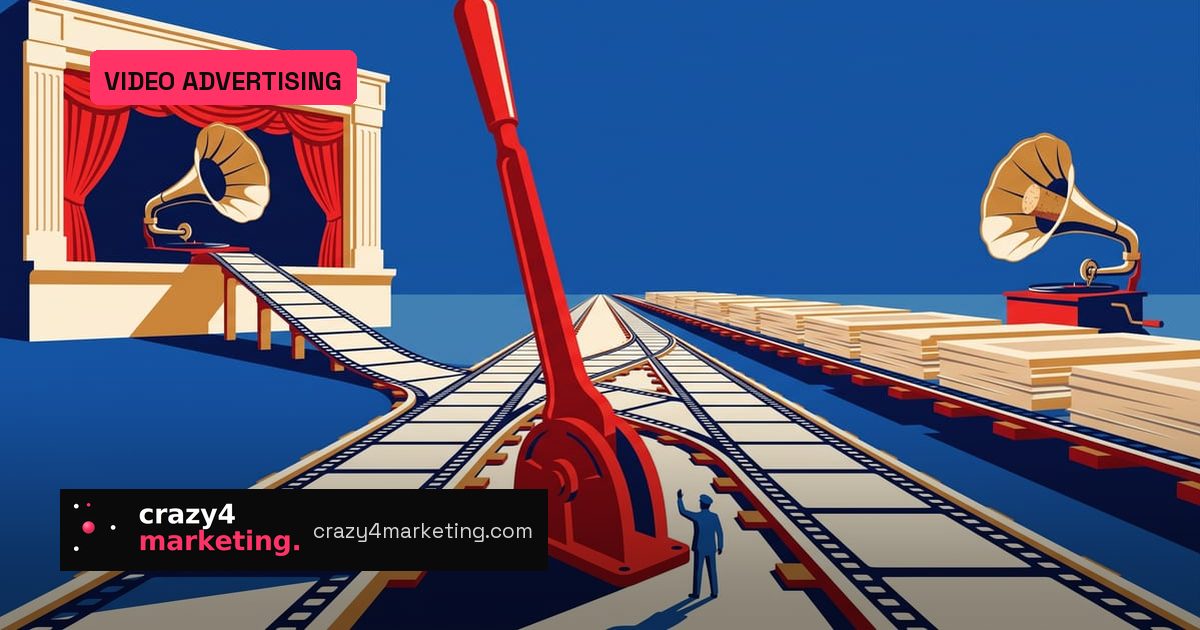
Online video — OLV for short — is the line item that isn’t CTV and isn’t social video. It’s video advertising served inside publisher-controlled players on websites and mobile apps, from a pre-roll before a clip a reader chose to a muted player embedded between paragraphs. With video budgets now split three ways, buyers need to know exactly what they’re getting when they buy the open web.
One label, very different inventory
The IAB’s 2026 Digital Video Ad Spend & Strategy Report defines OLV as short-form video from web and app-based publishers, sat alongside CTV and social video. In the US taxonomy, YouTube sits in social video. That distinction matters: OLV is the open web’s remaining video inventory, bought through open auctions and private marketplaces rather than platform tools.
But within OLV, not all impressions are equal. A dedicated video page where a reader clicks a clip and hears sound is a very different ad moment from a muted autoplay unit that appears further down an article. The bid stream separates them through a few technical fields.
- plcmt is the most commercially important: 1 = instream, 2 = accompanying content, 3 = interstitial, 4 = standalone/no content.
- startdelay positions the ad: 0 = pre-roll, -1 = generic mid-roll, -2 = post-roll.
- playbackmethod shows how play begins: 1 = autoplay with sound, 2 = muted autoplay, 3 = click-to-play, 5/6 = viewport-triggered with or without sound.
In February 2025, IAB Tech Lab made the instream bar stricter: a placement qualifies only when sound is on by default or the viewer shows clear intent, and the video is the focus of the visit. If signals can’t be verified, buyers risk having inventory treated as accompanying content.
Why it matters for your video budget
According to IAB estimates prepared with Guideline, US OLV spending will hit $20.7 billion in 2026, up 10%. That’s behind CTV at $29.3 billion and social video at $31.9 billion. OLV is the smallest and slowest-growing bucket, and 36% of buyers increasing CTV budgets said the money would come from OLV excluding YouTube.
Still, OLV gives publishers video revenue that doesn’t depend on a platform’s auction, and gives advertisers access to open-web audiences. The trade-off is classification risk. Instream inventory commands a premium, which has led to muted, scroll-triggered units being labelled as instream. The Trade Desk blocked Yahoo open marketplace video inventory for some advertisers in June 2024 over this exact issue, and Adalytics claimed in 2023 that in some campaigns 42% to 75% of TrueView in-stream spend went to Google Video Partner sites and apps that did not meet Google standards, including muted, autoplaying outstream players. Google rejected the findings, and the disagreement was never publicly resolved.
A quick pre-flight checklist
Before you scale OLV, treat placement as a performance variable, not a formality:
- Ask for plcmt, playbackmethod and startdelay reporting from your DSP or SSP.
- Compare completion and sound-on signals against CPMs; instream CPMs should not be paid for silent scroll units.
- Check viewability against the MRC standard: 50% of pixels in view for two continuous seconds.
- Watch for taxonomy drift between markets. IAB Europe’s video category includes YouTube, while the US IAB puts it in social video.
The next standards shift is already in motion. The IAB’s Redefining Media Types Standard, released in July 2026, moves toward impression-level attributes across CTV, OLV, social video and more. As DV360 archives legacy video line items in October 2026 and Amazon DSP rolls out VAST 4 support on third-party supply, operators that track these signals will be better positioned to buy the OLV that actually performs.
Source: PPC Land


