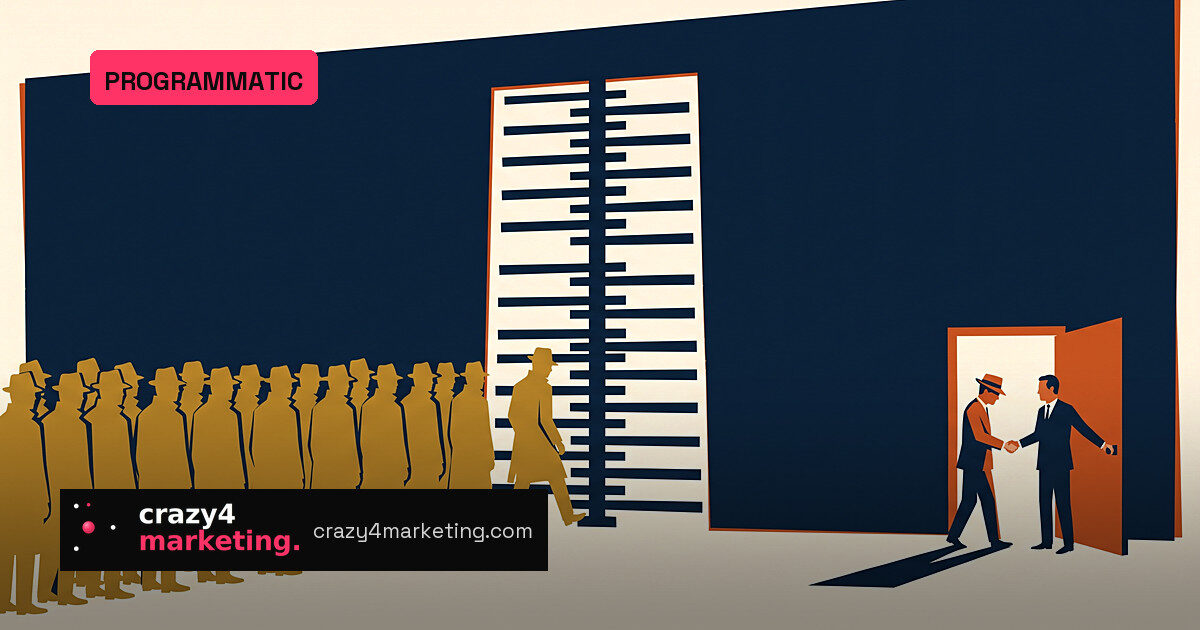
Most programmatic controls are built for the anonymous open auction. They assume every impression carries the same risk. A deal exemption is the switch that says: this impression is different, do not apply that blanket rule.
What a deal exemption actually does
In DV360, Google Ad Manager, Microsoft Monetize and Prebid, a deal exemption attaches to the deal ID carried in the OpenRTB bid request. When a bid with that ID is evaluated, the platform checks the deal’s own terms first, then decides which general rules still apply.
Three layers are commonly carved out:
- Price floors. A negotiated or fixed-price floor replaces the impression floor. Google says pricing rules don’t apply to Programmatic Direct, with an optional toggle for Private Auctions; Prebid’s floors module leaves deals unfloored by default.
- Seller ad quality blocks. Google Ad Manager’s “Override blocks” lets Private Auction deals skip advertiser-level content rules, while Programmatic Guaranteed gets exempted via its own bid request field. Microsoft’s “Maximum” trust level can also serve a blocked buyer on a deal.
- Buyer brand suitability. DV360 lets advertisers bypass brand suitability settings for a selected deal. Google’s documentation says: “For a selected deal, all brand suitability settings are bypassed.”
Why this matters for delivery and revenue
The commercial case is delivery. The Trade Desk’s internal analysis, cited by Will Doherty, its senior vice president of inventory development, found 90% of deal IDs fail to scale effectively. A deal negotiated for curated supply or a fixed price can still be filtered by an exclusion list written for the open exchange, which wastes negotiation time and committed revenue.
Price is the second reason: if a buyer and seller already agreed on a price, the open-auction floor adds nothing except a chance to block the transaction.
The third reason is accountability. Exempting a deal pushes responsibility to the counterparty—buyers rely on the seller’s curation rather than their own filters.
How to use deal exemptions without creating risk
Before turning the bypass on, find the layer that is actually suppressing delivery. Pacing reports filtered by deal ID are the fastest way to spot the problem.
Then exempt narrowly: if the issue is a pricing rule, switch off the floor; if it is a seller block, override that block; if it is brand suitability, bypass only that deal—not every campaign.
Do not treat a deal ID as proof of quality. Curated deals can package open exchange supply under a deal ID, so the exemption may cover inventory the buyer never vetted directly. Platform-level safety protections, such as Google’s automatic brand safety filters, are not bypassed by the DV360 control.
The moving parts to watch
Google has been shrinking the controls that exemptions bypass. On October 1, 2026, DV360 removed digital content label exclusions and most sensitive category exclusions, leaving inventory modes and content themes as the main settings a deal bypass switches off. The US antitrust remedy has also drawn a line around direct programmatic deals, with a proposed final judgment filed October 2, 2026 and Judge Leonie Brinkema yet to sign it as of October 11, 2026.
Source: PPC Land