
If your “best B2B software” page ranks your own brand first, Google’s AI answers are increasingly treating that page as a tip sheet for your competitors. Fresh measurement from search consultant Lily Ray, published on October 4, finds AI Overviews now cite 38% fewer vendor-written “best of” listicles than in June.
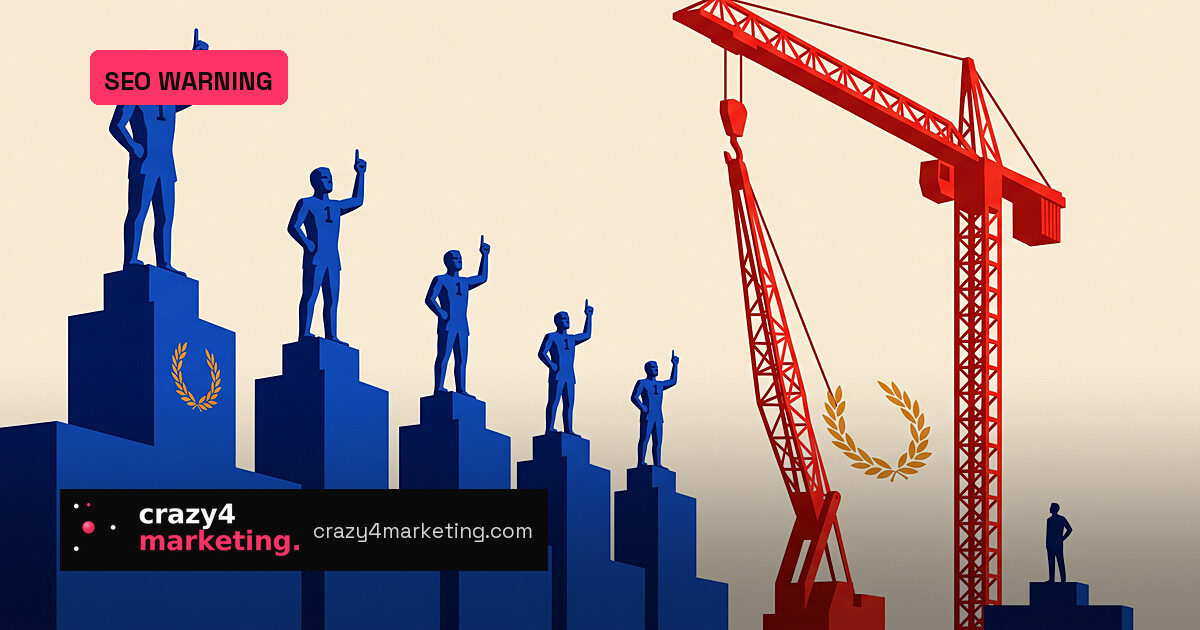
Ray’s September 2026 sample of 100 “best B2B software” queries found the brand that put itself in the number one spot was left out of the actual AI recommendation 83% of the time. That is up from 69% in June. In 70% of cases, the page helped a competitor get recommended while the publisher was skipped.
The paperwork is now the warning
Ray’s larger argument is that Google is signaling before it swings. On October 1 and 2, Google rewrote sections of its content quality documentation. The new generative AI guidance says it is “critical” to manually fact-check AI-generated content across title tags, meta descriptions, structured data and alt text. Another update defines publishing large amounts of text through generative AI without manual oversight as “little to no effort.”
Google also told site owners that fabricating creator profiles — AI headshots, invented names, false credentials — is “a form of deception” and a low-quality signal. Ray reads these edits as the written warning that will later be pointed to when a broad update lands.
The cadence is accelerating
Google has shipped four spam updates in 2026, with start dates on March 24, June 24, August 18 and September 24. The gaps between starts have narrowed from 92 to 55 to 37 days, though rollouts themselves have been getting slightly longer. At Search Central Live Deep Dive Europe in Barcelona, Google’s Gary Illyes reportedly said scaled content is now a bigger problem than link spam and repeated the number that Google filters out 40 billion spam pages per day.
Corroborating analysts — Marie Haynes, Cyrus Shepard and Glenn Gabe — are reading the same documents and openly predicting a significant core update, but none claims inside knowledge of Google’s schedule. Ray’s own precedent list includes documentation changes that preceded Panda, Penguin, Medic and the March 2024 core update. The caveat: sequence is not probability.
What Google appears to be targeting
- Templated, programmatic pages that add hundreds or thousands of near-duplicate URLs in a short window
- AI-generated authors with fake photos and credentials
- Self-ranking “best of” listicles that put the publisher first
- Paid placements in third-party lists, often sold for $135 to $250 or bundled as five AI mentions for $1,500
What to do now
Instead of fighting the shift, use it as a forcing function. Replace self-ranking pages with comparison content that honestly weighs alternatives and documents real evaluation. Publish fewer, better-researched assets. If you pay for product mentions or links, disclose the relationship and nofollow sponsored links — Google’s spam policies already treat money-for-links as a violation, and regulators increasingly expect clear disclosure.
The brands that will survive the next update are the ones AI systems have a reason to cite: original data, named experts, clear opinions and proof of work.
Source: PPC Land