

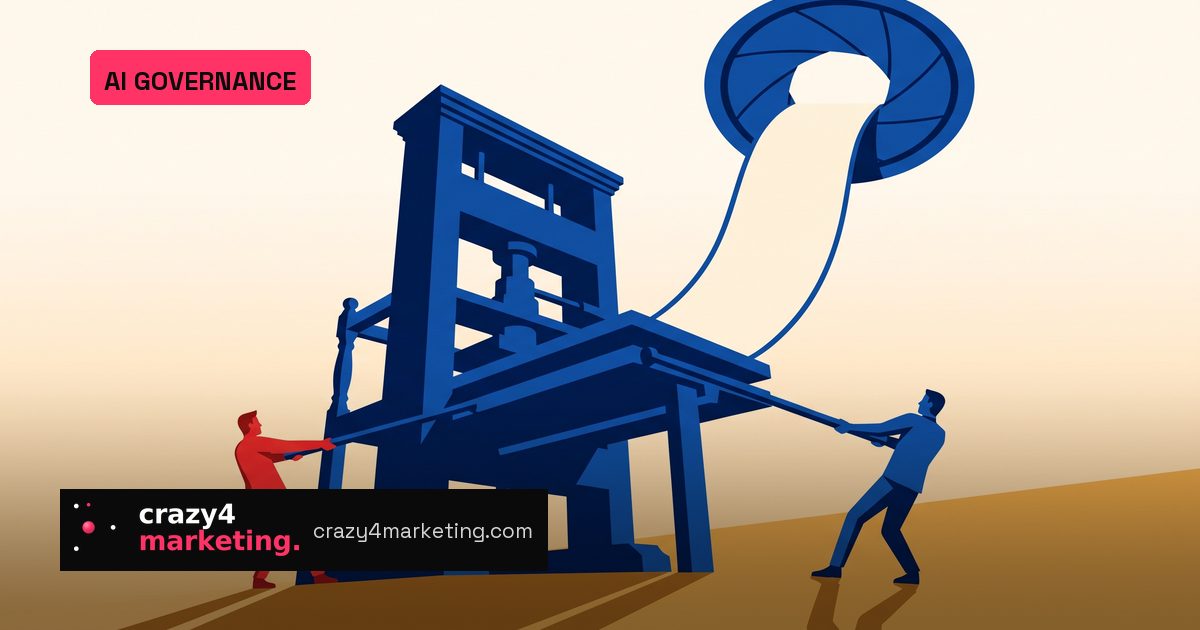
Acquia’s latest study asked 250 marketing leaders and 250 technology leaders in the US, UK and France who controls the content systems AI agents now read. The answer depends on which function you ask.
Marketing sees shared ownership; IT sees itself
Among CIOs and CTOs, 57% said they were the decision maker on CMS and DXP choices, and 66% said they were the key evaluator. CMOs split the same decision across marketing (25%), IT (24%) and a head of digital (18%). Acquia frames this as “two different decision-making structures inside the same organisations,” though the research compares separate executive panels rather than paired responses from the same companies.
That methodological caveat matters. Still, the headline number stands out for marketing leaders: only 41% of CMOs believe their own teams can govern AI-generated marketing, while 73% are confident they can drive revenue growth.
Why this is now a brand liability
AI assistants are becoming a buyer’s first impression of a brand. Acquia CEO Chris Tranquill puts it bluntly: trust is now judged “instantly, by a machine, on behalf of someone who may never see your homepage.” When that machine repeats a wrong price, claim or regulatory disclosure, the error usually traces back to content in a CMS.
Supporting data makes the risk concrete. A Contentsquare survey found 23% of consumers would switch brands when a site following an AI recommendation disappointed them, and 21% had seen AI details contradict a brand’s own page. Meanwhile, an August audit found one in nine businesses OpenAI recommended carried a wrong claim.
Close the accountability gap before you scale
The underlying problem is fragmentation. Acquia reports 61% of CMOs say content is spread across so many systems that no single source of truth exists, and only 40% say their stack is ready for AI agents. On the IT side, 56% of technology leaders say they will not deploy AI until content structure and data integrity are solid.
That leaves a clear to-do list for marketers:
- Name a single owner for CMS and DXP decisions, even if marketing and IT share operational work.
- Treat AI answers as a content channel: audit what assistants actually say about your brand.
- Fix data structure and governance before adding agentic tools to live sites.
The pressure is financial, too. 43% of CMOs named failure to prove AI ROI as the biggest threat to their role in 2027, ahead of missing revenue targets or losing budget to IT. Gartner’s 2026 CMO Spend Survey puts martech at 19.4% of marketing budgets, down from 26.6% in 2021, while AI initiatives take 15.3%.
Take the survey for what it measures
Acquia commissioned the research and sells a governance platform, so the framing is not neutral. The data captures what executives believe, not how their companies actually operate. But that belief gap is itself the strategic issue: marketing doubts its control over AI output, and IT says it will not switch systems on until the foundation is clean.
For D2C founders and performance marketers, the practical move is smaller than a full digital command centre. Pick the highest-risk AI-read content — prices, product claims, compliance details — and make one team accountable for its accuracy everywhere a machine can quote it.
Source: PPC Land


