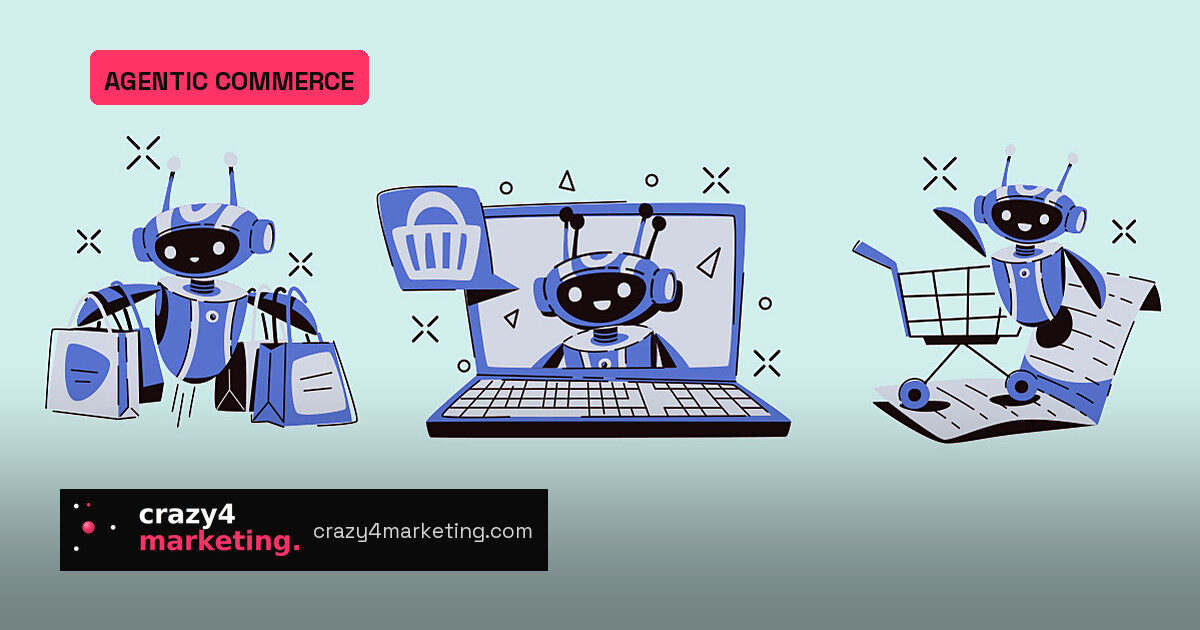
AI agents are about to become your most important new customer. They won’t click ads, watch a 15-second spot, or ask a friend for a recommendation. They will read structured product data, trust signals and brand signals, then decide whether your product fits the person they represent.
Gartner forecasts that 20% of commerce will be agentic by 2030, coinciding with an expected 20% adoption of programmable money, or digital funds guided by rules and safeguards. That is not a far-off sci-fi scenario. It means one in five purchases could flow through an AI agent that filters options, negotiates and completes the transaction.
From social hubs to agentic playbooks
When a Disney entertainment executive became Marriott’s CMO in 2013, the team brought storytelling into the brand by setting up social media hubs around the world. CEO Arne Sorenson gave CNBC interviews from the hub, and the work won a Cannes Gold Lion in a then-new Creative Data category.
That history matters because agentic commerce is now hitting a similar inflection. Marketing teams are starting to form cross-functional groups to decide what role AI agents play, how brand news travels, and what the brand is known for when an agent is always on. The author calls this Creative Data 2.0: connected loops that guide internal input and external output.
Three roles your brand can play
Brands need to decide first what role to play. That choice determines how to structure information and evaluate how agents respond.
- Advisor: Help agents navigate options with current, accurate information. Update details the moment a formulation, price, spec or claim changes.
- Assistant: Organize use cases and personalized options across categories, like party planning across decor, food and drinks.
- Operator: Build a one-stop shop that lets an agent do the heavy lifting all the way through booking, like an airline itinerary.
These roles are not just content management, cart bookmarking or promo display. The agent should behave like a customer’s best friend: listening to preferences and eventually completing the purchase. Each role shapes the story the agent tells back.
What CMOs should do now
CMOs already translate brand value into stories. Now they need to do the same for intelligent agents. That means making the brand legible to software, not just memorable to humans.
Start with a cross-functional playbook. Marketing, product, commerce and data teams should meet in one shared group to weigh what agentic technology can do against the company’s goals and the presence the brand wants. Then test one role, such as advisor or assistant, before trying to run all three.
Treat the agent as an audience. Update product information aggressively, organize the catalogue around occasions and use cases, and provide enough structured detail for an agent to reach a purchase. With seamless payments and sign-on emerging, the brands that make themselves easy for agents to discover and trust will be the ones that get recommended.