
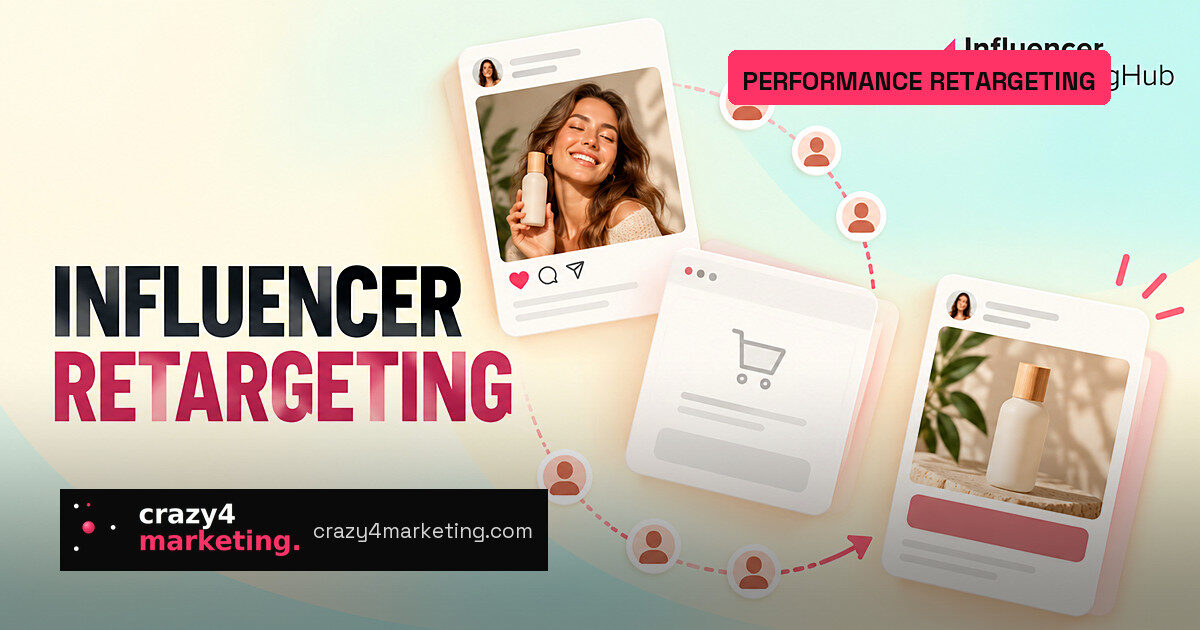
Creator campaigns are great at generating interest and terrible at sealing the sale. The numbers are sobering: only 1% to 3% of influencer-referred visitors convert on the first session. The other 97% to 99% tap a trusted link, scan the page, and disappear back into their feed.
Warm traffic is not search traffic
When someone clicks through from TikTok or Instagram, they are not in a focused buying mode. They are scrolling, curious but easily distracted. A slow mobile page, a multi-field checkout, or a landing experience that does not match the creator’s message can end the visit in seconds. The exit is usually about convenience, not a rejection of the offer.
That behaviour does not make influencer traffic a bad investment. It makes first-click conversion a weak metric. The real money is in a structured remarketing system that brings these warm visitors back after they leave.
Fix tracking before you spend more
You cannot retarget people you have not tracked. The foundation is simple:
- Install Meta and TikTok pixels to capture page views, add-to-carts and checkouts.
- Add a server-side API such as Meta CAPI so browser restrictions do not blind your tracking.
- Use granular UTM tags to identify the creator, platform and placement for every click.
- Send influencer traffic to dedicated landing pages for cleaner event data.
Go beyond basic page views. A ViewContent event after 10 seconds, separate AddToCart events and scroll-depth tracking tell you who is browsing, who is evaluating and who almost bought.
Segment bouncers, browsers and cart abandoners
Blasting the same ad to every bounced visitor burns budget. Group non-converting traffic by behaviour:
Casual bouncers stay under 15 seconds. They hardly know the brand. Show them brand introductions, product-use videos and broad collections.
Engaged browsers stick around past 45 seconds or view multiple pages. They have not added to cart. Give them feature comparisons, reviews, press coverage and proof.
Cart abandoners started checkout but left. Overcome the final objection with a shipping offer, a small discount or a reminder of what they left behind.
Use sequence and creator assets
A two-week retargeting flow works better than a single repetitive ad. In the first three days, keep the creator’s visual style alive with unboxing videos. From day four to seven, switch to customer proof and objection-handling creative. From day eight to fourteen, add light urgency or an incentive.
Where possible, run the ads through the creator’s handle using whitelisting. Ads from the original creator tend to outperform brand-handle ads because the recommendation feels more personal.
Exclude recent buyers before you activate anything. A discount ad served to someone who already purchased is pure waste and creates frustration.
Measure the full funnel
Track blended ROAS, CPA, CTR, conversion-rate lift and average order value. If retargeted visitors buy larger orders, the recovery engine is adding value beyond the first click.
Influencer posts start the conversation. Retargeting finishes it. Fix tracking, segment by intent, sequence the creative and measure the full cost, not just the initial post.
Source: Influencer Marketing Hub