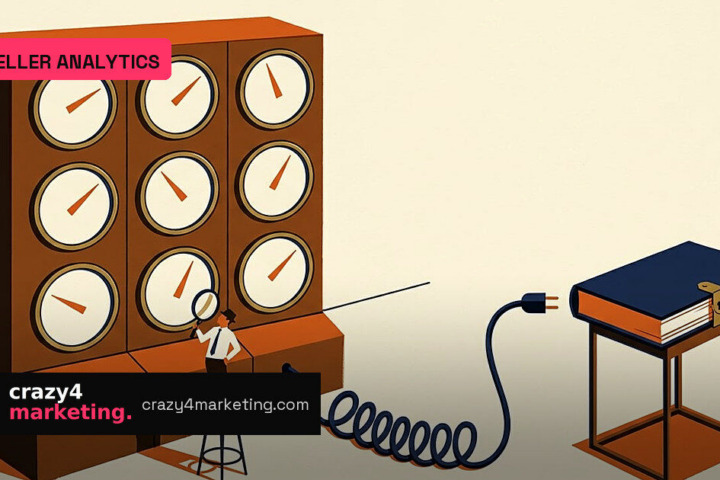
For years, a kirana’s cloud was the shopkeeper’s memory. The khata book held names, amounts, and a precise map of who bought what, when money was short, and whose family had a wedding coming. It was low-tech, high-trust and completely invisible to the outside world.
That is the shift worth watching now. The counter still remembers, but the remembering is moving to the cloud. Orders, payments, preferences and reminders become visible to the owner from a phone, not just from a worn notebook. For the customer, the corner shop starts to feel a little more like a personal concierge and a little less like a queue.
The khata was always a customer database
Marketers would call it CRM, but it existed long before the term. The kirana owner knew which brand of tea a household preferred, when the monthly groceries were due, and which customers needed a gentle reminder. This memory was the shop’s growth engine.
What digitisation does is not replace that memory. It makes it portable, searchable and harder to lose. A phone can hold the same relationships, add payment history, and turn a festival rush into a list of customers who usually buy more in that season.
What actually changes when the shop goes digital
The physical shop looks the same. The work behind the counter changes quietly:
- Orders move from spoken words to a phone or tablet screen, with less re-reading of the khata.
- Customer preferences become searchable, so a new helper can suggest without knowing every household.
- Payments and reminders link together, reducing the awkward “last month’s amount” conversation.
- The shop’s own visibility grows, so regulars can see what is available or place a reorder without a call.
None of this requires the customer to become a data expert. The shopkeeper simply gets a better view of what they already know.
The customer feels the difference
From the customer’s side, the change is often small: a faster bill, a reorder that arrives before the shelf is empty, a discount that fits their actual buying pattern. The familiar corner shop remains familiar, but it stops relying on the owner being physically present to remember everything.
It is also a more level playing field. A small shop that knows its customers deeply can compete with a much larger retailer on service, even if it cannot match the shelf size. Growth becomes less about floor space and more about attention and memory.
Why this matters for digital marketers
India’s data question has moved from “How much does data cost?” to “What can we do with data?” Jio’s 2016 launch with unlimited 4G data, voice, video and apps helped settle the first question, and the company reached 100 million subscribers within 170 days (company-reported; Reliance Industries Integrated Annual Report 2016-17). It now serves 524 million+ customers (Reliance Jio Infocomm, March 2026; company-reported), and its ecosystem spans connectivity, entertainment, commerce, payments, devices, cloud and AI (Reliance Industries 48th AGM, August 2025). Jio has stated a priority of digitising businesses (Reliance Industries 48th AGM, August 2025).
For marketers, the kirana’s move to the cloud is a distribution story. The small shop is no longer just a point of sale; it is becoming a local media and service channel. Its stated priorities include digitising businesses, which turns the corner shop into a touchpoint for content, commerce and customer understanding.
The khata’s new life
The khata book may not disappear. But its role changes from the only record to a backup, a habit, a warm reminder of where the relationship began. The real ledger moves to the cloud, where it can be seen, shared and acted on in real time.
What the shop keeps is the same thing that always made it work: trust, memory and the ability to know a customer by name. What it gains is the ability to do that at a scale the khata never could.