

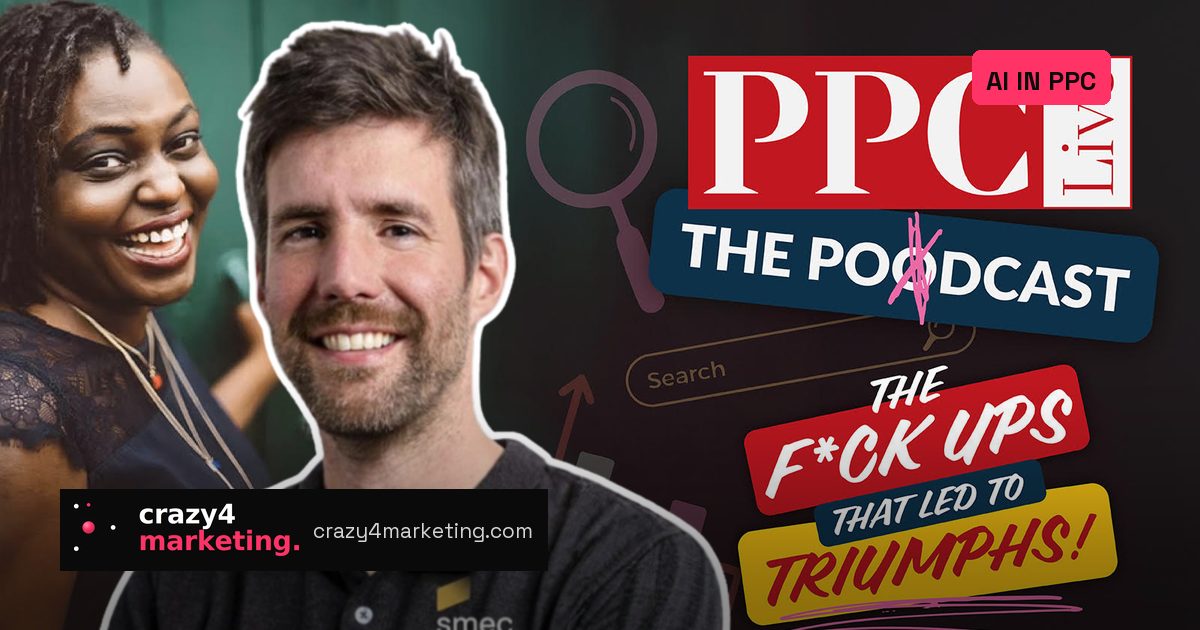
Google Ads is now built around automation, but automation without guardrails can quietly turn a profitable account into a bidding war. That’s the core warning from Mike Ryan, head of e-commerce insights at Smarter Ecommerce (SMEC), on the PPC Live podcast.
Ryan walked through real campaign mistakes, including an AI Max expansion that looked good on the dashboard but ignored business context. The lesson for performance marketers: optimization is not the same as strategy.
The AI Max wake-up call
In one example, Ryan explained how AI Max dramatically expanded a client’s traffic by going after a much larger competitor. The headline performance looked strong. But the advertiser had deliberately avoided those searches to prevent a costly bidding war. That was business context the AI could not see.
The takeaway is not to avoid AI Max. It’s to understand that automation optimizes within the signals you give it. If those signals don’t include business intent, the machine can chase the wrong conversions.
Trust but verify
Ryan’s approach is simple: trust new Google Ads technology, but verify what it is actually doing from day one. That means checking search terms, not just headline metrics. Early performance can hide poor query matching, especially while the system learns.
He also shared a cautionary example from his own research. Ryan initially believed AI Max favored the Search Partner Network and posted the finding on LinkedIn. More data later showed that wasn’t generally true. The correction didn’t travel as far as the original claim.
That’s a useful reminder for anyone publishing PPC insights: early observations become campaign decisions quickly, and viral conclusions are hard to take back.
Guardrails you can actually use
Instead of disabling automation, Ryan argues advertisers should use the controls already available:
- Apply negative keywords and brand inclusions or exclusions to limit unwanted expansion.
- Check Search Partner Network settings before drawing conclusions about traffic quality.
- Use AI Max match type and match source reporting to see where expansion is coming from.
- Feed custom labels with margins, sell-through rates, and return rates so bids optimize for profitability, not just recorded conversions.
The segmentation trap
Many accounts are still structured with highly granular campaigns. Ryan says that can starve Google’s automation. His research suggests Smart Bidding needs at least 30 monthly conversions per campaign, and ideally 60 or more, to work consistently.
He also called out overly complex account structures built around CFO margin buckets. They sound sophisticated, but fragment conversion data so heavily the algorithm struggles. The rule: every split should have a strategic reason to exist.
The August 17 panic
When Google rolled out its August 17 update, Ryan saw advertisers raise target ROAS even on campaigns that weren’t budget-limited. That defensive reaction may have been unnecessary. Google advised waiting one to two conversion cycles before judging the change.
The panic also created opportunity. If competitors pulled back, brands that stayed calm — or even lowered ROAS targets selectively — could capture share at a lower cost.
What to do next
For growth teams, the message is clear. Don’t hand Google Ads the keys and walk away. Build guardrails, add business context through custom labels, consolidate overly fragmented campaigns, and give changes enough data before reacting.
Curiosity is becoming a core PPC skill. Strong performance, new controls, and early industry claims all deserve investigation rather than blind acceptance.
Source: Search Engine Land