

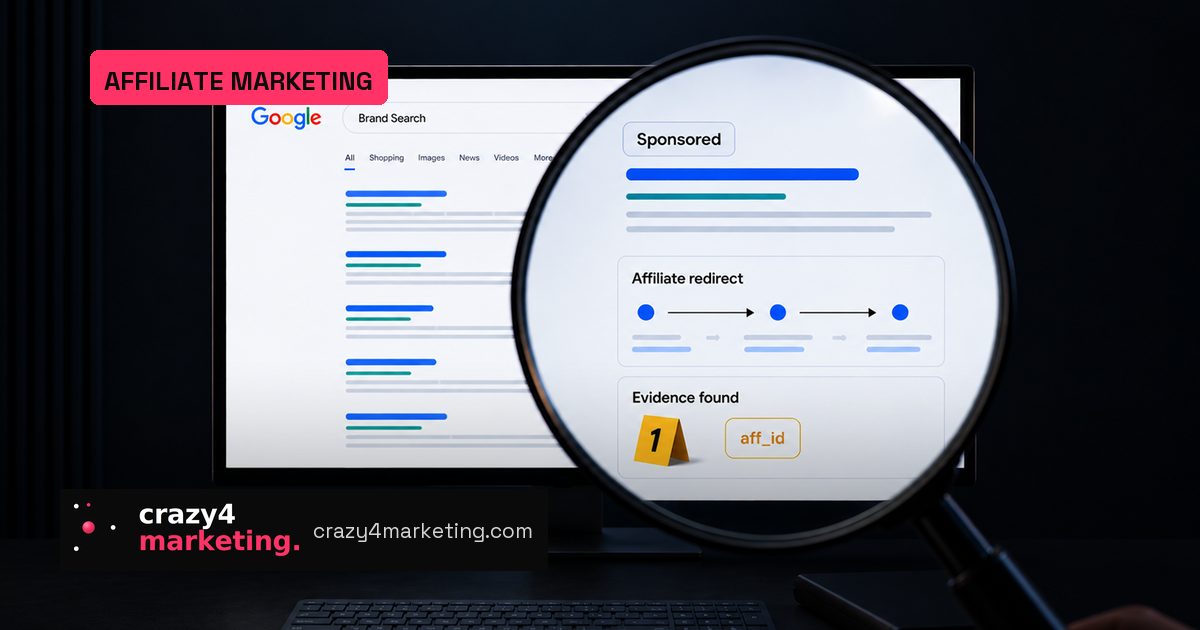
Affiliate dashboards can flatter a program. Clicks, conversions and commissions all point up. But the real question is not just whether a conversion happened — it is whether the affiliate actually generated that sale.
Where the blind spot sits
Most mature affiliate programs track what enters their platform. What is harder to see is the paid search behaviour that happened before the click. An affiliate can bid on your branded terms, appear alongside your own ads, and capture a customer who was already searching for you. The conversion is real. The incremental value may be zero.
According to Q2 2026 data from adment customers, affiliate hijacking activity keeps moving. The U.S. led monitored markets, followed by the U.K., Germany, Canada and India — India entered the top five for the first time, replacing Belgium. That matters because manual monitoring tends to focus on markets teams already consider important. Paid search activity does not always follow those assumptions.
Why strong affiliate numbers can mislead
Brand bidding often hides behind good performance. A customer finds you through SEO, content or word of mouth, then searches your brand name later. An affiliate ad intercepts that click, drops a cookie, and collects a commission on the sale. Technically everything checks out. Strategically, you are paying for demand you already created.
There is also a paid search cost. When affiliates compete with your own brand campaigns, they add another bidder to the auction. That can push up CPCs on the very terms you already own.
How to spot the leakage without a full-time detective
Manual checks work in a small program, but they do not scale across markets, devices, languages and search engines. Still, the same logic applies whether you do it yourself or use always-on monitoring:
- Define the violation: Know which branded keywords, ad copy rules, markets and devices are off-limits in your affiliate terms.
- Build a search test list: Include brand names, product names, misspellings, and combinations like “brand coupon” or “brand login.” Search in clean sessions at different times.
- Capture evidence before clicking: Record keyword, engine, time, location, device, ad copy, advertiser domain and position.
- Follow the redirect trail: Look for affiliate IDs or partner tracking parameters, then match them to conversions in your affiliate platform.
Repeated evidence matters more than a one-off observation. Group findings by partner, keyword, market and policy clause so enforcement teams see the pattern, not just the incident.
What faster detection is actually worth
In one example from the source, a sales engagement SaaS company found enough fraudulent activity within the first hours of continuous monitoring to save more than $8,000 in commissions and platform fees. They ultimately removed more than 75 fraudulent affiliates. Detection time has direct financial value: catching a violation before the next commission cycle is the difference between leakage and recovered margin.
For affiliate managers, the upside is also time. Teams spend less energy reproducing suspicious ads and more energy evaluating real cases and growing relationships with legitimate partners.
The core shift is simple: tracking shows what was recorded. Visibility shows how it happened. If your program only measures the first, brand bidders can quietly collect a commission on demand you already built.
Source: Search Engine Journal