TrueView is Google’s pay-for-attention contract for YouTube ads. A viewer who chooses not to skip has shown more intent than an impression that autoplays and gets ignored, so advertisers are billed only when someone watches long enough or interacts.
The model launched on December 1, 2010, as skippable pre-roll. At the time, Google senior product manager Phil Farhi told Tubefilter that advertisers came around because “you’re not paying for those skipped ads.” Google retired the TrueView product brand in stages between 2016 and 2021, then in October 2025 revived the label for the Views metric in Google Ads. Today TrueView survives mainly as a counting and billing unit.
When does a view actually get billed?
The trigger depends on placement:
- Skippable in-stream: the viewer watches 30 seconds, the whole ad if shorter, or clicks.
- In-feed video ads: the viewer clicks through to the watch page, or watches the autoplay inline for at least 10 seconds.
- Shorts ads: the viewer watches 10 seconds, the whole shorter ad, or taps the call-to-action button.
A worked example shows the economics. On a 45-second skippable ad with a $0.05 target cost per view, the viewer who skips at second six costs nothing. So does the viewer who leaves at second 29. The person who stays to second 30 costs roughly $0.05, as does someone who clicks the CTA at second eight.
Bumper ads and non-skippable in-stream ads are excluded by design, because viewers cannot skip them; they are bought on CPM.
Why it matters for your YouTube buying
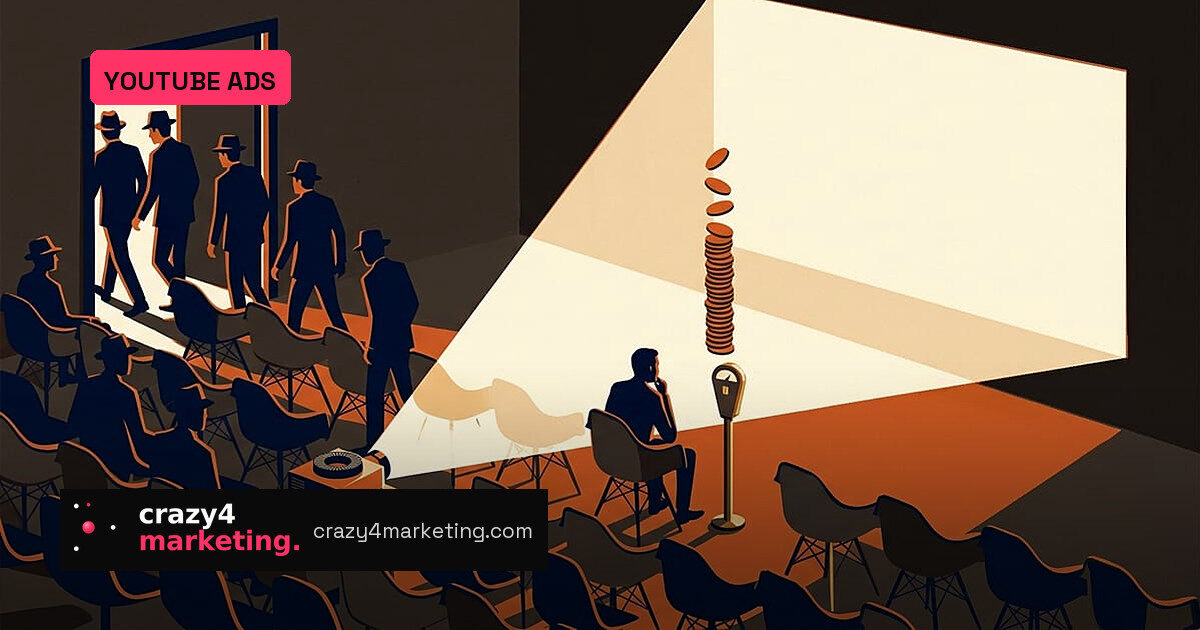
TrueView turned a creative problem into a pricing problem. Because skipped impressions are free, the first five seconds are the entire battleground. You are not paying for reach; you are paying for attention that holds.
Bidding decides whether a TrueView view is the billable event or just a report. Under cost-per-view bidding it is the billable event. Under Target CPM, Target CPA or Maximize conversions, skippable in-stream ads are charged on impressions and TrueView views become a reporting metric. Google also stopped new video view campaigns with Maximum CPV in April 2025, leaving Target CPV as the remaining view-based strategy for new campaigns. Video view campaigns, launched in April 2021, are the purest current TrueView product: they mix skippable in-stream, in-feed and Shorts ads and optimise for the lowest Target CPV.
The old view-through rate is now TrueView view rate, or the share of impressions that produced a TrueView view. The October 2025 rename of Views to TrueView views changed no billing logic but put the label across planning, forecasting and reporting screens.
The GVP dispute and measurement gaps
TrueView’s reputation was tested in June 2023 when research firm Adalytics reported that 42% to 75% of some TrueView skippable in-stream budgets went to Google Video Partners placements that appeared not to meet Google’s own standards, including muted, autoplaying and out-stream players. Google rejected the findings as “extremely inaccurate” and said the overwhelming majority of TrueView spend runs on YouTube.
Structural quirks remain. The 30-second threshold is fixed whether the ad is 31 seconds or three minutes. TrueView views and YouTube’s public view counts are separate systems. And since August 24, 2026, YouTube public views count from the first frame while ad metrics keep their own watch-time thresholds.
What to do about it
Treat the first five seconds as a gate. Earn attention immediately, because that decides whether you pay. Use Target CPV when you want the view itself to be the billing event, and watch TrueView view rate alongside cost per view. Do not compare YouTube cost per view with Meta, Snapchat or programmatic definitions — they are not the same unit.
Source: PPC Land