
The 60% tipping point
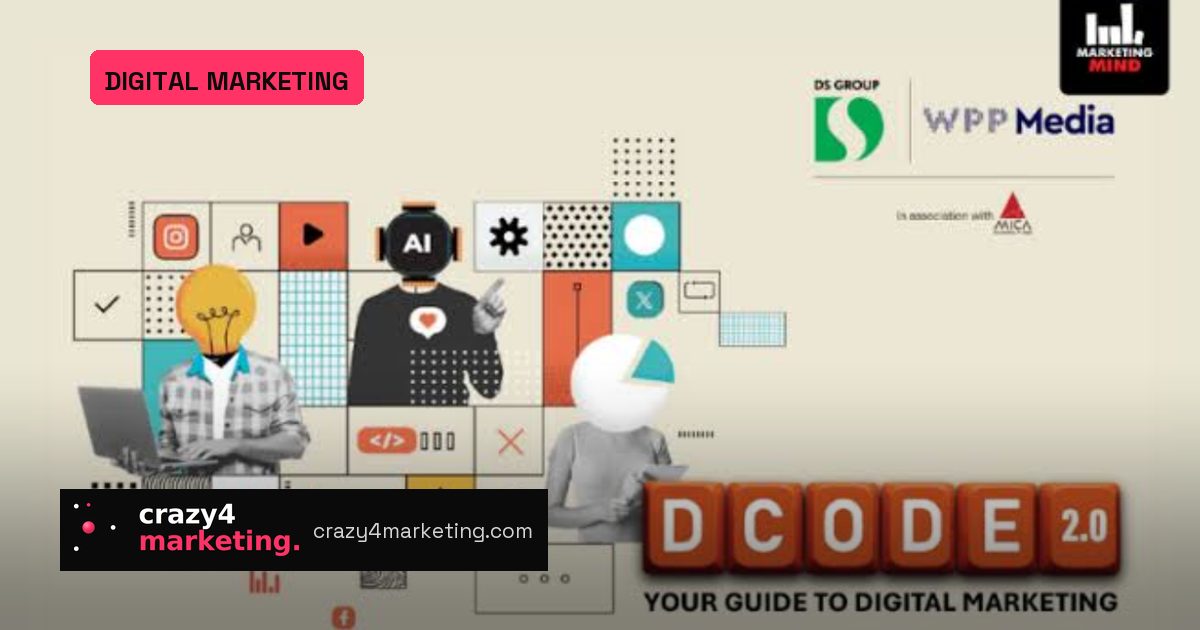
India’s digital ad market has crossed a structural milestone: digital now commands 60% of total advertising spend. The DCODE 2.0 playbook from DS Group, WPP Media and MICA puts total advertising expenditure at Rs 1.85 lakh crore for 2025, rising to roughly Rs 2 lakh crore in 2026. Digital is expected to grow 11.1% next year, compared with 3.1% for television.
Inside digital, the growth map is changing fast. Retail media is now nearly 20% of digital ad spend, quick commerce advertising is growing at around 50%, and connected TV is projected to cross Rs 8,000 crore in 2026.
But the real signal from DCODE 2.0 is not just budget share. It is how the purchase journey has compressed—and how most marketing organisations are still not set up to manage it.
From channel plans to journey teams
Rajeev Jain, senior vice president of corporate marketing at DS Group, describes the core challenge as a fragmented consumer journey and shrinking attention spans. The old reach-and-frequency view misses the context: the same consumer may be watching TV, scrolling social media, listening to a podcast and following an influencer simultaneously.
Navin Khemka, president of client solutions at WPP Media, South Asia, frames the bigger shift as “the velocity and collapse of the buying cycle.” A product can be discovered on an Instagram Reel, reviewed on YouTube and ordered on a quick commerce app within minutes. Discovery and conversion now happen in the same session.
That makes isolated channel budgets risky. They create overlap, inconsistent messaging and wasted spend. The smarter question for growth teams is: where is the bottleneck—awareness, consideration or conversion? For Gen Z, much of the journey increasingly happens inside AI platforms, from research and evaluation through to purchase in some cases.
Commerce media is not a brand replacement
Retail media and quick commerce are becoming major incremental digital growth engines, alongside generative search and AI. Khemka sees a move away from standalone lower-funnel activity toward environments where media, commerce and transaction data are connected.
But that does not mean brands should pour all budgets into performance. Jain argues that quick commerce works best as a brand reinforcement and reminder platform, not the primary vehicle for communicating brand purpose or positioning. DS Group’s own portfolio shows why: spices have stronger e-commerce purchase intent, so e-commerce is a more relevant environment; confectionery is less dependent on e-commerce for everyday purchases.
Action checklist
- Map purchase intent by category before shifting budgets to retail media or quick commerce.
- Treat quick commerce as a visibility and reminder channel, not the whole brand story.
- Build owned audiences with loyalty programmes and first-party data to reduce walled-garden exposure.
- Use incrementality testing and marketing mix modelling to separate true growth from sales that would have happened anyway.
AI changes search—and measurement follows
DCODE 2.0 estimates that around 42 crore Indians, or 29% of the population, now use AI tools. Google’s AI Overviews are pushing paid and organic results down the page, making Generative Engine Optimisation more important. Khemka says brands must now optimise content to be referenced natively by AI.
Jain sees AI’s immediate impact as an efficiency and intelligence layer rather than a replacement for marketing strategy. It helps teams generate and adapt content at scale, analyse reviews, social conversations and e-commerce feedback, and identify consumer motivations and barriers. The judgement and creativity behind the brand remain human.
The playbook’s evolution also reflects the pace: DS Group created the first edition internally, then WPP Media joined, and MICA added an academic and research perspective for the second edition. Jain says digital evolves so quickly that DCODE now needs to be an annual exercise.
Source: Afaqs!