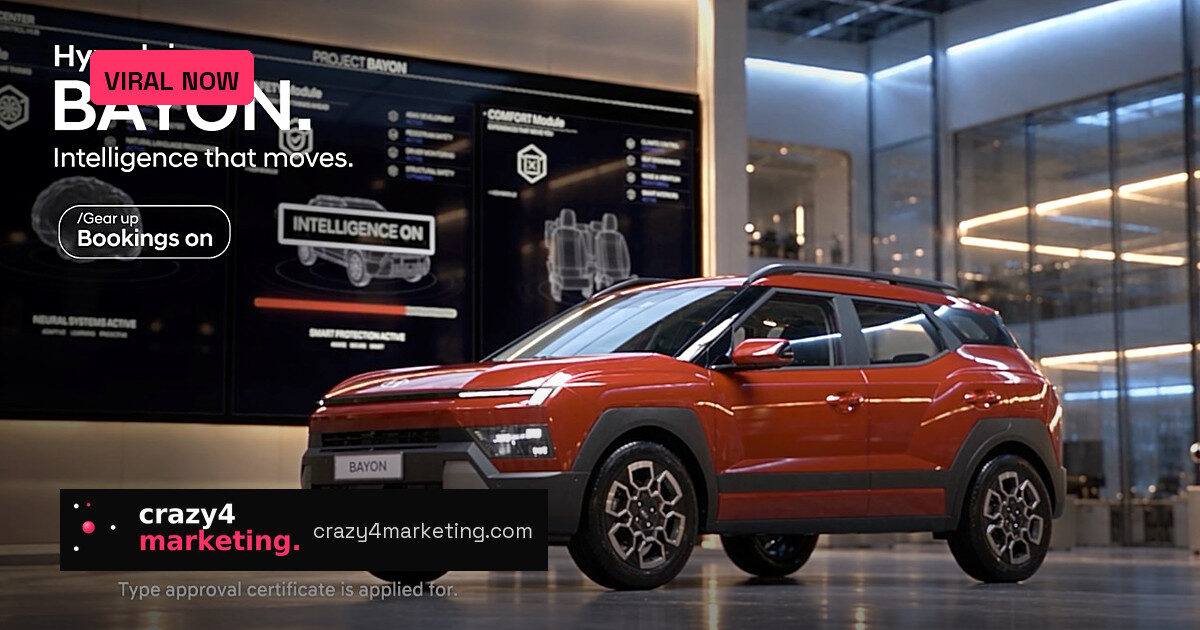
Hyundai’s BAYON ad starts with an impossibility: a newspaper page that speaks. The film doesn’t rush to explain. It lets the viewer watch a finger find the button, press it, and hear an artificial voice begin selling the SUV. That mismatch between medium and behavior is the engine of the whole piece.
The hook
The opening seconds are a stillness test. A print page sits where a video should be. The only motion is a hand reaching for the button. Then the voice starts before any car shot. That tiny delay is the hook: the viewer leans in because print isn’t supposed to do this. No fast cuts, no loud music. The surprise is physical, not visual.
Hyundai sets up the entire product premise in that first press. The AI voice isn’t a gimmick layered on top; it’s the actual interface the car is selling. So the hook does two jobs at once: it grabs attention and it introduces the technology.
The structure of the film
The film is built like a product demo, not a traditional brand spot. It opens with the front-page print ad and its pressable button. Once the button is pressed, the AI voice begins extolling the BAYON, a new mid-sized SUV. The voice is artificial on purpose, and Hyundai leans into that instead of hiding it.
From there, the story moves from the printed page to the broader pitch: the BAYON wants drivers to say ‘Hey Hyundai’ and ask, rather than jab at a screen while driving or lean forward from the back seat. SoundHound AI provides the voice, Perplexity provides the intelligence, and Nvidia provides the processing power. The end pushes toward action—the film’s own title carries the ‘Bookings ON’ signal.
Why it spread
Print rarely earns a second look. This ad gives readers a reason to pause, press and listen, maybe more than once. In a feed full of polished video, a static page that starts speaking is a genuine anomaly.
- Formats: a front-page newspaper ad and a demonstration film of the interaction. The front page itself is the scale claim.
- Platforms: the source doesn’t specify where the film traveled, but the share trigger is platform-agnostic: “a print ad just talked to me.”
- Creators: no agency is credited in the source. The named collaborators are SoundHound AI, Perplexity and Nvidia.
- Share trigger: the surprise of a still page becoming an audio experience, and the desire to show someone else the button.
The ad also follows a basic storytelling rule: show, don’t tell. It demonstrates the AI assistant instead of merely describing it, so the viewer meets the technology before the car.
The numbers
The source gives no view counts, press tallies, booking figures or sales numbers. The only countable element named is the single button on the front page. That matters: the story is spreading on mechanism, not on published performance data.
Steal this
- Make the medium demonstrate the product. If you sell a voice assistant, a sensor or a signature interaction, build an ad that lets someone trigger it rather than read about it.
- Add one small physical trigger. A button, a scratch panel or a tap cue can turn static media into a pause-and-try moment.
- Name the stack. Hyundai credits SoundHound AI, Perplexity and Nvidia. Smaller brands can borrow credibility by naming the tools that power their experience.
Watch the original: Hyundai on YouTube
Source: Afaqs!