
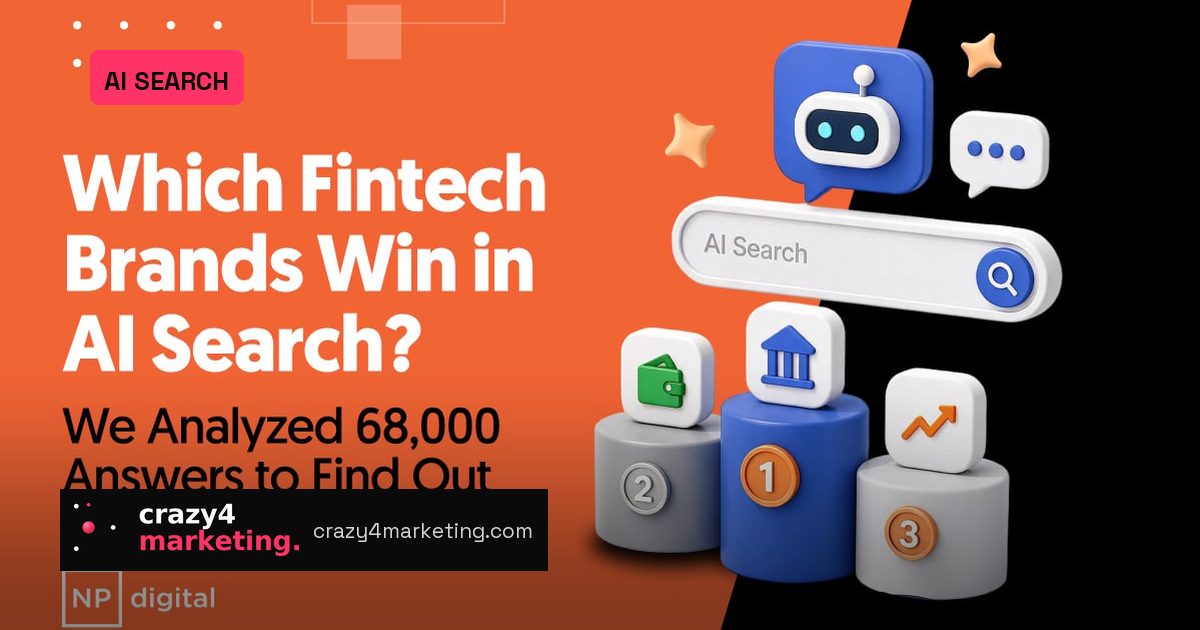
If you’re still anchoring your marketing to Google rankings alone, the ground has shifted. A new study from Neil Patel’s team analyzed 68,334 answers to 250 financial prompts across five AI platforms to see which fintech brands actually get recommended.
The headline? No brand in the dataset cleared 66 points out of 100 on the study’s AI Visibility Score, and no pure fintech brand cleared 65. The score blends three signals: how often a brand appears, how early it appears, and how many of the 10 fintech categories it covers.
That’s a massive opening for teams willing to rethink how AI surfaces their brand.
Apple leads, but category leaders tell the real story
Apple topped the overall index with a 65.6/100, helped by Apple Pay and its broader product ecosystem. SoFi led pure fintech brands at 64.6, partly because it appeared in all 10 fintech categories.
PayPal had the highest raw mention count at 14,294, yet ranked third overall. Why? Its average first-mention position was 4.46, meaning AI listed it later as a known option rather than a default pick. That gap between volume and position is the biggest strategic takeaway for growth teams.
Category saturation beats broad presence
The data shows fragmented visibility across most categories, but a few brands own their niche. Klarna appeared in 91.8 percent of buy now, pay later answers. Wise showed up in 84.7 percent of money transfer responses and was consistent across all five AI platforms. YNAB led budgeting tools with a 72.8 percent mention rate.
Lending and credit was the most fragmented: no brand cleared 43.7 percent. That makes it the clearest opportunity for a challenger to build AI authority quickly.
Third-party coverage is the new backlink
The study also found that where AI gets its information changes which brands get named. Reddit appeared in 12 percent of ChatGPT answers but fewer than 0.2 percent of Perplexity and Claude answers. NerdWallet showed up in 11.5 percent of Google AI Overviews answers versus 1.3 percent of Gemini answers.
Sentiment follows source mix too. Wise and Capital One received positive descriptor language because AI pulled from comparison sites and media listicles that describe them as reliable or transparent. It’s not brand reputation alone; it’s the coverage ecosystem you build.
What to do next
Here’s a practical framework for fintech marketers based on the findings:
- Audit your AI visibility across ChatGPT, Google AI Overviews, Gemini, Perplexity and Claude using real purchase-intent prompts.
- Pick one category before you chase all ten. Winning a niche beats appearing fifth everywhere.
- Earn coverage on comparison sites and financial media, because AI pulls language from those sources.
- Create task-oriented, instructional content that positions your brand as the first useful answer.
- Track both how often you appear and how early you appear in an AI answer.
The brands winning AI search aren’t always the biggest. They’re the ones with clear category ownership and an ecosystem of third-party mentions backing them up.
Source: Neil Patel