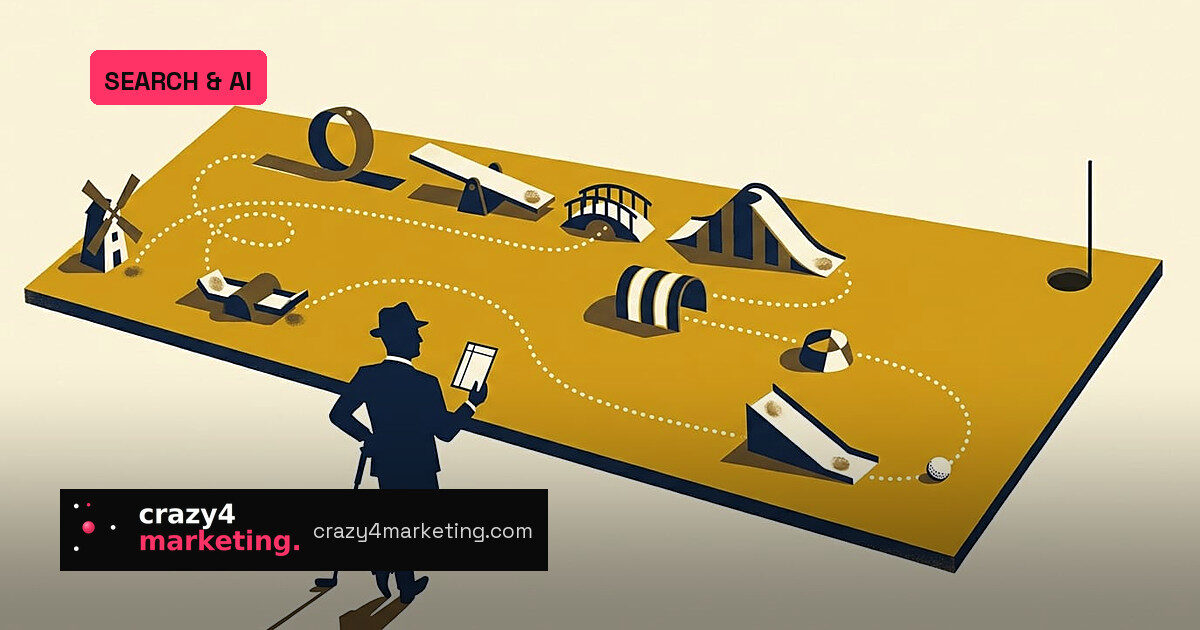
Google’s ads chief for search has a message for brand leaders worried about AI overviews: the buying journey is not getting shorter, it is getting wider. Brendon Kraham, Google’s VP of Search and Commerce for Global Ads Solutions, says shoppers who use AI search now touch 12 points across a considered purchase—nearly three times more than buyers who do not use AI.
Kraham leads Google’s advertising side, so the essay doubles as a defense of Search budgets. The claim, published on Think with Google on October 14, rests on Google-commissioned Ipsos survey data from 25 markets.
The numbers behind the claim
The touchpoint figure compares two groups of recent consumer-goods shoppers: 14,305 who used AI platforms or features in their journey and 21,881 who did not. The survey does not define a touchpoint, and PPC Land notes that the AI group is broader than Google’s own products. That makes the stat directional rather than proof that AI caused the extra steps.
Kraham also says 3 in 4 people using Google’s AI features report faster, more confident decisions. The sample there is narrower: 13,189 shoppers who already used AI Overviews or AI Mode.
What this means for your brand
If the journey really is expanding, showing up once is not enough. Kraham’s advice comes down to three moves:
- Publish deep, specific expertise instead of generic “top 10” content.
- Make your site, app and product feeds fast, rich and easy for users.
- Measure leads and sales, not what Kraham calls “unproven proxy metrics.”
His running-store example is telling: skip the broad listicle and make a video that explains why one customer’s shoe collapsed. IKEA’s deputy CMO, Linda Ha, echoes the idea that complex journeys like kitchen planning now reward brands that connect paid, owned and earned media.
The click tension Google doesn’t answer
Independent studies keep showing a different side. Pew Research found links were clicked on 8% of searches with an AI summary, versus 15% without. Ahrefs has reported a 58% lower click-through rate for top pages when AI Overviews appear. A randomized 2026 experiment measured a 39.8% drop in outbound organic clicks when an AI Overview showed up.
Both things can be true: shoppers may visit more touchpoints while any single page gets fewer clicks. The practical risk is that Google’s Search Console generative AI reports still count impressions, not clicks or revenue. So there is a gap between the advice to measure business outcomes and the AI-specific tools Google currently provides.
For marketers, the move is to treat AI visibility as a discovery layer, not a conversion metric, and to build attribution back to leads and sales yourself.