

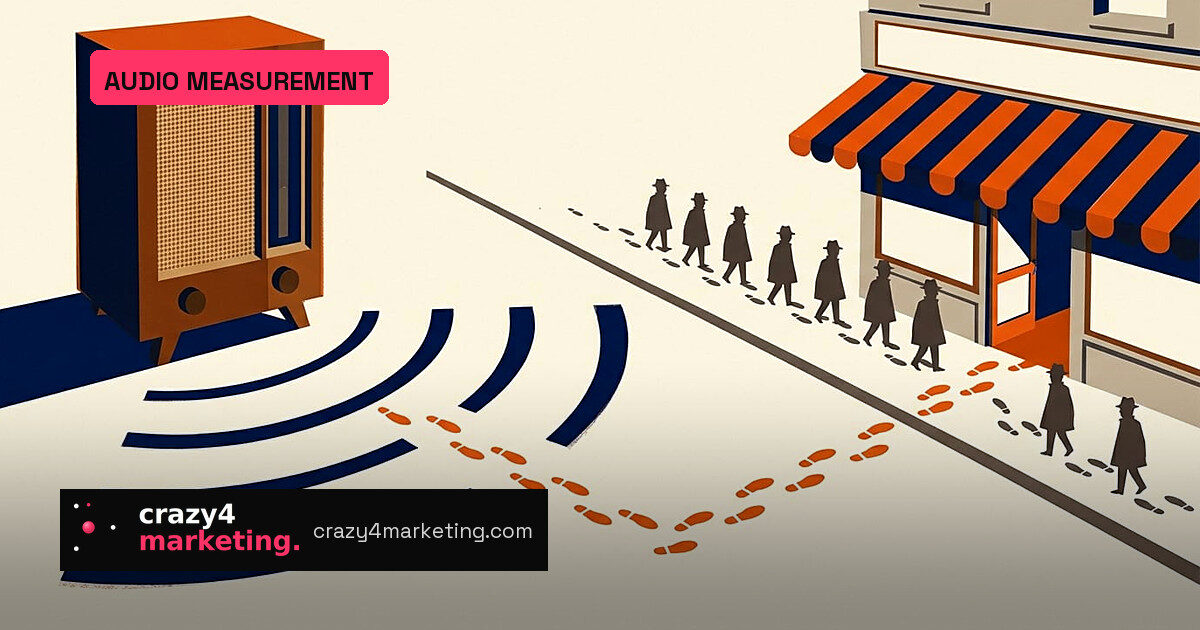
AudioGo, the self-serve audio ad platform run by AdsWizz, has struck a measurement deal with InMarket. Announced October 23, the integration lets advertisers attach InMarket pixels to AudioGo campaigns and report incremental store visits, sales and incremental return on ad spend (iROAS).
Incrementality, not just attribution
The deal is built around a stricter question than who heard the ad. AudioGo wants advertisers to ask whether a campaign produced visits and sales that would not have happened otherwise. That is the difference between incrementality and ordinary attribution, which simply credits any exposed person who later walks into a store.
For local and multi-location advertisers – franchises, auto dealers and home services – that distinction is the entire business case. A shopper who was already on the way to the showroom is not evidence the audio spot worked.
How the setup works
Measurement is not a one-click switch inside AudioGo. Advertisers first need their own agreement with InMarket, then request a pixel from their InMarket team and add it to any AudioGo campaign. InMarket handles the matching between ad exposure and offline outcomes.
AudioGo lists the outputs as incremental foot traffic, funnel visibility from listener to store to product, and iROAS alongside existing reports. InMarket says its platform draws on $736 billion in commerce data and more than 200 million location-based consumers. Both are the vendor’s own figures and neither is defined in the release.
What the announcement leaves open
- No control group, matching method or attribution window is described.
- No pricing, minimum spend or market availability is disclosed.
- No case studies, lift figures or campaign-count results are included.
- No detail on location boundaries, consent, data sourcing or match rates.
These gaps are normal for a partnership post, but they matter when incremental store visits can be calculated in very different ways. Buyers comparing audio against search or social need to know whether the measurement is like for like.
Why it matters for audio budgets
Audio has long struggled to show that ads change offline behaviour. AdsWizz figures previously cited by PPC Land put audio at 31% of consumers’ media time but only 9% of ad budgets. Better outcomes measurement is the bridge the industry has been trying to build.
AudioGo has spent the past year adding measurement partners. Earlier deals with Bionic, TapClicks and Magellan AI focused on reporting and ad intelligence. The InMarket integration is the first aimed squarely at physical outcomes, which is the proof small audio buyers have lacked.
This integration gives smaller audio buyers a metric that can sit in the same planning conversation as clicks and conversions. But it also adds a separate vendor cost to a platform built around low entry prices, and the method is not yet open to scrutiny.
The practical move is not to accept or reject the number, but to ask how it was built. Then compare audio’s iROAS against other channels only when control groups, match rates and attribution windows are comparable.
Source: PPC Land


