
Bestadsontv.com’s weekly global picks are a quick way to see what top creatives rate right now. This week the guest judge is Harsh Kapadia, Head of Enterprise Creative at Code & Theory, New York, and his favourites reward clarity over clutter.
AI hiring rejections, called out
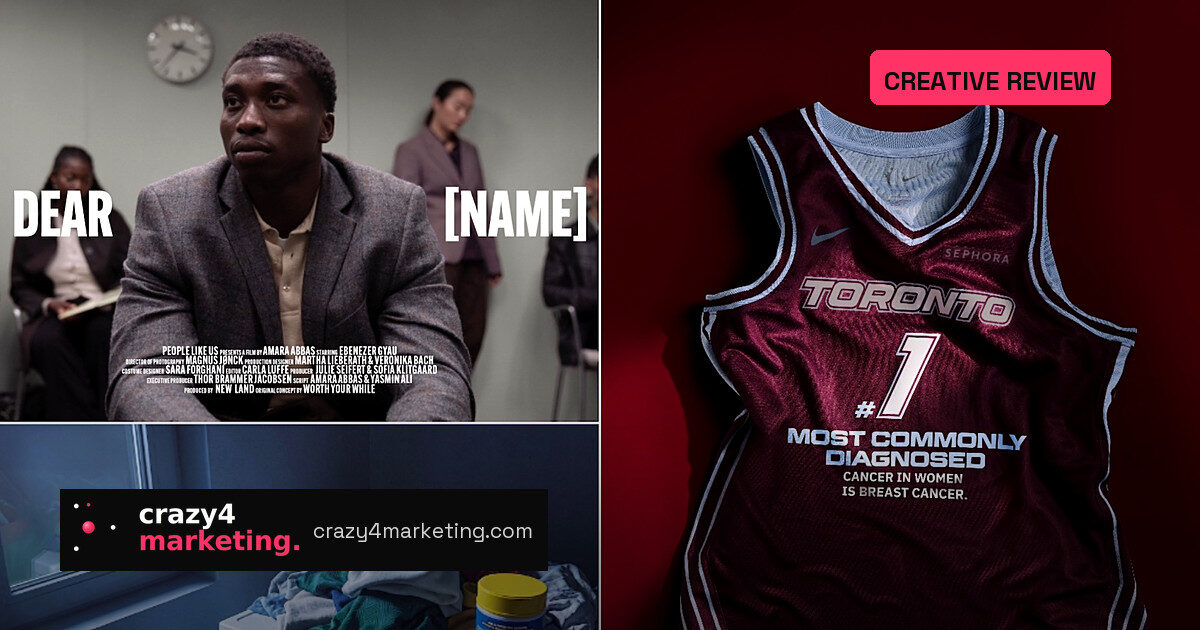
The week’s top pick is “Reject the Rejections” from People Like Us. The film captures the frustration of candidates who receive automated AI rejection emails. Kapadia’s review notes that the work does not ask for sympathy. Instead it builds solidarity and acts as a wake-up call for employers sending what he calls “AI slop” replies.
Tight editing keeps the film moving, but the power is in the observation: job hunting increasingly means being processed by machines, and brands can say something about that without being preachy.
Simple ideas, expertly committed
Orange takes runner-up with “Who Knows How Far Our Network Will Go?”. The review praises the telecom for not overcomplicating the message. A dancing astronaut is the whole idea, and that commitment makes it feel effortless and fun.
OxiClean’s “Jersey” goes the other direction. It uses long copy to unpack a specific World Cup memory many Mexicans share, then shows why OxiClean matters without explicitly saying it. The contrast between lasting emotions and physical stains gives the brand a reason to be in the story.
When the medium carries the message
CIBC and the Canadian Cancer Society win with “Wear the Stat”. The campaign uses players’ jersey numbers to surface health statistics that fans usually ignore. It’s a smart fix for the “it doesn’t affect me” problem: the stat is already on the shirt, so it becomes impossible to unsee.
Specsavers’ “I’m Spinning Around” is a contextual billboard placed next to a Kylie ad. The upside-down board triggers a “you had one job” reaction, then the brand reveal turns annoyance into a smile.
What to borrow from this list
- Pick one specific cultural detail instead of a broad emotion.
- Commit fully to a simple visual idea.
- Turn an existing asset, like a jersey number or a billboard context, into the message.
- Use tension or surprise before the brand reveal.
Kapadia’s own philosophy of “Cultural MacGyverism” — the belief that the strongest ideas come from mixing cultural insight, curiosity, creativity, data and technology — is a useful filter for these wins. Each pick finds a real human truth and translates it into a memorable device.
Why this matters for performance marketers
None of these are esoteric art projects. They are proof that a strong creative device can do the same job as a big media budget: stop the scroll, make the audience feel seen, and attach that feeling to the brand. For D2C teams testing static and video creative, the lesson is to build ads around a single sharp observation rather than a list of features.
The People Like Us film is especially timely. As more companies automate candidate communication, the tension between efficiency and empathy is becoming a brand issue. Smart employers and martech teams should audit their automated messages before a campaign like this makes them the villain.
Source: Campaign Brief